


Spotlighting UNDP South-South Cooperation in Climate Resilience: Expanding Tailored Intelligence for Actionable Early Warning Systems (TIAEWS)
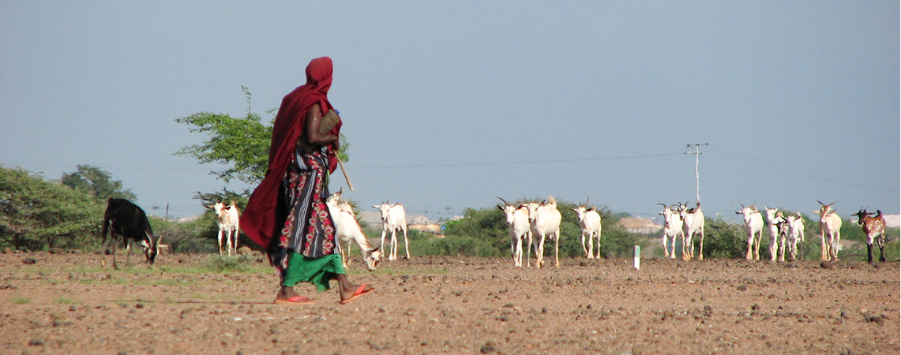
Photo: Kao Akana / Djibouti
Global warming and climate change are driving more frequent and intense extreme weather events, leaving millions of people increasingly vulnerable to their impacts. In the face of escalating climate threats affecting communities, economies, and ecosystems worldwide, early warning systems (EWS) are powerful and cost-effective tools to safeguard lives, livelihoods, and critical infrastructure by providing timely and actionable alerts on impending hazards.
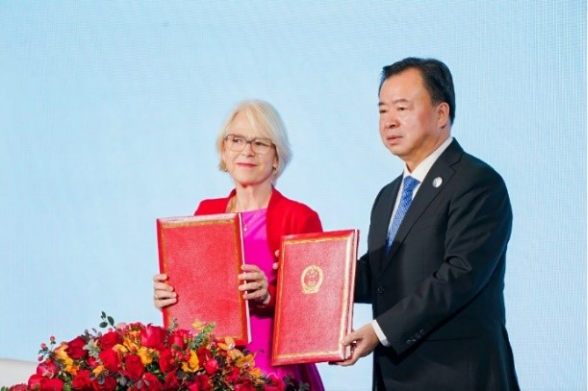
Aligned with global and regional frameworks such as the Early Warnings for All (EW4All) initiative, the Sendai Framework, and the Africa Multi-Hazard Early Warning and Early Action System (AMHEWAS), the Tailored Intelligence for Actionable Early Warning Systems (TIAEWS) programme represents a concrete step toward strengthening disaster preparedness and climate resilience in developing countries. Implemented under the South-South and Triangular Cooperation (SSTC) partnership between the United Nations Development Programme (UNDP) and the China International Development Cooperation Agency (CIDCA), the TIAEWS initiative aims to enhance the preparedness and response capacity of countries in Africa and Asia Pacific through the development of customized and accessible early warning systems. In Africa, the initiative contributes to a system-of-systems approach capable of managing risks across borders under the African Union Commission’s AMHEWAS programme. The TIAEWS initiative has been launched in six countries (Comoros, Djibouti, Madagascar, Maldives, Pakistan, Seychelles).
Current Progress Across Partner Countries
Pakistan
The first TIAEWS project was officially launched in Pakistan in March 2025, with the aim of strengthening the resilience of vulnerable communities in Gilgit-Baltistan by improving their ability to anticipate and respond to natural hazards. Through the planned deployment of 158 Early Warning System units across 10 districts in Gilgit-Baltistan by December 2026, the project is expected to strengthen community-level early warning capacity, improve coordination across relevant administrative levels, and support more timely, actionable alerts for vulnerable communities.
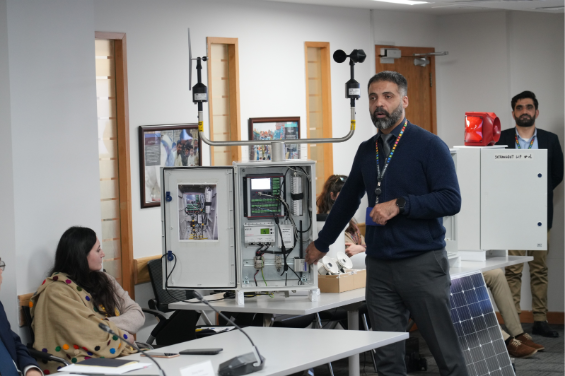
An engineer demonstrating EWS equipment/ UNDP Pakistan
Maldives
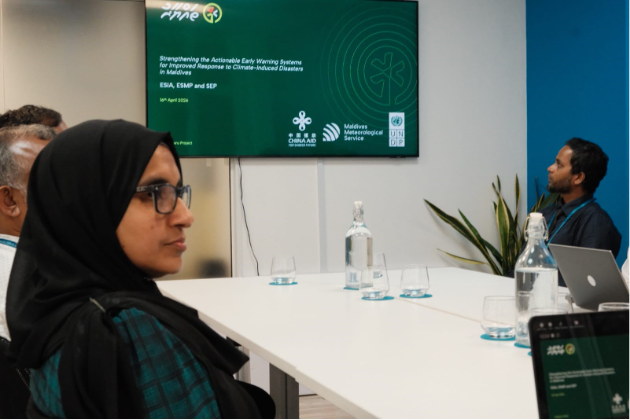
Launched in May 2025, the TIAEWS project in the Maldives focuses on strengthening meteorological infrastructure by expanding observation networks, improving data collection and forecasting accuracy, and enhancing localized and inclusive digital platforms to deliver timely early warning information to communities. The project has kicked off a nationwide roadmap and implementation plan for modernizing the EWS infrastructure, including the upgrading of Automatic Weather Stations (AWS), installation of new stations equipped with advanced meteorological sensors, and the deployment of low-cost marine buoys and piloting floating marine based weather stations to strengthen ocean and weather monitoring capabilities across the country. A digital platform, including a mobile application and revamped website for the Maldives Meteorological Service, will be launched to facilitate inclusive access to early warning information.
Seychelles
The TIAEWS project in Seychelles was launched in July 2025 to enhance national disaster preparedness and response through digital transformation. By harnessing digital technologies, the project seeks to shift from reactive and fragmented disaster response toward an integrated, nationally owned multi-hazard early warning system. The Disaster Risk Information Management System is being consolidated as a national digital public infrastructure, linking field incident reporting, damage-and-loss tracking, geospatial data, monitoring devices, situation-room dashboards and a mobile command center. Institutional coherence will be strengthened with enhanced technical coordination between the Disaster Risk Management Division, the Department of ICT, the Seychelles Meteorological Authority, and the Land Use and Planning Authority. The initiative will integrate learnings from AUC’s AMHEWAS and ensure regional interoperability.
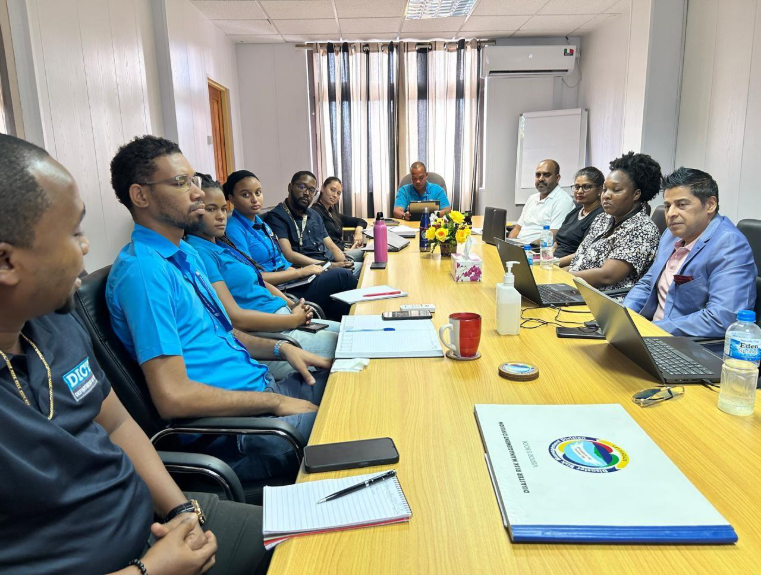
Mission debrief with technical working group – consolidating requirements for DRMIS roadmap and procurements/ Seychelles
Djibouti
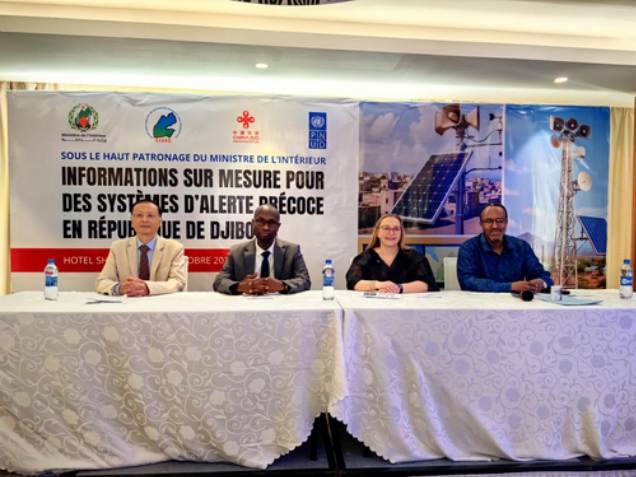
Djibouti launched its TIAEWS project in October 2025, aiming to modernize the national risk management framework by strengthening institutional capacities, improving access to actionable risk information, and developing digital platforms for real-time monitoring. Since its launch, the project has undertaken a comprehensive digital readiness assessment involving 35 institutions, focusing on data management, ICT infrastructure, digital services, and inter-institutional coordination.
Data collection at the national and local levels has been completed to support the development of the National Multi-Hazard Risk Atlas, as well as vulnerability, exposure, and resilience assessments, with the aim of informing Early Warning and Early Action (EW/EA) systems for communities and priority productive sectors, including livestock, agriculture, and fisheries.
Subsequently, a national multi-hazard situation room and regional coordination centers will be established to strengthen decision support and enhance last-mile communication for effective response to crises and protection of vulnerable communities.
Madagascar
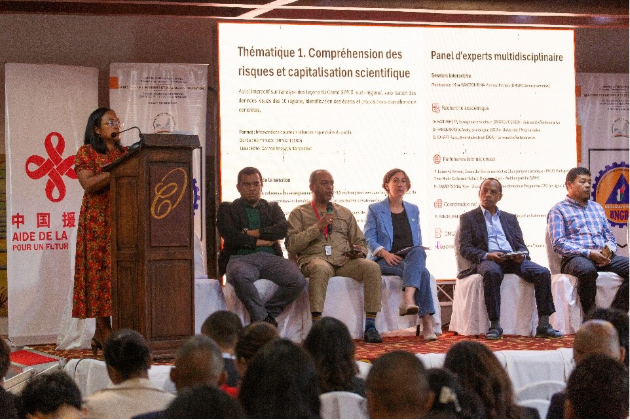
In Madagascar, the TIAEWS project is strengthening capacity to anticipate disasters by modernizing the operational centers of national institutions responsible for risk management and emergency response, and upgrading infrastructure with state-of-the-art meteorological stations in the north of the country, as well as new maritime weather stations at six ports, enabling synchronous collection of weather data. The project has also successfully updated both regional and national contingency plans and aims to carry out a nationwide simulation exercise to identify coordination gaps ahead of the cyclone season.
Comoros
Launched in April 2026, the TIAEWS project in Comoros will strengthen preparedness and response capacity through enhanced data management, institutional coordination and community outreach. The project will support national institutions, particularly the General Directorate of Civil Security, the Technical Directorate of Meteorology and the Karthala Volcanological Observatory, in order to strengthen coordination, data collection and analysis, as well as the timely and accessible dissemination of alerts.
Further Steps for Building Climate Resilience
In many developing countries, advancing early warning systems has long been constrained by limited financial resources, technical capacity gaps, and weak institutional frameworks. Through this TIAEWS initiative, UNDP, CIDCA and local governments are working hand-in-hand to build locally grounded, data-driven, and inclusive early warning systems that empower communities to shift from reactivity to resilience, enabling action before disaster strikes and staying ahead of the crisis curve. The next phase of the program evolves these national foundations by moving beyond data silos toward a networked regional architecture that establishes transboundary interoperability and real-time data exchange with regional entities. This initiative demonstrates how South-South cooperation can transform shared knowledge, technology and experience into concrete, scalable solutions for climate resilience and sustainable development.
For more information:
Discover more South-South in Action stories here: South-South and Triangular Cooperation.
Please log in or sign up to comment.