


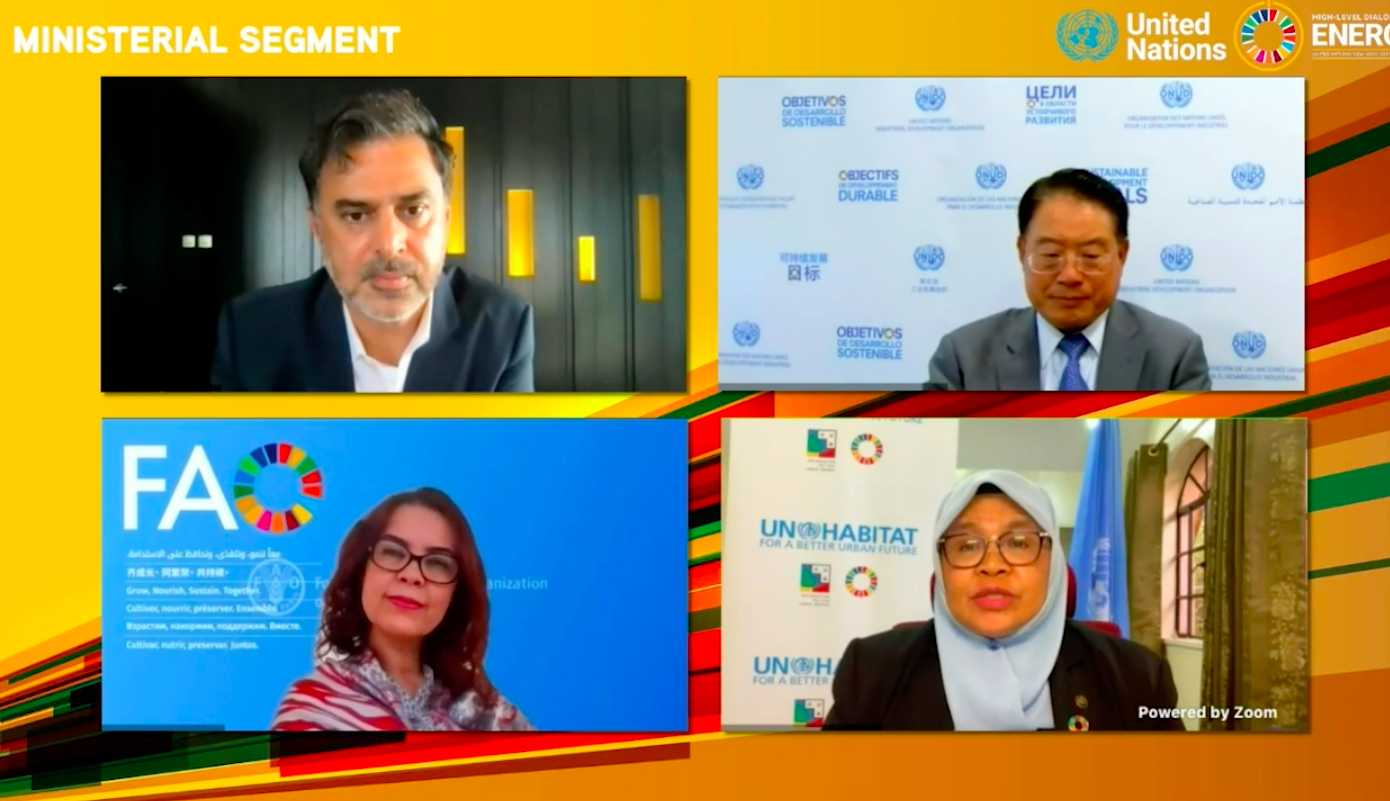
Co-hosted by Global Champion Countries Finland, Mauritius, Morocco, and Russia with Theme Co-leads UNIDO, UN Habitat and FAO, Day 2 of the High-Level Dialogue on Energy Ministerial Forums focused on how innovation, technology, and data are instrumental to accelerate progress on Sustainable Development Goal 7. Here are the key takeaways from UNDP’s Energy team.
1) Key announcements
-
The Deputy Major of London announced a C40 Cities Climate Leadership Group commitment to help accelerate energy transition by aiding cities in delivering energy-related targets in their climate action plans.
-
The Basque Country in Spain discussed its Basque Green Deal and outlined commitments to develop sustainable local markets for hydrogen power and to create citizens’ co-operatives for photovoltaic technology. More information here.
-
The Indian company JK Cement announced several commitments for 2030: increasing their green power mix to 75% from its current 25%; cutting net carbon emissions by 21% below 2020 levels; and reducing groundwater dependency through increasing water productivity to five times current levels. More information here.
-
The Indian company Ultratech Cement announced commitments to: double energy productivity from 2010 levels by 2035; increase green energy use to 34% by 2024; cut its carbon footprint by 27% below 2017 levels by 2032, and cut scope 2 (indirect) greenhouse gas emissions by 69% within the same timeframe. More information here.
-
IRENA has signed MOU with FAO to jointly advance renewable energy in the agri-food sectors. First output will be a joint report on how to scale renewable energy, to be launched at the Food Systems Summit
-
Mauritius will phase out use of coal by 2030, which currently accounts for 40% of energy mix. Its Energy Compact will demonstrate projects to substitute for the use of coal.
2) Key observations
-
Awareness of emerging technology remains very low – even with food waste loss at between 30-70% - at both farm and policy level [in the context of the Innovation and Technology in the Food sector session].
-
We cannot look at the SDGs in isolation, we must understand that a solution in one area will create issues in other areas unless we adopt a systems approach to ensuring a just transition.
-
Affordable and clean energy matters in everyday lives of those who lack access to energy the most across the African continent – for ex: 50% of Gambians do not have access to energy, and about 80% use wood/ biomass and charcoal for energy and cooking.
-
There is need for innovation as the population increases this will become even more critical.
-
The linkage between SDG7 and the other SDGs must be emphasised (including SDG6, SDG2, and others): clean energy is the enabler of the SDGs.
-
The HLDE is critically recognizing the needs of sub-national governments. Access to clean and affordable mobility is critical in developing cities, and transitioning from oil addiction is critical in developed cities – key issue is air pollution and carbon emissions. Need to think holistically across the whole city – for ex: EBRD have a Green City Action Plan, supporting 49 cities, with about $800m invested so far over the first 5 years and pushing up to $2bn over the next 3 years.
-
In this vein, Smart Cities technologies have huge potential to improve human quality of life, cities must embrace digital technologies, but it all starts with rebuilding infrastructure with clear visions and priorities for implementation
-
The forthcoming Food Systems Summit provide greater emphasis on the need to bring together food and energy challenge and open pathways for increasing access to innovation
3) Thematic Working Group on Innovation, technology, and data Report launch
The co-leads of the Working Group on Innovation, technology, and data UNIDO, UN-Habitat, and FAO and launched their report, which aims to align international action on energy innovation, technology development and deployment, and data collection and use with the achievement of SDG 7 by 2030 and net-zero carbon emissions by 2050.
The report outlines 5 key recommendations to ensure energy innovations present positive transformational potentials for achieving universal energy access and for net-zero emissions:
-
Align energy innovation governance and international cooperation with meeting the targets for 2030 and 2050
-
Expand the supply of energy innovation that addresses key gaps
-
Increase the demand for clean and sustainable energy technologies and innovation
-
Leverage digitalization for innovation, while addressing the digital divide.
-
Improve the collection, management, and application of data and data systems
Watch the video summary below and download the report for more information.
3) UNDP Spotlight: Innovation for Clean Energy Access
Achieving universal access to affordable, reliable and sustainable energy will require innovations in energy systems, their planning and associated business models.
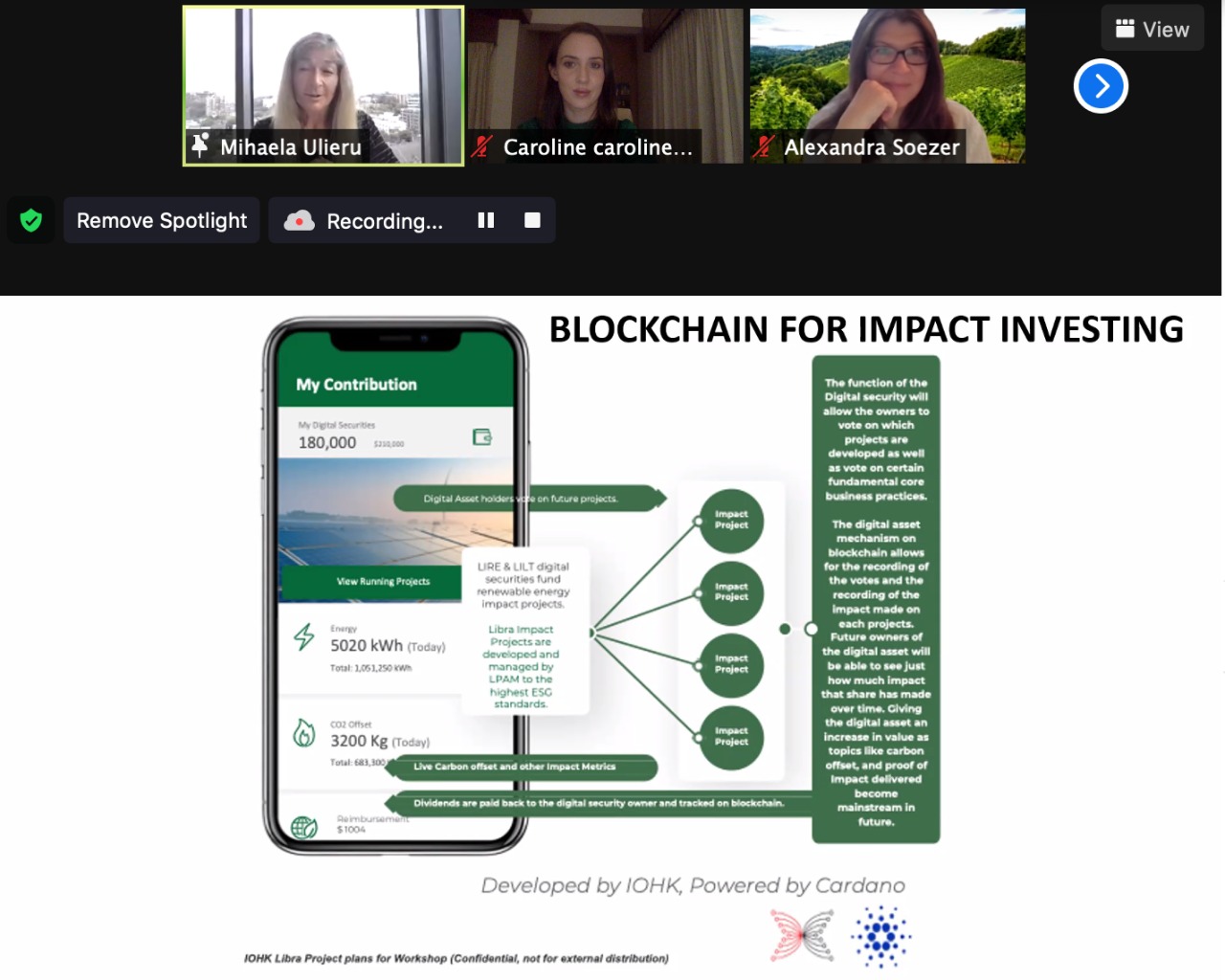
Moderated by UNDP’s Caroline Tresise and Alexandra Soezer, our side event on Accelerating Energy Access Through Energy Innovation featured speakers from Power Blox, the Reiner Lemoine Institute, InputOuput and the Government of Vanuatu to demonstrate some of the latest innovations in energy access and new models that are ready to be scaled.
The solutions showcased include (i) Pattern recognition processes and an artificial intelligence-based algorithm; (ii) Innovation in network design through algorithms; (iii) Modular technologies and; (iv) Blockchains for identity management, as well as a practical example of this technology applied in Vanuatu. Recording available here.
4) Tomorrow: Day 3 on Energy Transition
Tomorrow will be another big day, and we expect major Energy Compact announcements. UNDP Administrator Achim Steiner will be moderating the Ministerial Session at 9am EST, before attending the UN Secretary-General Spokesperson noon media briefing to give a mid-week update on the Forums.
Deputy Director of BPPS Adriana Dinu will launch the Working Group Theme report on Energy Access on behalf of UNDP, along with other group co-leads the World Bank and UN-OHRLLS, at 12:45pm. Tune in at the start of the webinar here.
We will also be co-hosting a Climate Investment Platform side-event on Financing Energy Projects in Small Island Developing States at 6am EST. Register here.
Find the full programme here, and tune in (with a coffee!) from 6am EST here.
Full summary of the day available here.
Follow live updates on UNDP Climate’s Twitter account throughout the week, and join the conversation with the hashtag #HLDE2021.
Please log in or sign up to comment.