


Thank you for joining the Voices from the Sahel conversations. Please note that the discussion room will be open from September 30th to October 25th. In the meantime, please read the short introduction on the background and purpose of this conversation and familiarize yourself with the platform.
Guiding Questions
Week 1 | 30 September - 04 October 2024
Moderators
Dimitri Sanga, Director of UNESCO Multisectoral Regional Office for West Africa
Ngone Diop, Director of ECA Sub-Regional Office for West Africa (SRO-WA)
Week 2 | 07 -11 October 2024
Moderators
Maxime Houinato, Regional Director of West & Central Africa at UN Women
Barrie Freeman, Deputy Special Representative of the United Nations Secretary-General for West Africa and the Sahel
Week 3 | 14 - 18 October 2024
Moderators
Njoya Tikum, Resident Representative for UNDP Senegal & Director of UNDP Sub-Regional Office for West & Central Africa
Matteo Marchisio, Head of the Regional Hub for the Sahel and Country Director for Senegal of IFAD
Week 4 | 21 - 25 October 2024
Moderators
Sennen Hounton, Director of the UNFPA Regional Office for West and Central Africa (WCARO)
M. Gilles Fagninou, Regional Director of UNICEF in West and Central Africa
Abdouraouf Gnon-Konde, Director of the Regional Bureau of UNHCR for West and Central Africa
Comments (170)
Dear Sahel Youth , Dear UN colleagues , Dear Participants from all horizons !
Greetings from Dakar! I hope this message finds you well.
As of Friday, October 25th, the Second Edition of Voices from the Sahel has officially come to a close. Over the past four weeks, you have helped us create something truly meaningful—a space that has been filled with rich experiences, thoughtful insights, and honest reflections on your ideal vision and future of the Sahel as well as the sustainable solutions to the current development challenges.
Since our launch on September 30th, 169 comments from 191 members in 32 countries have come together on this platform to share, discuss, and imagine what the future of the Sahel can be or look like.
Your voices have been heard. You’ve shared stories, challenges, and perspectives that go beyond statistics and headlines. Some of you highlighted the real, day-to-day struggles facing young women and youth at large in this region, while others shared personal successes, community-driven solutions, and ideas for change. Each contribution has deepened our collective understanding of both the needs, opportunities, and possibilities within the Sahel.
I would like to extend my heartfelt gratitude to the esteemed leaders who guided and moderated our discussions:
Their leadership and dedication have been instrumental in making this consultation a success.
I am also immensely grateful to the colleagues behind the scenes in the nine UN Agencies, Funds and Programmes as well as in the Office of the Special Coordinator for Development in the Sahel (OSCDS), who worked tirelessly to keep this initiative running smoothly. Their commitment and hard work have been invaluable, and this consultation would not have been possible without them.
But most importantly, my thanks go to you all , the participants. You are not just contributors; you are changemakers. You are a testament to the resilience and potential of the Sahel. Your words, appeals, and energy have reminded us all of the strength and vision that can transform this region.
So, what’s next?
Thank you, once again, for your invaluable contributions. Please stay tuned for further updates, as this is just the beginning. I’m grateful and honored to have walked this journey with each of you.
In the meantime, if you have any questions, please do not hesitate to contact Ashu Hailshamy ([email protected]); Jiyeon Park ([email protected]) ; Aicha ([email protected]) ; and Madina ([email protected])
Warm regards,
Mar
Thanks for sharing this opportunity to us all. I'm pleased to be a unique platform like one. Hope to get an insightful moments as young leaders.
You are most welcome Idrissa. Looking forward to an excellent conversation once it's launched.
I am delighted to join the second edition of Voices from the Sahel: Conversations, Visions & Solutions. I would like to extend my sincere thanks to USG Mar Dieye for designating me as a shadow moderator for the first week of our consultation, which will take place from September 30 to October 4, 2024, focusing on the exciting theme of digital technology.
I look forward to vibrant discussions and engaging with all of you as we explore innovative solutions for the Sahel.
Let's make this a productive and inspiring exchange
Always a pleasure having you dear Tahirou.
Looking forward to an excellent conversation.
The healthcare systems in many sahelian nations face significant challenges in
equitably serving their populations. Factors such as limited resources, vast
geographical distances between communities, and economic barriers restrict
access to essential medical services. These issues are exacerbated in rural and
remote areas. However, strategic implementation of artificial intelligence (AI)
technologies holds immense potential to help overcome such hurdles by
enhancing diagnostics capabilities, broadening access to care, and improving
medication affordability across Africa.
Dear Ousmane, I couldn't agree more with you. Technology and AI in particular can and will indeed be a shifter in extending quality healthcare access to millions of Africans.
Would you have any good example you have read that inspire you on how Africa can engaged in this field?
Hello, thank you for this wonderful opportunity, really missed the interaction with brilliant people. Hope that i will be useful, and surely this opportunity will help me enhance my knowledge and expand my network.
Hello Teslem, Good to have you here in this conversation; Looking forward to an excellent four weeks.
I am very honored and delighted to join the second edition of Voices from the Sahel: Conversations, Visions & Solutions. I would like to transmit my sincere acknowledgement to Mr Mar Dieye and the UN for inviting me for these four weeks consultation, which will take place from the 30th September to 18th October, 2024, focusing on innovative solutions for substainable development.
I look forward to bring in my students in other to make more vibrant the discussions and engaging with all of you as we explore innovative solutions for the Sahel.
Let us make this consultation a productive and inspiring exchange innovative for the future generation of Sahel.
Hi everyone, as always we are delighted to be here to make our voice heard and contribute meaningfully over the discussion groups and thematic for this particular consultation.
Wishing you all a wonderful deliberation towards a more inclusive and just Sahel
Dr. Samuel Adunreke
Innovea Development Foundation
Dear Samuel,
Thank you for your attention to the Voices from the Sahel consultation. The discussion is still ongoing, with a focus on Entrepreneurship this week. We would be delighted to hear your insights and experiences as an Executive Director!
Best,
Jenn
Bonjour du Niger,
Mes salutations distinguées à tous.es,
C'est un réel plaisir et un honneur d'être parmi les participants à ce grand rendez-vous de donner et de recevoir pour le redressement des conditions de vie des populations du Sahel.
Je suis convaincu qu'avec des initiatives pareilles, nous y arriverons sûrement.
Cordialement,
Abary.
Hi everyone 👋🏽..I am Kindness Z. Kwanwah from Liberia, and it’s an honor to join astute leaders as we discuss on the thematic areas for this consultation.
Thanks so kindly for the opportunity, I look forward to an exquisite time of gaining and sharing knowledge.
Hello Kindness,
We can't wait to hear your views on the many topics.
Dear Youth and Women of the Sahel, Colleagues, and Partners,
Let me start by welcoming you to the second edition of our regional Consultation; the Voices from the Sahel, a platform where youths and women of the Sahel and beyond, and the United Nations, engage directly on key topics that accelerate durable progress of the region.
Our region – the Sahel, beyond the challenges we see and hear, is not without its unmeasurable potential. Of, course, the opportunities for development, peace, stability and progress in this region supersede the current challenges confronting it. As I recalled to you in my opening message in 2021, at our first consultation, most of the challenges the Sahel is facing are more, man-made than natural, which makes the challenges solvable than perennial.
The United Nations Integrated Strategy for the Sahel and the United Nations Support Plan fully recognize women and youth of the Sahel as key players in our implementation process. This means, our reflections on how to accompany the States and people must always ensure your inclusion and active participation, so that collectively, we can engage in frank, durable and transformative solutions to achieve stable development, peace and prosperity.
Beyond every international or regional support actions, the Sahel’s most precious resource to accompany its sustainable development efforts is its Youth, and should be provided all the necessary support to reach their full potential. It is only when that happens, that the region can truly benefit from the dividends of its youthfulness.
Efforts such as the present consultation,#YouthconneckSahel, demonstrate our readiness and availability of not leaving the Sahel behind which goes to the heart of changing the negative narrative and demonstrate that the Sahel has be necessary asset for growth and peace. These are demonstrations that as a global public good, we are all Sahel – and hence the #IAMSahelcampaign recently launched by UNDP. A change in the narrative is a call for us all to reflect on positive solutions for a #ThrivingSahel. I am also happy to share with you the Editorial by Ibrahim Thiaw and myself, on the Change of Narrative on the Sahel. (Please find attached).
Like the first one, this conversation is about solutions and forward-thinking. It is for us to once again explore these four (4) carefully thought-out themes and provide concrete suggestions and recommendations which together, with the United Nations, and other stakeholders including friends of the Sahel with you the young people and young women at the centre, we can accelerate our support actions and accelerate development actions.
On this note, it is my great pleasure to officially launch the second edition of our Sahel consultation – The Voices from the Sahel: Conversations, Visions, and Solutions and invite you engage actively the moderators of each week and fellow participants, by reflecting on the guiding questions that will be shared with you each week along the 04 thematic areas.
Together with our esteemed moderators - Regional Directors of 09 UN agencies, funds and programmes, feel free to share your thoughts in any language of your choice—French or English. This platform will automatically translate your responses, and you can adjust the language settings by using the options at the top right corner of the page.
I will actively participate in these discussions by responding to your views, comments, and perspectives, as well as addressing any specific questions you may have.
PS: Also take some time to read the report of the first edition (here)
I look forward to your valuable insights.
Thank you.
Mar
Thank you so much, I am happy to be part again of this meaningful discusion. Thank you Mr MAR GUEYE and UNISS for giving the opportunities to sahelian youth to share their thought and showcase their initiative for the development of the Sahel.
I am Moussa Diouf, from Senegal, young climate-smart-agriculture expert, working with smallholders farmers in the sahel, by empowering them to restor their land and produce more food
Merci beaucoup Moussa Diouf pour l'information sur l'important travail que vous faites en tant qu'expert dans le secteur agricole sensible au climat (climate smart agriculture). Pourriez-vous partager des informations sur comment vous avez utilise la technologie pour maximiser les opportunites d'un tel secteur. Quelles sont vos perspectives? D'apres vous quelles mesures idoines vous permettraient de saisir au mieux les opportunites dont regorge ce secteur, profit des communites.
Merci bien
I am highly delighted to be part of this session. I look forward to a collaborative session.
Dear Participants, please reflect on and respond to the Week 1 guiding question from here.
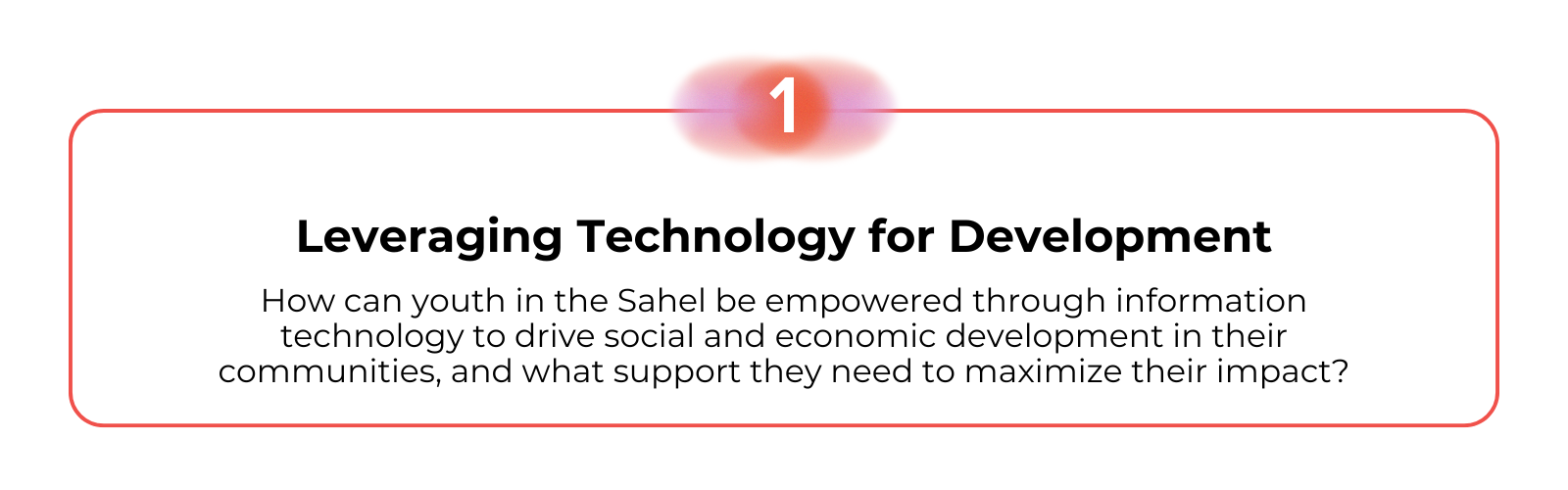
*Leveraging Technology for Development*
How can youth in the Sahel be empowered through information technology to drive social and economic development in their communities? What support do they need to maximize their impact?
Dear all,
On behalf of UNESCO, I am delighted to welcome you all, to this online platform, that I will be moderating, most of all i am looking forward to hearing from you, and engaging with you in a constructive manner, and having fruitful exchanges.
As you are aware the world is undergoing huge transformations, coupled by several challenges that somehow define the future that young generations will inherit. On the other hand we experience major technological breakthroughs.
I believe that young people have a lot to offer, in this case young people from the Sahel, one of the world’s most youthful regions, with 65 per cent of the population below 25 years of age. These millions of young people can bring about change if given the right tools and resources. Providing them with the right digital skills to take advantage of new opportunities. We therefore need to harness the power of youth, and also try to turn the constraints into opportunities.
The African Union Commission (AUC) recognizes the centrality of youth to achieving the aspirations of Agenda 2063. It is for this reason that aspiration 6 of Agenda 2063 affirms that the Africa We Want is "An Africa, whose development is people-driven, relying on the potential of African people, especially its women and youth, and caring for children''.
As UNESCO, in efforts to ensure meaningful youth engagement we are convinced that engaging young people, a priority group for us, in decisions that affect them is not just a matter of right, it is a matter of principle. As innovators and knowledge creators, they have proven time and again how crucial they are to social change. In view of the difficult challenges our societies and humanity face, this is now needed more than ever as we navigate the complex development challenges in the Sahel region which are numerous, and often overshadow the region’s enormous potential.
I count on your full participation as solution providers, it is your creativity and innovation which will unlock this potential, not only because you are the majority in the Sahel, but because you can, because you are agents of change, and it is without a doubt that us as the UN we need your voices.
Thank you
Thank you for this important discussion that is centered around two key vectors of Africa's transformation - youth and technology.
Allow me to seize the moment to highlight the African Union's recent adoption of the first Continental Strategy on Artificial Intelligence, whose implementation should be driven by and especially targeted at Africa's youth, particularly its pillar on building capacities (including skills, research and innovation support), in line with the objectives of the newly-adopted UN Global Digital Compact.
It is safe to assume that Africa's youth, who hold the key to the continent's future, also constitute its most technologically-adept demographic dividend. This is why the UN family must unite to accompany the AUC as it kickstarts this implementation, and especially ensure that youth are placed at the centre thereof.
Sahelian youth could be the driving force for the development of new technologies in promotion of peace in the region.
Thank you very much Dimitri for the powerful message. Truly, I am enthusiastic about this particular session and very open to learning from your vast experience. The transformations going on in different parts of the world all point to one direction - Education; Digital technology and Innovation as key drivers. The Sahel region must be a part of this evolutions and young people and women as you rightly put it, are the solution drivers.
Julia Negumbo Effectivement la jeunesse au Sahel peut être la force motrice pour la paix grâce aux opportunités des technologies.
Selon toi comment cette jeunesse peut-elle grâce aux technologies de l'information apporter le devéloppement sociale et économique dont la région a tant besoin ? As-tu deux ou trois idées ou actions que l'on devrait prioriser ?
Bonne journée à toi
Dear Youth and Women of the Sahel, Colleagues, Partners and Friends,
A warm welcome to the Second Edition of of the Voices from the Sahel SparBlue Consultations.
I am delighted to be your moderator this week alongside my colleague Bowe Malebogo for the thematic " Leveraging technology for development".
The Sahel region and Africa in general are experiencing a steady digital transformation and youth are at the forefront of this transformational change. Million of youth and women are using technology , digital as a cost effective strategy to contribute to the region's wealth creation, but much more need to be done.
We are eager to her your insights, thoughts and responses to the following questions:
(1) How can youth in the Sahel be empowered through information technology to drive social and economic development in their communities and what they need to maximize their impact?
Please, feel free to respond in any language of your choice by clicking the language a button on top right of the page, this platform will automatically translate it.
We hope to have a rich and interactive discussion.
Thank you and looking forward to our fruitful discussion this week!
Thank you very much Ngone for your warm message. Looking forward to learning a great deal from your session.
WHO is committed to strengthening engagement with the youth and women in the Sahel region, recognizing their pivotal role in driving sustainable health solutions. By empowering young people and women with health education, access to essential services, and leadership opportunities, WHO aims to build resilient health systems that are responsive to the needs of these key populations. Together, we can create healthier communities, foster equity, and ensure that the voices of youth and women are central in shaping the future of health in the Sahel.
I am delighted to join the conversation on Leveraging Technology for Development. A critical factor in this conversation is the issue that has to do with the high rate of digital gender divide which exists in the Sahel, and which is characterised by limited access and use of technology by women. Increasing women’s access to, and their use of technology will improve women’s digital connectivity and provide social and economic benefits that will have a major impact on development.
Excellent. I could not agree with you more, Dear Tokunbo.
In today's world and the Sahel region in particular, we cannot have a discussion about development without bringing into the equation digital technology and the role women can play in it. But the question still remains; what are some of those practical solutions to narrow and even eliminate the gender divide in that area such that, the Sahel can start benefitting from the value proposition which women rightly incarnate in the development space.
Ashu Hailshamy you make a valid point about the untapped potential of Women due to lack of access to digital technology. Increasing Women’s access to technology through the use of mobile devices will improve women’s digital connectivity and provide social and economic benefits.
It is reported that 80% of Women in Africa live in rural areas and depend on agriculture for their livelihood. Women and girls do not have access to consistent electricity and Internet at home or on the farms, so many do not interact with a computer or laptop.
I fully support your assertion, ma'am. Research highlights the detrimental effects of geographic dispersion and remoteness on women and youth's access to technology, underscoring the need for targeted infrastructure development.
This is very true, in some communities the teachers have to draw the computer on a board to teach the students instead of computer.
According to the United States Agency for International Development (USAID), sixty-four percent of women in sub-Saharan Africa do not own a mobile phone, which is approximately 304 million women. Mobile phones are an easy way to connect to the Internet and can bridge the gender digital divide.
Merci tokunbo chiedu pour le partage de ces chiffres sur l'accessibilité à la technologie par les femmes au Sahel en particulier les jeunes filles, en vue de leur permettre une meilleure participation au développement social de leurs communautés.
Que faudrait-il faire selon toi pour que plus de jeunes filles aient accès aux technologies et puissent les utiliser pour créer de l'emploi par exemple ou pour se former dans divers domaines ?
Warm greetings again dear Partners and Friends,
We are looking forward to your active participation in this conversation. This platform is yours, please use it to share your insights.
Many of you are making impressive strides using technology.
I can name the many women and young entrepreneurs of the ECA’s West African Business Linkages Platform who are contributing to agricultural values chains, energy transition, climate action, etc. They are also harnessing opportunities and innovation in the circular economy, transforming tons of waste into sustainable wealth, creating decent jobs for thousands of young peoples, and contributing to the well-beings of their respective communities.
And there are magnificent opportunities out there. As underscored by the United Nations Secretary General, Mr. Antonio Guterres, the Pact of the Future adopted last week by the World Leaders, at the Summit of the Future, with the Digital Compact and the Declaration for Future Generations "open the door to new opportunities and untapped possibilities".
We look forward to your insights. Many tahnks again.
Since boys usually have the opportunity to access education over or before girls, this furthers stalls women’s and girls’ ability to use technology.
To close the gender digital divide in sub-Saharan Africa, governments, development partners, and the private sector must collaborate to remove or minimize the following obstacles – affordability, social barriers, and digital literacy.
Limiting these obstacles will help close the gender digital divide and increase the number of women who can access technology through mobile phones.
Dear Madam Ngone, thank you for the opportunity to contribute to this important discussion on leveraging technology for development in the Sahel.
I believe that education and skills development are key to empowering youth in the Sahel.
Government policies should be designed to encourage youth entrepreneurship and innovation in the digital sector.
mentorship could be one of the solutions. as well as technological exchanges with youth from other parts of Africa, and the rest of the world?
I agree
I agree with the above analysis. It is estimated that about half of the 340 million Sahel's population do not have access to electricity with far-reaching negative externalities on all groups of populations especially women and girls, rural populations and across sectors.
However, dear Partners and Friends, there are opportunities in any challenges, the Sahel's abundant sun and wind are among the region's immense energy opportunities which could be harnessed by leveraging technology and digitalization. Please share your thoughts, experiences and also what need to be done to scale up and transform successful initiatives, in an inclusive, and sustainable way.
The proposed event/Hackathon could bring together Sahel youth with a good knowledge (and those interested) from all walks of life, leaving no one behind, to exchange with other fellow youth from Africa and the rest of the world, for capacity building and to exchange on recent software development technologies, Artificial intelligence/ Machine Learning/ Data Sciences etc. Mentors from the Africa region, diaspora and beyond, in the form of Innovators, Educators, teachers, research community, private sector, development partners would be on board, to tackle or find solutions on common challenges faced by Sahel countries. It could be an annual on every 2 years platform allowing young innovators and their mentors to come together and find solutions for social, environmental and technical problems faced by their communities e.g. around certain themes, Education, renewable energy, Drinking Water and Sanitation, Agriculture , Health and Hygiene, put in groups , with seed funding provided for their projects addressing real life issues taking into account some cultural practices as solutions where applicable, and tapping into technology, what do you think ?would it work ? do we have some existing models like this in the Sahel we can tap into? Please share ideas....
Hello everyone, it's a great honour for me to be part of this important platform. I am already enjoying the conversation.
Bonjour à tous
Ravi d’être parmi vous dans cette importante plate-forme de partage. J’ai raté la rencontre d’aujourd’hui, je serais avec pour les prochaines échéances. Merci
Mahamat Dabary du Tchad
Coordonnateur de l’ONG APDE
Bonjour Mahamat,
Nous sommes ravis que ayez joint cette plateforme. N'hesitez pas a partager vos idees sur la thematique.
Bonjour Mahamat
Ravi de ta participation aux échanges. Rassures-toi tu n'as rien raté du tout! Tu peux prendre le train en marche et nous dire par exemple comment au niveau de l'ONG APDE ou au Tchad les TIC accompagnent-ils le développement social ou économique des communautés en particulier des jeunes.
Au plaisir de te lire!
Dear Esteemed Participants,
Many thanks for proactive participation in yesterday's fruitful discussion.
Let us continue the thought provoking conversation on the theme "Leveraging Technology for Development".
Key question: How can youth in the Sahel be empowered through information and technology to drive social and economic development in their communities, and what support they need to maximize their impact?
Technology is indeed a key driver of transformational change in many if not all sectors.
Take education, for example. Leveraging technology could help provide access to education to million of children in the Sahel who are out of school.
Data from various organizations i.e., UNICEF, OSCSD, ECA, UNESCO, suggests that, due to conflict, poverty and limited infrastructure, about one-third of children in the Sahel region are out of school. The situation is worse in some countries where the proportion reaches 50% of more.
This is a big concern and calls for impactful solutions. Leveraging technology could be a game changer as suggested by e-learning platforms.
For example , UNESCO found that during COVID19 pandemic, e-learning platform helped 1,6 billion students globally to continue their learning. There are many other proof of concept including from your own experiences. Please share them and let us reflect on what it takes to scale up and transform them? How can youth be empowered through information to lead, and/or scale transformative initiatives for their communities.
Indeed, youth's voices and agencies are essential to achieve transformational change in the Sahel.
We look forward to your insights. Please feel free to contribute in French and/or in English as you wish.
Many thanks
Ngone Diop
Hello chers tous
je suis très honoré et ravi de participer à la deuxième édition de Voix du Sahel : Conversations, Visions & Solutions. Je tiens à exprimer ma sincère reconnaissance et mes encouragement à M. Mar Dieye et à l’UNISS_ONU pour nous créer ce cadre d'échange et de consultation, qui se dérouleront du 30 septembre au 18 octobre 2024 et porteront sur des solutions innovantes pour un développement durable.
dans le même sens; permettez de me presenter: je m'appelle ADAM MBODOU ABAKAR est un jeune leader tchadien dynamique et polyvalent, alliant engagement citoyen et esprit entrepreneurial mais surtout passionné de numérique, j'ai rapidement acquis diverses compétences dans la Géomatique-SIG, et photogrammétrie ainsi que le drone. En tant que président fondateur de l'Association Tchadienne pour l'Orientation et la Citoyenneté Active (ASTOC), actuellement Responsable de Formation, -Éducation et Emploi au sein du Conseil National de la Jeunesse du Tchad (CNJT), je joue un rôle central dans l'encouragement des jeunes à s'impliquer activement dans la vie publique mais surtout de représenter les intérêts des jeunes à un niveau stratégique.
En plus de tes engagements associatifs, je suis également entrepreneur et promoteur de la startup CartoTchad, un projet innovant qui reflète mon intérêt pour la technologie et le développement durable. Grâce à mes sens d’écouté et mon esprit d’apporter mes modestes contributions aux réussites des diverses actions et initiée en faveur des jeunes, j’ai eu la chance de collaboration avec des organisations internationales telles que le PNUD Tchad, Coordination de Nations Unies Tchad à travers le Secrétariat PBF de Consolidation de la Paix l'UNICEF et l'UNFPA, j’ai acquis une solide expérience à travers mes diverses participation et implication, renforçant ainsi mon expertise dans le développement de projets impactant au service de la communauté tchadienne.
Merci
ADAM MBODOU ABAKAR
Dear Adam,
Thank you for your participation in the consultation. Your profile is highly relevant to this week’s topic on Entrepreneurship in the Sahel. We would be grateful if you could kindly share your experiences and insights, the challenges you’ve faced and any expectations you may have from the UN or your government in addressing those challenges.
Looking forward to hearing from you!
Best,
Jenn
hello everyone,
Another day, more ideas., more ideas and more ideas!...please drop them in the comments section - share your experiences, as an individual or what your youth organisation is doing in this regard or initiatives in your community.
Key question: How can youth in the Sahel be empowered through information and technology to drive social and economic development in their communities, and what support they need to maximize their impact?
We agree that education has a critical role to play in determining the future direction that the digital transformation may take us,.... will be gender-balanced or not. UNESCO recently launched a report, entitled Technology on her terms, the report is divided into two parts.
The first part reviews progress on gender parity in education for most SDG 4 targets, documenting the continuing growth in girl's and young women’s participation in education at different levels, which has helped reverse decades of discrimination.
The second part, assesses gender gaps that have emerged in many countries in terms of access to technology and education and social outcomes, ranging from digital skills to exposure to various risks. This part also discusses how gender disparities, start early, with math anxiety among girls and lack of self-efficacy feeding into later subject choices and careers.
https://unesdoc.unesco.org/ark:/48223/pf0000389406/PDF/389406eng.pdf.mu…
Hope you find it useful, as a good reference for some Sahel countries.
Selon mes expériences dans le cadre des activités associatives et entrepreneuriales ; je me permet de dire que l’autonomisation des jeunes du Sahel par l’information et la technologie est un levier crucial pour stimuler le développement social et économique dans cette région. Voici quelques suggestion :
Soutien institutionnel et politique passe la Politiques gouvernementales favorables : Les gouvernements doivent adopter des politiques de soutien aux jeunes entrepreneurs et aux initiatives technologiques en allégeant la fiscalité, en facilitant les démarches administratives, et en favorisant l’inclusion numérique. Et d’autre part par l’Accès à des plateformes d’innovation ouvertes : Créer des plateformes publiques et privées qui mettent en relation les jeunes entrepreneurs avec des mentors, des partenaires financiers, et des opportunités de marché.
Brefs, les jeunes du Sahel peuvent être autonomisés par l’information et la technologie à travers une combinaison d’éducation numérique, de création d’opportunités entrepreneuriales, de soutien institutionnel, et de renforcement des réseaux régionaux.
ADAM MBODOU ABAKAR thank you very much for the elaborate ideas shared today. looking forward to hearing from the rest of the youth. rest assured that you comments will be taken into consideration
Question: How can youth in the Sahel be empowered through information and technology to drive social and economic development in their communities, and what support they need to maximize their impact?
Proposal: Empowering through information and technology should include enhancing digital literacy to enable young Sahelians to acquire new skills and knowledge, such as coding, digital marketing and innovative solutions to enhance food systems, access to sanitation and hygiene. We should create a Sahelian or African-made online social platforms for the youth to share ideas, solutions, co-create projects about sustainable devopment, governance, health, access to basic services, climate change and social change to promote collective problem-solving among youth and within communities. We can discuss more about the needed resources to materialize the above, beyond/before financial support.
Creating Sahel social platform we be a great thing that could better happen for young african. But the issue is think on how can we make this platform accessible to them ?! From my experience many young African are illiterate when it concerns technology or Artificial Intelligence and they don’t have access to informations. This is equally because many leaders don’t share the different opportunities with youth inother to continue dominating the youth.
Bigambia Bitimi we could have the platform enabling the use of various languages like this one, real time, and perhaps some trainings or capacity building sessions is local languages, and some contents accessible offline. please share already ongoing initiatives in local languages, anyone?
Good afternoon, Esteemed Participants,
Many thanks for the insightful conversation. Please keep it up.
Myrline Sanogo-Mathieu,
I agree with your sound suggestions. Digital literacy is indeed one of the pre-requisites for the youth to harness fully technology to drive change in their countries and communities. The good news is that many UN organizations are supporting youth to acquire the skills needed. For instance, in partnership with ITU, UNWOMEN, and other partners, ECA has implemented a continental coding camp initiative targeting girls i.e. Africa Girls Coding Camps. So far 40.000 girls from across African including the Sahel region have been trained in technology, and innovation paving the way for their contribution to impactful energy and food security for their communities. Some of the girls/young women are pursuing their education in Universities. These are few success stories among many others. The key messages here are twofold:
(1) identifying and addressing roadblocks that prevent the youth from leveraging technology is critical to support their efforts.
(2) Strategic partnerships among the youth are instrumental knowledge/skills sharing, cross fertilization mutual learning.
Thanks again Myrline Sanogo. Looking forward to more insights.
Bigambia Bitimi,
I agree with you, this is a call for us to engage the youth at every gathering or around us. We are not drawing them closer enough eventhough their understanding of getting things done faster than going through a process, we have to catch them now before they slip through our hands. Some of them have the privilege of having access to technology at a very tender age, others do not even as teenagers. There is still that gap need intervention. In some communities they first time they see a computer is at the examination. Yes illiteratracy at that level among the youth is a gap to fill.
Ngone Diop,
Thanks for sharing about the opportunity about the partners who are finding solutions to the problems. How can one get access to these partners to support others who need help in building their skills.
Thank you
Myrline Sango-Mathiel,
The platform for the youth is a great idea, this will give an exposure to many who are lacking behind. They will make a good use of their phones than just watching films.
Thank you
Dimitri Sanga for now I dont really have an idea of an online local language training program initiative in Cameroon but most of them are in person training or teaching in most nursery and primary schools.
i guess this may be possible in other sahalian countri
Dear Myrline,
Excellent reflection. Technology is certainly a game changer for Africa. However, while we strive to establish an Afro-centric online platform, as you have rightfully suggested, I would like to hear your views on how we can make the existing platforms more useful to Africans. What do you think we are missing? How do we ensure that these platforms do not also become vehicles of destabilisation ?
By the way, we are linking up with Concordia University and Give 1 and others to expand cyber security training to close to 25000 young people across Sahel and broader West and central Africa. Should you be interested, please look out for the next call for application on UNDP platforms.
Hello to everyone !
By leveraging technology, Sahel can build an inclusive, dynamic, and forward-thinking education system and in other sectors like agriculture, livestock, finances, etc. Technology holds tremendous potential to transform education in Sahel by expanding access, improving quality, and fostering innovation. I can take an example of training programs where many young people can have access to training of any kind from developed countries universities without traveling to participate in person!. Today, we have implemented such an initiative in a humanitarian training center where we observe an increase in the number of registered students from all the regions of Cameroon.
But leveraging technology equally have many negatives factors that increase the risks of a good performance.
we can take factors like : poor network, lack of technological equipment, lack of competency, limited incentive to invest in the domaine, etc.
@ADAM MBODOU ABAKAR C’est très pertinent tes points de vue !.
J’aimerais également souligner que aujourd’hui nos États ne peuvent pas jouer ce rôle. Je vais prendre le simple exemple où nos banques ne permettent pas des emprunts bancaires aux jeunes entrepreneurs du secteur des technologies ceci par manque de garantie.
Il y’a également le problème de fuites des talents du Sahel vers l’Occident et bien même que ces talents acquièrent des compétences en matière de technologies refusent un retour dans leurs pays d’Origine pour transmettre les connaissances à jeunesse du Sahel.
Je pense cependant que revoir les politiques ou les méchanismes d’emprunts bancaires pour les jeunes investisseurs dans le secteur de technologies doit être revu.
Ensuite nous devons sensibiliser les jeunes entrepreneurs de tech à ne plus aller vers l’Occident et même lorsqu’il y vont, ils doivent revenir former les jeunes entrepreneurs du Sahel.
its definitely important to have the Diaspora on board. Lets explore the various ways they can contribute including online trainings
Dimitri Sanga yeah we must have them amongst us
To Answer the first question for Week 1: *Leveraging Technology for Development* How can youth in the Sahel be empowered through information technology to drive social and economic development in their communities? What support do they need to maximize their impact?
I feel that the Sahel area, even with our particular problems, provides a fascinating and exciting opportunity for young people interested in technology innovation. We can enable adolescents to be change agents by teaching them about digital literacy skills, giving access to inexpensive technology, and cultivating an entrepreneur-friendly atmosphere. Through programs like as STEM education, research funding, and favorable legislation, we can provide the circumstances for young people to use technology to address local concerns, establish sustainable livelihoods, and promote social and economic growth in the region.
Bonjour chers tous, c'est un honneur d'être parmi vous et de partager mes réflexions et observations sur ce sujet crucial qui façonne notre avenir.
En effet, l'engagement des jeunes et des femmes dans le Sahel est essentiel pour construire un avenir durable et prospère dans cette région. En effet, l'éducation joue un rôle fondamental dans cette dynamique. Offrir aux jeunes, et particulièrement aux filles, un accès à une éducation de qualité n'est pas seulement une nécessité; c'est une obligation morale. Une éducation adéquate permet non seulement de réduire les inégalités de genre, mais elle favorise également le développement économique en formant des individus capables de contribuer activement à leur communauté.
Les femmes, en tant que piliers de leurs familles et de leurs communautés, ont un potentiel immense. Lorsqu'elles sont soutenues et encouragées à participer pleinement aux processus décisionnels, elles apportent des perspectives uniques qui peuvent transformer les défis en opportunités. Des initiatives locales qui favorisent leur autonomisation se traduisent souvent par des retombées positives pour l'ensemble de la communauté. En investissant dans des programmes qui encouragent les femmes à entreprendre et à s'impliquer dans des projets communautaires, on crée un cercle vertueux de développement.
Par ailleurs, la technologie représente un levier puissant pour l'engagement des jeunes. En leur fournissant un accès aux outils numériques et en les formant aux compétences technologiques, nous leur donnons la possibilité d'explorer de nouvelles avenues professionnelles. Les jeunes sont souvent les moteurs de l'innovation; ils peuvent utiliser ces compétences pour développer des solutions adaptées aux besoins locaux tout en renforçant leur résilience face aux défis économiques.
Enfin, il est crucial d'encourager la participation politique des jeunes et des femmes. Leur voix doit être entendue dans les discussions qui façonnent leur avenir. En intégrant ces groupes dans le processus décisionnel à tous les niveaux, nous pouvons garantir que les politiques mises en place répondent réellement aux besoins et aux aspirations des communautés du Sahel.
Merci Avom Kevin pour ta contribution sur l'importance de l'engagement des jeunes et des femmes dans le Sahel.
Tu soulignes à juste titre le rôle des technologies comme levier d'autonomisation.Pour aller plus loin, pourrais-tu approfondir la question suivante : Comment les jeunes du Sahel peuvent-ils être autonomisés grâce aux technologies de l'information pour stimuler le développement social et économique dans leurs communautés ? Quels types de soutien, tant au niveau des infrastructures que des formations, seraient nécessaires pour maximiser leur impact ?
Au plaisir de te lire!
Merci pour votre réaction Mr Somda Théodore
Pour répondre à la question, je voudrais d'abord bien rappeler à quel point l'autonomisation des jeunes dans le Sahel est essentielle pour stimuler le développement social et économique de leurs communautés et donc, tout d'abord l'accès à Internet et aux infrastructures numériques est une condition préalable. Il est donc crucial de développer des réseaux de télécommunications, en particulier dans les zones rurales, et d'établir des centres communautaires équipés d'outils informatiques. Ces espaces pouvant devenir plus tard des hubs d'apprentissage et d'innovation pour les jeunes.
Aussi, la formation en compétences numériques est également primordiale. J'aborde ici l'idée de proposer des cours sur l'utilisation des outils numériques, la programmation et le marketing digital car cela permettra aux jeunes de se familiariser avec les technologies modernes. Et en parallèle, il est essentiel d'encourager l'entrepreneuriat numérique en offrant un accès au financement, que ce soit par des microcrédits ou des subventions, afin que les jeunes puissent créer leurs propres entreprises en ligne.
Le soutien et la création de réseaux sont des éléments clés pour aider ces jeunes entrepreneurs, avec des programmes d'accompagnement où des professionnels expérimentés guident les jeunes dans leurs projets. Cela peut renforcer leur confiance et leurs compétences. De plus, établir des réseaux d'entraide favorise le partage d'idées et de ressources entre pairs.
Enfin, j'irai plus loin en disant, qu'il serait également vital que les voix des jeunes soient entendues dans les discussions politiques concernant le développement technologique dans la région. Leur participation active peut garantir que les politiques mises en place répondent réellement aux besoins de la jeunesse et contribuent à un avenir prospère pour le Sahel.
Avom Kevin L'accès à la technologie et notamment en zone rural, le mentorat des jeunes et la mise en réseau, comme l'ont évoqué d'autres participants, comme toi, et la participation des jeunes aux décisions politiques qui soient bénéfiques à l'autonomisation des jeunes du Sahel grâce aux technologies de l'information, les soutiens à la création de startups de jeunes sont effectivement importants pour les jeunes, qui représentent environ 65% de la population au Sahel.
Quel pourrait être l'apport des différents acteurs en ce sens : Organisations de la société civile, Gouvernements, Organisations régionales,Instituts de recherches et universités, secteur privés, Organisations internationales ?
Au plaisir de te lire!
Mr Somda Théodore l'autonomisation des jeunes du Sahel grâce aux technologies de l'information et à la création de startups est un enjeu crucial pour le développement de la région. Voici comment différents acteurs peuvent donc contribuer à cet objectif :
1. Organisations de la société civile
Avec :
- la création de réseaux locaux, elles peuvent établir des réseaux de jeunes entrepreneurs pour favoriser l'échange d'idées et de ressources. Cela crée un environnement collaboratif où les jeunes peuvent se soutenir mutuellement.
- Des programmes de mentorat, qui associent des jeunes avec des entrepreneurs expérimentés, leur permettant d'acquérir des conseils pratiques et d'éviter certains pièges courants.
2. Gouvernements
Avec :
- Incitations fiscales, s'agissant de proposer des exonérations fiscales ou des subventions aux entreprises qui embauchent des jeunes ou qui investissent dans des projets technologiques ciblant les jeunes.
- L'éducation numérique, s'agissant d'intégrer l'éducation numérique dans tous les programmes scolaires afin que tous les jeunes acquièrent les compétences nécessaires dès leur plus bas âge de scolarité.
3. Organisations régionales
Avec :
- La création d’un marché régional, il s'agit d'établir une plateforme où les startups du Sahel peuvent promouvoir leurs produits et services, facilitant ainsi l'accès à un marché plus large.
- Des échanges culturels et professionnels, il faudra encourager les échanges entre jeunes entrepreneurs de différents pays pour partager des expériences et créer des collaborations transfrontalières.
4. Instituts de recherche et universités
Avec :
- Les incubateurs universitaires, il faudrait donc créer des incubateurs au sein des universités où les étudiants peuvent développer leurs idées de startups avec un accès à des ressources, du mentorat et un soutien financier.
- Des études de marché, pour les recherches sur les besoins spécifiques du marché local afin que les jeunes entrepreneurs puissent adapter leurs offres en conséquence.
5. Secteur privé
Avec :
- Des partenariats pour la formation, ici les entreprises peuvent collaborer avec les organisations de la société civile pour offrir des formations sur les compétences numériques, le marketing digital, et la gestion d'entreprise.
- Des programmes d'accélération, il s'agit de lancer des programmes d'accélération pour soutenir les startups prometteuses dirigées par des jeunes, fournissant un accès à du capital et à un réseau d'experts.
6. Organisations internationales
Avec :
- Des projets pilotes, il faudra donc financer des projets pilotes qui démontrent comment l'accès à la technologie peut transformer la vie des jeunes dans certaines communautés, servant ainsi de modèle pour d'autres régions.
- Plaidoyer international, utiliser leur influence pour mobiliser d'autres pays et organisations autour de l'importance d'investir dans l'autonomisation des jeunes au Sahel.
Voici quelques exemples concrets :
1- Un programme pourrait être mis en place où une organisation internationale finance une série de bootcamps technologiques dans plusieurs pays du Sahel, offrant aux participants non seulement une formation technique mais aussi un accès à un réseau mondial d'entrepreneurs.
2- Les gouvernements pourraient lancer une initiative annuelle visant à récompenser les meilleures startups dirigées par des jeunes, créant ainsi une culture d'innovation et d'entrepreneuriat.
En somme, chaque acteur a un rôle unique mais complémentaire à jouer dans cette dynamique. Une collaboration efficace entre ces entités peut véritablement transformer le paysage entrepreneurial au Sahel, en permettant aux jeunes non seulement de rêver grand, mais aussi de réaliser leurs ambitions.
Avom Kevin Merci beaucoup pour cette réponse très complète. En effet, l'autonomisation des jeunes dans le Sahel grâce aux technologies et à la création de startups est une clé pour le développement durable de la région. Votre analyse des différents rôles des acteurs, qu'il s'agisse des gouvernements, des organisations civiles ou des institutions de recherche, est pertinente et offre des pistes d'action concrètes. Au plaisir de continuer cet échange !
Dear experts,
I'm pleased to participate in this consultation, especially regarding the topic of "leveraging technology for development."
I can attest that ICTs are a true asset for our youth to participate in the sustainable development of Africa, especially the Sahel, based on my experiences in the digital economy and renewable energy technologies. "How can youth in the Sahel be empowered through information and technology to drive social and economic development in their communities, and what support they need to maximize their impact?" is a question that can have multiple answers, as I discussed during a recent consultation as part of the European Union and CSOs in Djibouti's "3PN (ADVOCACY ON DIGITAL POLICIES AND PROJECTS)" project (Report). Five main points can be derived from these:
1- Enhancing Women's and Youth's Education in New Technologies
Implement new programs to improve women's and youth's digital literacy in both rural and urban areas. This will not only help to close the gender gap and ensure a positive digital culture, but it will also increase the youth's ability to innovate in technology across all sustainable fields, such as renewable energy and agro-ecology.
2- Investing in safe and affordable access to infrastructure and digital services
The inadequate, expensive, and difficult access to digital infrastructures is one of the biggest obstacles young people face in realizing the full potential of information and technology for the sustainable development of their communities. Even though many African nations, including Benin, are investing heavily in digital transformation, the Internet, for instance, is still very expensive and of subpar quality in many nations where digital services are not easily accessible. For upcoming projects, data security, dependability, and availability are also crucial factors.
Here are two examples of initiatives designed to make a real impact on young people and their communities through technology in the Sahel:
(i) “eSAHEL” project to create technology and innovation labs in schools and universities
(ii) “FibroSahel” project to extend fiber optics and improve connectivity and digital services in the Sahel.
3- Supporting the co-creation of local technological innovations and the development of start-ups
Africa's youth are exceptionally talented and have a plethora of solutions to offer the digital economy, based on my experience working on entrepreneurship support programs and projects. Unfortunately, the lack of access to adequate technical and financial support is preventing our businesses from blossoming. Additionally, there is a growing disparity in the amount of support provided to African technology companies run by women and young people versus NGOs.
The United Nations and its financial partners must promptly reassess their support policies for the private sector, aligning them with the genuine needs of young innovators. This involves revisiting the criteria for support and actively engaging these innovators in the execution of projects as well as in monitoring and evaluation processes. Such measures are essential to guarantee that the most promising companies receive the necessary support. Failure to undertake these actions will result in Africa, and the Sahel region in particular, remaining merely a testing ground for technological innovation, without achieving substantial growth in start-ups, industrial development, and the digital economy.
4- Enhancing the legislative and financial frameworks.
Legislative and fiscal frameworks, frequently overlooked, play a crucial role in shaping the capacity of young individuals to effectively leverage information and technology for meaningful contributions to their communities. It is imperative for nations within the Sahel region to enhance their policies, legal structures, and tax systems to ensure the establishment of a cohesive regional or continental environment that fosters the protection and development of innovative technological solutions across various sectors.
5- Knowledge sharing and south-south cooperation
African nations, especially those in the Sahel region, are experiencing a technological leap forward, driven by local expertise. It is essential to establish new initiatives aimed at developing frameworks for the exchange, sharing, and experiences capitalization beyond traditional events such as forums and webinars. This approach is necessary to dismantle existing barriers and foster more productive collaborations among stakeholders.
Congratulations on this crucial initiative for sustainable development in the Sahel!
Sincerely,
Johannes Goudjanou
Johannes Goudjanou Thank you very much for your brilliant proposals.As you pointed out, regarding the improvement of digital literacy for women and youth, both in rural and urban areas, it is crucial to support young people in acquiring technological skills to foster innovation in sustainable sectors, such as renewable energy and agroecology.
In line with this vision, UNESCO's MIL CLICKS initiative, through the Media and Information Literacy (MIL) program for educators and learners, is an ideal platform to strengthen these skills.
As a participant highlighted yesterday, and as you rightly point out, peer learning and knowledge sharing with young people from other regions of Africa can also significantly strengthen the capacities of the youth.
Looking forward to more great ideas coming from you!
Chers membres du groupe,
Je suis honoré de me joindre à vous dans cette plateforme de consultation ouverte "Voix du Sahel". Je tiens à remercier chaleureusement les organisateurs pour cette formidable initiative, qui permet de rassembler les voix et les idées des différentes communautés du Sahel afin de bâtir des solutions durables pour notre région.
En tant que Directeur Administratif et Relations Extérieures chez EMPLOI ET MOI, spécialisé dans la gestion des ressources humaines, la formation et le développement des soft skills, je suis convaincu que ces échanges joueront un rôle crucial dans la création de nouveaux mécanismes pour renforcer les capacités des jeunes et des femmes au Sahel.
Je me réjouis de contribuer à ces discussions et d'apporter ma modeste expérience en matière d'emploi et de formation. Ensemble, nous avons l’opportunité de façonner des solutions qui reflètent les véritables besoins et aspirations de nos populations, et nous sommes persuadé que cette consultation aboutira à des actions concrètes et innovantes.
Merci encore à tous pour votre engagement et votre participation active. Je suis impatient de collaborer avec vous et d'apprendre de chacun de vos points de vue.
Bien à vous,
Cheick TOURE
Directeur Administratif et Relations Extérieures.
EMPLOI ET MOI
Cheick A.T. TOURE C'est un apport considérable d'avoir ton expertise sur cette plateforme.
Pourrais-tu partager avec nous tes idées ou réflexions sur comment les jeunes du Sahel peuvent-ils être autonomisés grâce aux technologies de l'information en vue de stimuler le développement social et économique dans leurs communautés ? Quel soutien leur est nécessaire pour maximiser leur impact ?
Au plaisir de lire tes propositions et avis sur la question.
I am very pleased to be here again to take part in this 2nd edition with these distinguished personalities including our UNESCO Regional Director, Dr. Sanga. Technology is very important for today's society, because in a very short time, it has evolved enormously, leading to fundamental changes in various fields, such as in education with the arrival of ICT in schools. Every day, billions of people use technological objects such as a telephone or a connected watch.
Salut
pour moi le numérique est une grande opportunité pour les États du Sahel mais surtout á la jeunesse et les femmes dans leurs quêtes l’autonomisation économique, sociale et politique. Il faut rappeler que investir et s’orienter vers le numérique et TIC, est une solution durable et rapide pour surmonter tous problèmes et défis actuels au Sahel.
Moi suggérer que les actions en faveur du Sahel soit toujours en connexion avec le TIC. A travers l’accès à l’internet tous, former accès sur l’Intelligence Artificielle et le Robots ainsi que la science spatiale.
Bonjour Tous,
c'est un plaisir pour moi de participer à cette consultation en ligne '' Voix du Sahel: conversations, visions et solutions'' sous la direction de la coordination des nations Unies pour le développement au Sahel.
Je ne manquerai pas à apporter ma contribution autant que faire se peut.
Cordialement
Harouna ABARCHI
Pastoraliste A2N
Niamey Niger
hello everyone, in my humble opinion i think that empowering youth in the Sahel through information technology can transform social and economic development in their communities. Given the region’s unique challenges, such as limited infrastructure, high unemployment, and social inequality, leveraging technology can create opportunities for education, entrepreneurship, and innovation. Here’s how youth can be empowered, along with the necessary support to maximize their impact:
Access to Education and Skill Development (E-learning and Online Training): Youth in the Sahel can access world-class education through e-learning platforms, online courses (e.g., Coursera, Khan Academy), and local digital education programs. This helps build critical skills like coding, digital marketing, and entrepreneurship. Support Needed: (Affordable internet access and infrastructure, partnerships between tech companies, governments, and educational institutions to develop curriculums.)
Entrepreneurship and Economic Opportunities (Tech-Driven Entrepreneurship) : Youth can start tech-driven businesses, such as digital platforms connecting local artisans or farmers with broader markets, or mobile payment solutions that enhance financial inclusion. Support Needed: (Access to capital through microfinance and startup incubators, training in entrepreneurship and digital business management, mentorship programs connecting local youth with global entrepreneurs.)
Digital Health Solutions (Telemedicine and Health Apps) : Youth could play a key role in delivering healthcare services through telemedicine platforms, mobile health apps, and data-driven health solutions. These technologies can bridge gaps in healthcare access, especially in remote areas. Support Needed: (investment in affordable health tech infrastructure, Partnerships between government, NGOs, and health tech companies to offer training and employment opportunities in digital health.)
Agriculture and Environmental Sustainability (AgriTech Innovations): Young people can harness technology such as drones, and AI to improve agricultural productivity. They can develop apps that provide local farmers with market prices, weather updates, and farming techniques, boosting food security and rural incomes.(Waste Management Solutions) : Youth could develop tech solutions to manage waste in urban areas, turning waste into products like fertilizers or energy, as exemplified by Saha Coffee using date seeds for coffee alternatives.Support Needed: (funding for AgriTech startups, partnerships with research institutions and agricultural organizations,access to affordable tech equipment (drones, sensors, etc.))
in conclusion to maximize their impact, youth in the Sahel need:
With these elements in place, the youth in the Sahel can be at the forefront of social and economic transformation through technology.
Empowering youth in the Sahel through information and technology is a transformative pathway for social and economic development. WHO's perspective on this aligns with fostering resilience and addressing critical public health challenges through digital innovation, particularly in fragile and conflict-affected regions like the Sahel.
Enhancing Digital Literacy and Skills
To drive meaningful change, it is crucial to equip young people with digital literacy skills. Programs that teach coding, digital marketing, and the use of digital platforms for problem-solving will enable youth to become leaders in fields such as healthcare, sanitation, and climate resilience. For example, coding skills could be used to develop innovative digital health tools that address challenges in accessing health services in remote areas. Digital marketing could help promote health campaigns, especially around hygiene, sanitation, and nutrition, while also encouraging entrepreneurship that can drive economic growth.
Leveraging Technology for Health and Development Solutions
WHO’s interventions in the Sahel have demonstrated the importance of integrating technology into health systems. Empowering youth to use technology in their communities—whether through mobile health apps, telemedicine, or early warning systems for epidemics—can significantly enhance healthcare delivery and outbreak management. These innovations are especially important in addressing key public health priorities such as infectious diseases, maternal and child health, and improving access to essential services in remote or underserved regions.
Creating Sahelian or African-Made Online Platforms
An online social platform designed by and for African youth could foster collaboration and innovation around issues like health, sanitation, and sustainable development. Such a platform could allow young people to share solutions and experiences on topics such as food systems, climate change adaptation, and access to health services, promoting collective problem-solving at a grassroots level. WHO can support this initiative by providing resources and technical expertise on health-related topics, while facilitating partnerships to scale these platforms.
Non-Financial Support for Maximizing Impact
Beyond financial resources, the youth need access to infrastructure such as internet connectivity, mentorship from public health and technology experts, and capacity-building opportunities through training programs. WHO can collaborate with other agencies to provide mentorship on health challenges, access to data, and technical guidance in creating impactful health and sanitation solutions. Capacity-building efforts could include the development of learning modules on health, technology, and development to inspire innovation from the youth in creating sustainable solutions for their communities.
Empowering youth in the Sahel region of Nigeria through information technology (IT) can play a transformative role in driving social and economic development, particularly in alignment with the Sustainable Development Goals (SDGs). By equipping young people with digital skills, access to technology, and relevant resources, they can become key agents of change in their communities.
1. Digital Literacy and Skills Development (SDG 4 – Quality Education
- Training programs focused on digital literacy, coding, data analytics, and entrepreneurship can equip youth with the skills needed to participate in the digital economy. Collaborations with tech hubs, universities, and non-profit organizations can provide structured learning paths.
- Investment in tech education infrastructure, particularly in rural and underserved areas of northern Nigeria.
- Subsidized internet access and digital devices for low-income youth.
- Partnerships with companies to provide internships, mentorships, and job placements.
2. Promoting Tech Entrepreneurship (SDG 8 – Decent Work and Economic Growth)
- Supporting tech-based startups among Nigerian youth in areas like agriculture, e-commerce, and fintech can stimulate job creation and economic growth. Youth-driven startups can use technology to develop innovative solutions for local problems, such as mobile payment systems or platforms to connect farmers with buyers.
- Access to microfinance, venture capital, or government grants tailored to youth startups.
- Incubators and accelerators offering business training, networking, and mentorship to scale tech enterprises.
- Simplified policies and tax incentives for young entrepreneurs to thrive in the formal economy.
3. Leveraging ICT for Agricultural Development (SDG 2 – Zero Hunger)
- In Nigeria's Sahel region, where agriculture is a dominant livelihood, youth can use ICT to improve agricultural productivity. Platforms offering weather forecasts, market prices, and digital farming tools can optimize farming practices.
- Public-private partnerships to create digital platforms tailored to local agricultural needs.
- Training on the use of mobile apps and technology to access agricultural extension services.
- Investment in rural broadband connectivity to ensure farmers can access ICT tools.
4. Social Innovation and Civic Engagement (SDG 16 – Peace, Justice, and Strong Institutions)
- IT can empower youth to address social challenges in their communities, such as insecurity, education, and governance. They can develop platforms for civic engagement, use social media to promote peacebuilding, or design apps that streamline public service delivery.
- Digital platforms that encourage youth to participate in governance and decision-making processes.
- Training in the use of social media and digital tools for advocacy and community mobilization.
- Support from civil society organizations to mentor youth on how to use technology for social change.
5. Green Tech and Climate Action (SDG 13 – Climate Action)
-Youth in northern Nigeria can be empowered to develop climate-resilient technologies, such as apps that provide climate-related data to help communities adapt to desertification and drought. Tech-driven solutions for renewable energy, like solar-powered irrigation, can also foster sustainable development.
- Investment in green tech education and innovation centers focusing on climate-smart solutions.
- Collaboration with international organizations and NGOs to provide funding for climate resilience projects.
- Access to knowledge-sharing platforms that connect Nigerian youth with global climate action initiatives.
6. Health Tech for Improved Healthcare Access (SDG 3 – Good Health and Well-being)
- Youth can drive the development of health tech solutions like telemedicine platforms and health apps that improve access to healthcare services in remote areas of Nigeria’s Sahel region, especially where infrastructure is limited.
- Government and donor-funded programs to establish digital health centers equipped with the necessary technology.
- Mobile health initiatives that target underserved communities, offering telemedicine services via smartphones.
- Training programs for youth in health informatics, enabling them to create localized digital health solutions.
Key Support Needed to Maximize Youth Impact
- Access to Funding: Young innovators need access to grants, loans, and seed funding from both government and private institutions to start and scale tech-driven solutions.
- Infrastructure: Rural and semi-urban areas in northern Nigeria often lack reliable internet connectivity and electricity. Investing in ICT infrastructure, including widespread access to the internet and affordable digital devices, is crucial.
- Mentorship and Networks: Youth need mentorship from established tech leaders, business professionals, and community leaders to guide their initiatives. Creating tech hubs or innovation labs where young people can collaborate and innovate together will also help.
- Policy and Government Support: Governments should create youth-friendly policies that encourage entrepreneurship, reduce regulatory barriers, and provide incentives for tech startups. Strong policies on cybersecurity and digital rights protection are also necessary.
- Partnerships: Collaborations between the private sector, NGOs, government bodies, and international organizations are vital to providing the necessary resources, training, and platforms for youth to succeed.
Bonsoir chers tous ,je suis ravi de participer a cette deuxième édition voix du Sahel . Je suis Bernard Thienou résidant au MALI .je suis un jeune activiste dans ma communauté.,secrétaire chargé aux questions académiques et de formation dans mon quartier a Kati sebenicoro dans le Cercle de kati.
En tant que jeune je propose le renforcement des compétences par la formation des jeunes.pour être autonome il faut avoir des connaissances.
Bonjour Bernard Thienou Merci pour ta participation. Les jeunes doivent exprimer leurs visions et aspirations sur le Futur qu'ils rêvent. Pourrais-tu développer plus sur la question de la formation et le renforcement des capacités ? Penses-tu qu'il faut plus de formation dans les Sciences et les technologies pour les jeunes en particulier les jeunes filles? Comment faire si c'est le cas pour que ces compétences répondent aux besoins socio-économiques du Sahel ?
Hâte de lire tes contributions.Bonne journée
Somda Théodore
Bonjour Monsieur Théodore,il faut faciliter l accès au formation,Ici chez nous pour être former il faut avoir beaucoup de moyens car c est dans les écoles privées que ces formations sont faites.donc nos états doivent valoriser les écoles publiques et les équipées pour que tous ,nous ayons de Bonne formation sur la technologie.
Dans les zones rurales il y a manque d électricité.
Bernard Thienou Merci pour ton message et les réflexions partagées. Une des solutions pourrait être de s'appuyer sur l'existant et de renforcer les initiatives telles que les Accelerator Labs du PNUD, qui accompagnent les jeunes dans 115 pays, y compris au Mali. Ces structures avec la mise en place de centres d'innovations technologiques, pourraient devenir des lieux de formation et d'innovation pour les jeunes, notamment dans les zones rurales. En s'appuyant sur les énergies vertes, ces centres peuvent jouer un rôle clé dans le développement durable tout en favorisant l'autonomie des communautés.
Qu'en penses-tu ?
Somda Théodore bonsoir je crois que ces Centres peuvent bien aider les jeunes.
Il y a le manque d information aussi parceque beaucoup de jeunes non pas connaissance de l existance de ces centres qui soutiennent et aident les jeunes.particulierement je ne savais pas ca et beaucoup d autres jeunes sont comme moi.
Salutations depuis la Guinée.
Je suis très content d'être parmi vous.
Merci pour les échanges fructueux.
Cordialement.
Bonjour à la Guinée et à toi Alpha.Nous avons hâte d'entendre ton avis sur la question de la semaine : Comment les jeunes du Sahel peuvent-ils être autonomisés grâce aux technologies de l'information pour favoriser le développement social et économique dans leurs communautés ? Quel soutien leur est nécessaire pour maximiser leur impact ?
Youth in the Sahel can be empowered through information technology (IT) to drive social and economic development in their communities in several ways, and supporting them effectively is crucial to maximising their impact.
1. Digital Literacy and Skills Training:
(a) Comprehensive Education Programmes: Implementing robust educational curricula that include IT fundamentals, coding, cybersecurity, and data science. Partnerships with academic institutions and online platforms can facilitate access to these resources.
(b) Practical Workshops and Bootcamps: These offer hands-on training sessions and boot camps to develop practical skills. Local governments, NGOs, and private sector partners can organize them.
Support Needed: Investment in online courses, workshops, and community training centres is crucial to equip youth with digital skills. Establishing partnerships with tech companies can enhance the quality and reach of these educational initiatives. Scholarships and mentorship programmes are also vital to ensure that economically disadvantaged youth have equal access to these opportunities.
2. Advocacy and Social Change:
(a) Digital Campaigns: Leveraging social media and other digital platforms to advocate for social issues, mobilize communities, and drive change. Training youth in digital marketing and content creation can amplify their voices.
(b) Networking Opportunities: Facilitating connections between young people and industry leaders, mentors, and peers. Networking events, online forums, and professional associations can provide valuable support and collaboration opportunities.
Support Needed: Training in digital advocacy, media literacy, and responsible usage is essential to ensure these tools are utilized effectively and safely. Such training equips youth with the skills to navigate the digital landscape, advocate for their communities, and engage in meaningful discourse. Governments should play a pivotal role in ensuring freedom of expression online. This includes implementing policies that protect digital rights and promote open access to information.
Non-Governmental Organizations (NGOs) can provide crucial support by offering platforms and resources for advocacy initiatives. These organizations can facilitate training programs, create safe online spaces for dialogue, and support youth-led advocacy efforts.
I totally agree with you on all that. awesome
Hi Anthony. Your proposals for empowering young people in the Sahel through information technology are excellent. Capacity building in technology, along with awareness campaigns through social media on social issues, are highly relevant.
One proposal that particularly caught my attention is the production of online content to amplify the voices of young people. In the era of artificial intelligence and machine learning, the production of African content is crucial to reflect our realities, values, and cultures.
How do you think we could implement this component to support young people in the Sahel?
You are right Somda.
In this era of artificial intelligence and machine learning, the production of African content that will reflect our realities, values, and cultures is crucial. There are several ways this can be done. Some of them include:
Anthony Ajana Uzodigwe Thank you for your very concrete proposals!
Question: How can youth in the Sahel be empowered through information and technology to drive social and economic development in their communities, and what support they need to maximize their impact?
We cannot talk about Information and Technology without Power (Electricity) and (Internet Connectivity) which are both issues of setbacks in our Sahelian communities particularly rural communities. These need to be addressed. Yes, there is talk about digital illiteracy among young people in rural and low-income communities, access to power and internet connectivity provides an enabling environment to implement digital skills training in these communities. We must implement a Public-Private-Youth Partnership to unlock these potentials. No one should be left behind, especially in hard-to-reach, low-income and marginalized communities. Recall that young people in these regions are highly vulnerable to recruitment to violent extremism which continues to be a threat to Peace and Security in our region and ultimately the development of our region.
You are definitely right ..first thing first.
having electricity/power and Internet Connectivity - what cheaper, affordable solutions do we have to address these challenges? which could be youth led, anyone with suggestions? best practices?
Growing up in Maiduguri in Northeast Nigeria - the epicenter of the Boko Haram Violent conflict for the past 13 years - I have witnessed the challenges and risks associated with violent crises and how they disproportionally impact girls' education, well-being, and development.
This, in addition to deeply entrenched cultural norms, has caused disparity in access to technology and education for girls including deeply entrenched cultural norms that keep working against girls. I give you an example of a girls-only public secondary school in Maiduguri where girls do not have the opportunity to access or learn digital or computer skills yet their tertiary institution admission exam is a computer-based test (JAMB). A majority of girls fail this test not because they do not know the answer to the questions but because they do not have computer skills and for most of them that would be their first encounter with a computer.
I started a Digital Inclusion Initiative for Underserved Adolescent Girls titled DigiUpNorth focused on bridging the gender digital divide, and demystifying tech, and empowering them. over 100 girls gained digital skills and reported feeling more confident to sit for the CBT (JAMB) and pursue higher education. What was more profound was their education choices with over 60% of the girls choosing STEM-related education and career compared to less than 10% before the program. This is a good example of how young people can be partners in accelerating social and economic development in the Sahel through their initiatives and agency.
https://humanglemedia.com/schoolgirls-in-northeast-nigeria-may-no-longe…
What a great initiative.
Wow this is a great initiative. @Abdulkadir
Thank you, Ashu Hailshamy
Bonjour à toutes et tous,
Recevez mes salutations et encouragements distingués pour les efforts consentis dans le cadre de ce richissime dialogue sur une si importante thématique d’actualité surtout au Sahel.
Activiste dans plusieurs structures des jeunes de notre localité, Arlit qui est une commune du Niger située à plus de 1000 Km de la capitale, Niamey. Cette ville, communément appelée capitale minière en raison de son potentiel minier ,dispose également de plusieurs structures et mouvements des jeunes et femmes qui œuvrent nuit et jour l'épanouissement de leurs communautés à travers des activités communautaires,
Malgré cet engouement générationnel , et ses ressources minières, la majorité des jeunes et femmes de cette localité n'utilisent pas la technologie à bon escient, autrement dit pour réellement mener des activités capables de contribuer à leur plein épanouissement socioéconomique et professionnel.
Pourquoi ???
Assurément, parce qu'ils ne sont pas véritablement outillés pour ce faire ( besoin pressant en formation numérique/technologie ) et par conséquent, limitent la technologie à sa simple fonction de communication (appel/message) , alors que le monde contemporain confrère à la technologie d'autres fonctions prometeuses destinées à combattre les défis du moment ( pauvreté, chômage, l'ignorance...). pour le développement du Sahel.
Il est important de signaler pour qu'il y ait véritablement ce développement, il faille commencer à la base en milieu rural d'abord et urbain ensuite en mettant les acteurs concernés ( jeunes et femmes) dans des meilleures conditions axées sur la formation professionnelle continue à tous les niveaux.
Once again I am happy to be on the context of this consultation as the head of integration for my organization since the previous consultation.
Putting in context, The Sahel region has two components:
I) The Geographical Sahel and
(ii) The Sahel and it's characteristic elements.
Speaking directly to the Topic and Thematic focus of the 1st week.
The importance of Technology, Innovation towards the Development of the Sahel Region paves way for a more critical consideration of the various challenges as well as prospects for addressing the numerous peculiarities.
We all know in the history of the Design; that the Sahel Region Comprising of Countries like Guinea, Burkina Faso, Cameroon, Chad, Nigeria, Nigeria and Mali has a design by coordinates and boundaries geographically.
These nationalities have shared in similar, both wealth and prosperity, including having equal share of threats and challenges among which is insurgency, unemployment, social injustices among many other social economic challenges.
To speak less to the challenges of the Sahel and straight to solutions, It's about time this consultation's outcome brought to bare; the roadmap to digital Cooperation in the Sahel towards the Digital Transformation of the Sahel State, which in return would create millions of Jobs for Women, Youth and a growing need for economic transformation.
The Digital Economy sector however can be harnesses in various sectors and as it is, it is being under exploited in some Sahel countries.
As an expert in the filled of information communication technology and digital economy, I have in similar fashion worked with The global coordinating body for ICT, The ITU and some Digital Economy Coalitions to address global challenges.
Adapting the UN Digital Compact would go a long way in meeting the growing demand for Technology Adoption and Deployment, as well and bridging the digital divide in the Sahel.
Also alluding to the inputs of many others, I would reiterate that Digital Inclusion and digital cooperation withing and beyond the Sahel states would help nationals explore the world of opportunities that would have a ripple effect on the whole-of-economy through a "whole-of-commumity" engagement approach or whatever recommendations that suffices
Investment in broadband networks, subsidies on end user telecoms utilities such as digitally enabled mobile telephones would grant students majorly youths in the Sahel, access to roaming without constraints. The exploration and access to digital finance (through Financial Technology, FinTech Solutions) would minimally address challenges associated with financial services of rural dweller and reduce drastically pressured on urban infrastructures.
Multinational corporations like GSMA, are doing great work on this Thematics and from previous research, they are working to improve the overall well being of communities in Africa by investing in more such digital infrastructures.
Buttressing this point, the improvements and success recorded on Digital Public Infrastructure would further enable Digital Learning infrastructure with it's benim impact on enhanced internet connectivity.
The investment in Broadband, Satellite and Telecommunication infrastructures serves as the bedrock towards deploying DPI for public benefits in eHealth, ELearning, enhanced communication, financial inclusion and the exploitations of Digital Technologies for every other strata of development including e-Governance; which has already taken flight in some Sahel countries, e.g Nigeria and Senegal. Further subsidies on the internet access and connectivity components like drastic reduction of VAT on Mobile phones, development of local device manufacturing industries, training of youths in Technology transfers amongst other co-benefits of these practices would further improve access to the most vulnerable population under consideration, and progressively aid their leverage upon such infrastructure.
All the above mentioned requires the collaboration of Non-State actors, Development Partners, Public Finance Institutions and the Private sector. Hence, there would either be the elimination of the digital divide or minimal cause and effect, portending the constraints to Youth's Digital Inclusion.
Samuel Adunreke
According to UNDP Sahel hUman Development Report 2023, The reliability of electricity in the Sahel is also among the lowest in the world, creating a critical roadblock for development. “ About half of the 340 million people living in the Sahelian region does not have access to electricity.
https://www.undp.org/sites/g/files/zskgke326/files/2024-02/sahel_human_…
Leveraging Technology for Monitoring and improving Energy Access is as important as the mile-end connectivity and access to clean, affordable and reliable energy access.
In our recent Consultation with the UNDP and IBM a couple of weeks aback; UNDP/ IBM Bridging the Energy Divide: Leveraging New Technology to Leave No One Behind
We acknowledged the importance of developing and emerging technologies on improving electricity access for countries, particularly least developed and developing countries. But in most least developed countries, as some in the Sahelian region where technology adoption is just as limited and challenging as socio-political and economic instability, which is become a bane to growth and economic development, it is recommended that a working approach overarch Energy access is crucial for health, education, and economic prosperity, serving as a key multiplier for all SDGs. However, 675 million people still lack electricity, and 2.3 billion live without clean cooking options, part of this figure are the 350 Million people of Sahelian origin and residence; placing them at risk of being trapped in cycles of poverty and inequality. To accelerate both energy access and transition, UNDP has undertaken an ambitious plan: providing access to an additional 500 million people by 2025, with a focus on hard-to-reach areas and crisis contexts.
Bringing this into the conversation as an hypotheses for adjoining, Enhancing access to sustainable energy for the most vulnerable requires leveraging the latest technology to identify, at a granular level, those on the brink of exclusion.
This is about what is needed to be replicated in the Sahel
Samuel Adunreke
As ways and means imply, to address the needs in the deployment, commercialization and adoption of Technology in improving Energy Access in the Sahel, it is important to go with an approach we proposed and are currently taking initiatives on through Innovea's Renewable Energy progression. We have been able to address some of the SDGs that are interrelated and cross-cutting like development of gender and youth friendly approach to the deployment of clean,affordable energy access to improve livelihoods of our impact target.
So doing we have effectively collaborated and are collaborating with the private sector, Development Partners to train youths in Renewable Energy technologies, to deploy clean cooking solutions and address issues climate change apart from interventions in mobilizing and deployment of resources to critical Infrastructure for energy security.
When the Youths I'm the Sahel are engaged and sponsored in skills that would help them transform their own lives and develop their own communities, they are as lessly vulnerable to being engaged in terrorism and other vices, in other words they are kept away from the streets and better placed to be of use to their own self, families, and societies.
Question : Comment les jeunes du Sahel peuvent-ils être autonomisés grâce à l’information et à la technologie pour stimuler le développement social et économique de leurs communautés, et de quel soutien ont-ils besoin pour maximiser leur impact ?
Les technologies doivent etre au coeur du developpement socio-economique dans la region du sahel. La creation des applications web/mobile adapte aux activites quotidiennent, qui sera conceptualise en fonction des langues local aura un impact social-economique significatif. L'autonomisation des jeunes devra passer par une formation des jeunes dans ces technologies.
Developper des unites de formation pour accelerer l'acquisition des competences rapide dans l'autonomisation des jeunes du sahel. La crativite des jeunes doivent etre accompagner par un soutient financier pour permettre a ces jeunes d'impacter positivement leurs communautes et d'etre autonome. La facilitation a l'acces au financement pour leurs projets technologie innovantes pourrai apporter un gain du point de vue socio-economique dans la region du Sahel.
Pour favoriser l'autonomisation des jeunes grâce aux technologies de l'information, il est essentiel, comme d'autres l'ont déjà souligné, d'éduquer aux TIC. Cette éducation doit être résolument inclusive, en prenant en compte les personnes vivant avec des handicaps spécifiques, tels que les déficiences visuelles ou auditives, qui ont souvent été marginalisées dans les programmes éducatifs, en particulier dans le domaine du numérique.
Il est également crucial de proposer une éducation adaptée aux personnes illettrées, compte tenu du faible taux de scolarisation dans les pays du Sahel. Cela implique de concevoir des modules pédagogiques qui soient traduits dans les langues locales, afin de faciliter leur appropriation par les populations illettrées.
Par ailleurs, l'autonomisation des jeunes par les TIC peut aussi passer par la promotion de l'entrepreneuriat numérique et l'amélioration de l'accès aux financements.
Rokia Malika TISSOLOGO Tout à fait d'accord avec toi!
Picking on Rokia Malika TISSOLOGO
Making reference to what we currently do via ITU-D and P2C platform.
Technology must be at the heart of socio-economic development in the Sahel region. The creation of web/mobile applications adapted to daily activities, which will be conceptualized according to local languages will have a significant socio-economic impact. Youth empowerment will have to go through training young people in these technologies.
Develop training units to accelerate the acquisition of rapid skills in the empowerment of youth in the Sahel. The creativity of young people must be accompanied by financial support to enable these young people to positively impact their communities and be autonomous. Facilitating access to financing for their innovative technology projects could bring a gain from a socio-economic point of view in the Sahel region.
What we are currently doing and what can be adopted moving forward!!!
To support the initiatives like ours that are already supporting the Digital Economy through Technology transfers , policy thrusts and bringing the best practices around the world to the Africa and SSA, we are working to build Digital Innovation Hubs across Africa where ideas can be cross fertilized with startup founders empowered financially to make more positive impacts in their societies. It is expedient to increase financing and give these Entrepreneurs in the Sahel platforms to create more positive impacts by leveraging existing programs like the UNDP funded initiatives.
The ITU Partner2Connect gave us a chance to present our blueprint and it can be followed through. However we require more funding, harmonization to reach out to more entrepreneurs with an Impact Fund
For Youth empowerment six interdependent dimensions has to be examine : psychological, community, organizational, economic, social and cultural. And also, technology will have to contains platforms for change, this will help Sahel to pivot to meet the challenges of the times, adapting the needs to solve social issues and employment.
Technology will equally supports teens to build relationships, learn new problem-solving skills, enhance their learning, and be creative. Digital learning tools will help teens strengthen their academic skills and make up for missed time in class. Parents will have to institute safety guidelines for their teens' technology use.
In this world of coding and software development, equipping young people with skills in programming would allow them to create innovative solutions. Such tools could include apps and digital platforms that can address local peculiar challenges.
Also, as a Nigerian and Development Economist, I have observed that many young people now explore the informal market space to start off their businesses. Training in digital tools and content creation could help these youths use technology for entrepreneurship.
Why???
As to addressing need for digital training/technology) and consequently, uplifting technology use beyond communication function (call/message), when youths and women are adequately trained and empowered with digital skills atat Technology base camps, they can better understand how technology works and utilize their new technology for other promising functions intended to combat the challenges of the moment (poverty, unemployment, ignorance) for the development of the Sahel.
For instance, building a force of 1,000 women in each Sahel community would mean that 1,000 women are digitally empowered to use mobile technologies for banking services, sale of their goods and services, they can offer services based on their new line of knowledge such as digital marketing, e-commerce, as Financial Technology merchants or sales representatives, they can also use FinTech Solutions to improve on their sales of good and services as earlier mentioned.
As for the youths, elearning trainings can equip them with skills in Programming, digital marketing, and making the digital nomads of them would mean making them potential software developers, and they can operate from the heart of The Sahel and monetize their skills anywhere across the globe, just with the help of digital connectivity
It is important to point out that for this development to truly take place, it is necessary to start at the base in rural areas first and then in urban areas by putting the actors concerned (young people and women) in better conditions focused on continuing vocational training at all levels.
This is by establishing community Technology Hubs, both powered with electricity and enabled with digital Telecommunications Infrastructure. Whereas, these areas and communities of needs must be adequately researched.
Hello to you out there
I command the initiative as it furthers an important conversation for our youth.
I'm not a young from Sahel but I could have been a parent or a grand parent from the region.
I want to tell you a story about computers networks and people.
I happen to have a PhD in applied mathematics on computer simulation of fluid dynamics. Back then the challenge was and still is, how to get around limited power of computers to solve these problems with meaningful precision. To give you an idea, my first computer in 1992 had 2Mb of Ram and 250 Mb of disk (a phone with those numbers today wouldn't even serve as a toy).
Our field of research quickly moved to parallel computing. The key point being that if you can connect computers together, they could act as one computer. The catch up phrase was "The network is the computer". The idea was that if you can connect a bunch of computers together with proper software, you get a more powerful computer.
Since then people have been interconnected and it's hard to imagine anything happening today when networks are down. But if we take numbers comparing a european or chinese internet user with an African user, we could say that our African Internet is down...all the time (sparse, slow and expensive).
Our youth cannot show up on world stage as individuals, they need to build themselves into a powerful interconnected brain, where "The network is the youth"
Back in the 90s a powerful movement (Open source) in computer science was built that made the current internet what it is. Android aka Linux was started by a Finish student to become the most used operating system of today by far. How? for those who can, read https://en.wikipedia.org/wiki/The_Cathedral_and_the_Bazaar.
Whether personal innovation or government initiatives, it would make sense to focus on improving internal data/information sharing and current two-tiers internet won't cut it for us, yet still useful to tap into the huge wealth of information available.
Back when radio where a thing, community radios where a powerful tool of community building. Internet tech is thousand times more powerful and more flexible (it now carries radios). Internet is a collection of networks, so let's build our network to grow the internet further. The benefits are simple: Let's aim for a higher internal speed of information sharing. Start local and expand - Inter-nets.
Our youth will rise together higher by tapping into the power of the collective like-minded.
I'm available to mentor youth interested in the topic.
Depuis 2000, le Tchad a pris des mesures pour non seulement contrôler et réglementer le secteur des technologies de l'information et de la communication (TIC), mais aussi pour exploiter son potentiel pour le développement socio-économique et politique. Ces mesures comprennent la mise en place d'un cadre légal pour les TIC ainsi que l'organisation institutionnelle du secteur et la mise en place de l'infrastructure. Cependant, malgré les améliorations que les réformes des TIC ont apportées à différents niveaux, les cadres législatifs et institutionnels ont été conçus avec plusieurs dispositions qui constituent des freins au développement harmonieux des TIC pour le bien-être de tous, ce qui explique la persistance des restrictions des droits numériques par le gouvernement. En conséquence, le pays a connu des restrictions d'accès à l’Internet et aux média sociaux depuis 2014, auxquelles se sont ajoutés plusieurs mécanismes de surveillance et de contrôle qui portent atteinte aux droits numériques en particulier et aux droits de l'homme en général.
Les technologies de l’information et de la communication (TIC) jouent un rôle crucial dans le développement social et économique au Tchad, notamment pour les jeunes.
Concernant votre question Voici quelques façons dont les TIC contribuent à ce développement :
Éducation et Formation : Les TIC permettent un accès plus large à l’éducation grâce aux plateformes d’apprentissage en ligne et aux ressources éducatives numériques. Cela est particulièrement bénéfique pour les jeunes dans les zones rurales où les infrastructures éducatives sont limitées
Entrepreneuriat et Emploi : Les TIC facilitent la création d’entreprises et l’accès aux marchés globaux. Les jeunes entrepreneurs peuvent utiliser les réseaux sociaux et les plateformes de commerce électronique pour promouvoir et vendre leurs produits.
Accès à l’Information : Les TIC améliorent l’accès à l’information, ce qui permet aux communautés de rester informées sur les opportunités économiques, les programmes de développement et les services gouvernementaux.
Participation Civique : Les TIC permettent une plus grande participation des jeunes dans les processus décisionnels et les initiatives communautaires, en facilitant la communication et la mobilisation via les réseaux sociaux et autres plateformes numériques.
L’ONG APDE utilise également les TIC pour soutenir ses programmes de développement, en offrant des formations en compétences numériques et en facilitant l’accès à des ressources éducatives et professionnelles pour les jeunes
Bonjour Chers Participant(e)s,
Merci beaucoup pour toutes les idees partagees.
Mahamat Dabary, les informations partagees ci-dessus sur les mesures prises par le Tchad.
Pourriez-vous partager quelques resultats obtenus de ces initiatives/programmes? de telles mesures ont-elles aide les jeunes a utiliser au mieux les technologies , par exemple pour la formulation et la mise en oeuvre de porgrammes de developpement pour leurs communautes? Si c'est le cas, pourriez vous partager des exemples precis et des recommendations
Merci bien
Hello everyone
Thanks for all the good ideas, so far...
Continental Conference on Transforming Science, Technology, Engineering and Mathematics in Africa | UNESCO
This conference, organized by UNESCO and the African Union Commission with partners, aims to build a transformative STEM ecosystem for Africa.
26 November 2024 - 28 November 2024
Addis Ababa, Ethiopia
Building on the African Union's 2024 theme, "Educate an African fit for the 21st Century", UNESCO and the African Union Commission (AUC), and key continental organizations are co-organizing this three-day conference to forge a continent-wide strategic partnership to build a transformative Science, Technology, Engineering, and Mathematics (STEM) ecosystem. This comprehensive approach, coupled with strong collaboration among stakeholders aims to position Africa as an equal player in the future of STEM education, innovation, entrepreneurship, and engineering.
Africa is poised for a transformative leap. By 2030, it will hold the world's largest youth bulge, with an estimated 500 million people aged 15-24. This demographic dividend presents a tremendous opportunity. However, a significant challenge remains, a critical skills gap exists that threatens to stall progress and that is costly for Africa. Millions of young people on the continent require STEM skills crucial for navigating the demands of the 21st-century workforce. The World Economic Forum, in their Future of Jobs Report 2023, for example states that Africa will need an additional 23 million STEM graduates by 2030 to fill critical positions in engineering, healthcare, and information technology.
The African Union's Agenda 2063 recognizes the critical role of education, Science, Technology, and Innovation (STI) in achieving its ambitious goals. Its strategies namely CESA-16-25 and STISA-2024 operationalize this vision, with a strong emphasis on STEM education across the continent.
This conference, taking place at the African Union Conference Center in Addis Ababa, aims to identify the root causes of challenges hindering STEM education, research, innovation, and entrepreneurship in Africa, and to develop effective strategies to overcome them and unlock the continent's development potential.
To attend in-person please register here
Bonjour, heureux de partager avec vous cette discussion très enrichissante. Pour ce faire, nous avons besoin de pouvoir adapter les solutions numériques aux besoins des populations cibles. Souvent ceux qui élaborent ces solutions n'ont aucune idée de la vraie réalité des bénéficiaires, raison pour laquelle beaucoup de programmes échouent dans le Sahel. Il faut côtoyer les bénéficiaires, leur poser des questions sur comment nous pouvons leur être utile.
TECHNOLOGIE POUR LE DEVELOPPEMENT
Bonjour à toutes et à tous. Merci pour cette occasion de consultations.
Dear Members,
Bonjour!
Thank you for your active participation during the first week of our consultation. We are pleased to share the attached weekly report summarizing our discussions on "Leveraging Technology for Development."
We look forward to your continued engagement in the second week as we focus on the thematic area of "Promoting Education for Women." Please share your thoughts and responses to our guiding question:
What role can the UN play in effectively encouraging families to allow young women and girls in the Sahel to pursue their education up to secondary school and beyond, and how can this empowerment contribute to the region's development?
Best regards,
OSCS team
Chers Membres,
Bonjour !
Bienvenue dans cette seconde semaine des consultations SparBlue « Voix du Sahel ».
Je suis ravi d'être votre modérateur , aux côtés de mon collègue Barrie Freeman, pour la thématique de la « Promotion de l’éducation des jeunes femmes et filles ».
Malgré les efforts déployés à l'échelle mondiale pour garantir l'égalité d'accès à l'éducation, les jeunes femmes et filles des pays africains confrontés à des conflits de longue durée, à des déplacements de population et à la pauvreté, se heurtent à des obstacles pour obtenir une éducation de qualité. L'éducation peut être une bouée de sauvetage pour les jeunes femmes et filles prises dans un conflit ou une catastrophe, en leur offrant une chance de briser le cycle de la violence et d'apporter un changement positif. Elle a le pouvoir de redéfinir les normes de genre, de promouvoir la tolérance et d'encourager la réconciliation.
Nous sommes impatients de connaître vos idées, vos réflexions et vos réponses aux questions suivantes :
Quel rôle les Nations unies peuvent jouer pour encourager efficacement les familles à permettre aux jeunes femmes et aux filles du Sahel de poursuivre leur éducation jusqu’au niveau secondaire et au-delà ? Comment cette autonomisation peut-elle contribuer au développement de la région ?
N'hésitez pas à répondre dans la langue de votre choix en cliquant sur le bouton "langue" en haut à droite de la page.
Nous espérons avoir une discussion riche et interactive.
Merci et au plaisir de participer à nos discussions fructueuses cette semaine.
Dear young girls and boys, women and men of the Sahel;
Dear colleagues;
Ladies and Gentlemen;
I am pleased to join my colleague Maxime Houinato, UN WOMEN Regional Director for West and Central Africa to moderate the discussions for the second week.
The organization of this second edition, which aims to refocus attention on young girls and women, a major target for sustainable development in the Sahel region, is to be welcomed and congratulated.
This week we will specifically discuss the theme of "Promoting education for girls and women: What role can the UN play to effectively encourage families to enable young women and girls in the Sahel to continue their education up to secondary level and beyond? How can this empowerment contribute to the development of the region?"
Consensus has been reached that education is a fundamental right of girls, enshrined in the Universal Declaration of Human Rights of 1948 and recognized by the International Convention on the Rights of the Child (CRC) adopted by the General Assembly in November 1989 and ratified by 197 States, making it the most widely ratified convention in history.
Acting for young women and girls also means acting for development, especially in terms of education .
An analytical look at the demographic potential reveals the numerical superiority of the female gender, especially that of the youngest. Already in 2010, the world had 1.8 billion young people aged 10 to 24 in the world, 90% of whom lived in developing countries such as those in the Sahel at a time when women, taken as a whole in this region of Africa (the Sahel), constitute 54% of the population.
Such numerical weight could be a greater demographic dividend, within the framework of the process of equitable and sustainable development of the countries of the sub-region, if it were appreciated at its fair value and better exploited accordingly. In such a perspective, education would be the starting point for an inclusive development that would see women as a driving force and resource rather than weak agents of society or worse victims.
Gender equality starts with educating girls , it is often said.
Today, Africa is struggling to develop, inter alia, because for a long time we have not been able to deal with the demands of girls' right to education, trivialized by socio-cultural constraints that inhibit the contribution to the development of the other larger half of humanity represented by women.
However, despite all the discrimination they face, women in the Sahel contribute significantly to the survival of their communities and the prosperity of their countries by carrying out a wide range of jobs and activities in almost all sectors of development.
When more women work, economies grow.
Let us imagine for a moment the level of prosperity of families, communities, countries and beyond the entire Sahel, if these various discriminatory obstacles against women were removed, starting with quality education for young girls: we will contribute to changing the narrative and will be able to rewrite the history of the Sahel.
This is all the more worrying and crucial to the point of asking whether the transformation of Africa in general, and of the Sahel in particular, should not begin with young girls and young women.
Today, we must seize the opportunities offered by the present time to achieve large-scale results so that our collective tomorrow is more equitable for all. The voice of the Sahel represents a great opportunity to give a voice to young women and girls.
To date, the biggest challenge remains the support of parents and families to promote the education of girls, beyond primary schools.
In this sense, the role of the United Nations is decisive.
A symposium organized by UNOWAS in November 2023 in Senegal provided an opportunity to discuss with other UN, government and civil society actors concerned by the theme of education the issue of security in schools by working on Resolution 2601 (2021): the link between security, access to education and governance in the Central Sahel and West Africa.
I call for enhanced synergy between the various actors for effective implementation of the final declaration that sanctioned the UNOWAS Colloquium on Security Council Resolution 2601 (2021): the nexus between access to education, security and governance in the Central Sahel and West Africa.
Certainly, other initiatives exist and also deserve to be known and implemented.
I therefore invite you all, throughout this week, to contribute to this reflection and to the discussions, and above all, to answer the following questions:
Thank you, it's your turn to speak...
Dans les pays du Sahel, notamment au Sénégal, les disparités entre les filles et les garçons en matière de scolarisation persistent depuis plusieurs décennies malgré les politiques et programmes mis en place par les gouvernements pour la promotion de l’éducation pour tous.
Des études ont montré que du préscolaire au secondaire général, les filles sont mieux représentées que les garçons, néanmoins elles ont de grandes difficultés à poursuivre des études pour les filles au Moyen Général. Par ailleurs, le taux de scolarisation des filles en milieu rural est nettement inférieur à celui des garçons. Les filles en milieu rural sont également plus susceptibles d'abandonner l'école que les garçons.
Pour moi, s’intéresser à la scolarisation des filles, c’est d’abord agir sur ce qui les maintient jusque-là en dehors de l’école.
Outre ces considérations sociales et culturelles, la pauvreté des ménages semble être un facteur frein à la scolarisation des filles.
Ce que les Nations Unies peuvent faire, entre autres, c’est accompagner les Etats dans la promotion de l’égalité et l’équité dans l’accès à l’éducation, surtout en milieu rural. Aider les gouvernements à également assurer une paix durable, la prospérité et la stabilité à leurs populations.
Je suis SALIFOU Aïchatou, militante béninoise.
C’est un plaisir d’être dans cet espace riche et de pouvoir parler des priorités de mes pairs.
Très engagée depuis 13 ans, je me permets de faire ces analyses à titre de proposition d’idées pour encourager les familles à permettre aux jeunes filles et aux femmes du Sahel de poursuivre leur éducation.
En effet, nous avons réalisé un grand progrès en termes de scolarisation des filles, contrairement à il y a 10 ou 15 ans. Cependant, ces progrès sont lents, et des millions de jeunes filles ne sont pas scolarisées ou sont déscolarisées pour des raisons économiques, sociales ou politiques.
Je partagerai mes réflexions en plusieurs étapes de développement, depuis la petite enfance jusqu’à la jeunesse, en intégrant différents plans d’action.
L’ONU doit continuer à investir dans l’éducation collective. L’éducation ne doit pas être perçue comme une faveur faite aux femmes et aux filles, mais comme un droit fondamental. Ces initiatives peuvent se poursuivre à travers les différents programmes communautaires, avec la participation de femmes leaders issues de divers métiers. Ces femmes peuvent venir en communauté et montrer par leur exemple l’importance de la scolarisation et de l’éducation. En somme, il faut que les femmes leaders prennent davantage la parole pour partager leurs expériences et se rendre visibles dans la sphère publique. Par exemple, étant née à Bassila, certains parents me prennent pour modèle pour leurs jeunes filles et souhaitent que leurs enfants puissent suivre cet exemple. En résumée l'investissement dans les programmes de mentorat leader par les femmes et les filles leaders.
Dans les écoles secondaires, l’une des plus grandes craintes des parents est la grossesse non désirée. J’entends certains dire que c’est une perte d’investir dans l’éducation d’une fille, car elle finira par tomber enceinte et abandonner. Ceci reste encore à ce jour une réalité. Il est donc crucial d’investir dans des programmes d’éducation à la santé sexuelle. Il faut mettre en place des politiques intégrant les différentes composantes de l’éducation complète à la sexualité, non seulement dans les curricula, mais aussi à travers la pair-éducation dans les collèges. Les clubs scolaires sont des catalyseurs pour nous. J’en suis une bénéficiaire, et aujourd’hui, je suis engagée au niveau national et international. L’ONU doit investir davantage dans des programmes durables et influencer les politiques nationales pour rendre effective l’éducation complète à la sexualité dans les curricula.
La menstruation est aujourd’hui perçue comme une deuxième cause majeure de décrochage scolaire chez les jeunes filles dans les collèges. Des infrastructures adaptées et la disponibilité de protections menstruelles sont essentielles. L’ONU peut influencer les politiques nationales pour améliorer les infrastructures scolaires et garantir un approvisionnement constant en protections menstruelles. Les jeunes filles peuvent également être impliquées dans ce processus. Cette année, nous lançons un programme visant à créer, dans les collèges, des clubs de discussion et de fabrication de serviettes menstruelles. Cette activité permettra aux jeunes d’acquérir une compétence pratique et aux pairs d’accéder à des protections menstruelles via des distributeurs.
L’un des plus grands défis au Sahel est le chômage des jeunes, qui constitue un frein à l’éducation des filles et des femmes. L’éducation des plus jeunes est compromise par le taux élevé de chômage et de sous-emploi dans nos pays. Entre l’inadéquation de la formation et le marché de l’emploi, le coût de la formation professionnelle et le harcèlement sexuel constant, certains parents préfèrent que leurs filles n’aillent pas à l’école. Ils disent parfois qu’il ne sert à rien que leur fille étudie si elle ne trouve pas d’emploi par la suite.
L’ONU peut encourager la création d’écoles techniques et de lycées offrant des formations adaptées aux besoins de développement des pays. Il faut aussi promouvoir des formations professionnelles certifiantes de courte durée qui répondent aux besoins du marché. Pouvoir, en 6 mois ou 1 an, accéder à un emploi et gagner des revenus inciterait les parents à éduquer leurs filles. Les écoles de deuxième chance sont rares dans le Sahel. Des programmes de ce type permettraient aux femmes de se former pour répondre aux besoins actuels. En investissant dans ces écoles, les filles et les femmes ayant rencontré des difficultés pourraient acquérir de nouvelles compétences.
Comment cette autonomisation peut-elle contribuer au développement de la région ?
Un pays développé est un pays qui tire parti de la qualité de l’éducation de ses citoyens, sans distinction de genre. En investissant dans l’éducation, on réduit les rapports de pouvoir qui conduisent à de nombreuses violences à l’égard des femmes.
En investissant dans l’éducation des femmes et des filles, on leur permet de s’investir dans la réalisation des Objectifs de Développement Durable (ODD). Une bonne éducation permet de réduire la pauvreté, de trouver des solutions innovantes aux défis, et d’améliorer la qualité des services de santé.
En investissant dans une éducation de qualité et inclusive, les femmes peuvent mieux contribuer aux questions de paix et de sécurité au Sahel. Elles peuvent participer à la veille informationnelle sur la sécurité, promouvoir la cohésion sociale et participer aux instances de prise de décision. Les femmes sont des maillons essentiels de la paix.
Les inagalités du genre persistent et sont très ancrées dans le sahel. Il est important d'investir pour atteindre l'égalité. L'éducation est une clée. Une éducation de qualité permettre aux femmes de reclamer leurs droits, de les proteger.
Angelita Diop
Merci pour ce commentaire pertinent. Vous soulignez avec justesse les nombreux défis auxquels les filles du Sahel, et en particulier celles des zones rurales au Sénégal, continuent de faire face malgré les efforts déployés pour garantir une éducation inclusive et équitable. Chez ONU Femmes, nous reconnaissons que l'éducation des filles est une clé essentielle pour briser le cycle de la pauvreté et promouvoir un développement durable.
Pour y parvenir, nous travaillons en étroite collaboration avec les gouvernements, les communautés et les partenaires de développement pour éliminer les obstacles sociaux, culturels et économiques qui entravent la scolarisation des filles. Nos interventions dans la région du Sahel visent à renforcer les systèmes éducatifs par la promotion de politiques sensibles au genre, la création d’environnements scolaires sûrs et accessibles, ainsi que le soutien aux familles pour qu'elles puissent maintenir leurs filles à l'école.
Nous investissons également dans des programmes de sensibilisation communautaire pour changer les normes sociales néfastes et réduire les mariages précoces, tout en plaidant pour l'amélioration des infrastructures scolaires, telles que l'accès à l'eau potable et des installations sanitaires adéquates. ONU Femmes reste déterminée à accompagner les États dans la mise en œuvre de réformes durables qui garantiront que chaque fille, où qu'elle soit, ait accès à une éducation de qualité et aux mêmes opportunités de réussite que les garçons.
Aichatou SALIFOU
Merci, Aïchatou, pour ces réflexions pertinentes et pour votre engagement continu en faveur de l’éducation des filles dans le Sahel. Je partage entièrement votre point de vue selon lequel parvenir à l’égalité de genre dans l’éducation n’est pas seulement une question de justice, mais aussi un droit fondamental qui profite à l’ensemble de la société. Vous avez souligné des aspects cruciaux tels que la nécessité d’avoir davantage de femmes modèles, l’éducation complète à la sexualité, et le soutien à la gestion de l’hygiène menstruelle dans les écoles, qui sont tous essentiels pour maintenir les filles à l’école et promouvoir leur autonomisation à long terme.
Votre exemple en tant que modèle pour les filles de votre communauté est inspirant et met en lumière l’importance du mentorat. Les agences du Nations Unies s’engage à collaborer avec les gouvernements et les communautés pour s’assurer que ces questions soient abordées de manière globale, notamment à travers notre travail visant à promouvoir l'accès aux services de santé et aux droits sexuels et reproductifs (SRHR) pour les adolescentes et les jeunes femmes. Nous reconnaissons que garantir l’accès à l'éducation et aux services SRHR est essentiel pour prévenir les grossesses précoces, maintenir les filles à l’école et soutenir leur bien-être général.
Je souhaiterais vous poser la question suivante : au vu de votre expérience et de votre engagement, comment percevez-vous le rôle de l’éducation numérique et des technologies pour atteindre davantage de filles, notamment celles vivant dans les zones reculées ? Quelles stratégies, selon vous, pourraient contribuer à combler la fracture numérique et créer plus d'opportunités pour que les filles et les jeunes femmes du Sahel puissent accéder à l'éducation et à la formation ?
Maxime Houinato
Merci pour votre retour. Un aspect de mon intervention a été omis : celui de l’emploi. Aborder les questions d’employabilité et d’entrepreneuriat est essentiel pour garantir l’éducation des filles, surtout dans le contexte actuel.
L’éducation numérique
La question de l’éducation numérique est un enjeu majeur pour les jeunes filles. Le numérique doit devenir une thématique transversale et être intégré dans les programmes scolaires. J’ai eu la chance, pendant six mois, dans mon collège public, d’avoir accès à une salle d’informatique lorsque j’étais en 6ème (première année du collège). Nous avons eu l’opportunité de découvrir des ordinateurs.
Cela a profondément influencé ma réflexion. J’ai compris qu’il existait des métiers au-delà de ce que je connaissais à l’époque.
Les salles numériques doivent être intégrées dans les programmes scolaires pour éduquer les élèves sur le numérique, l’utilisation correcte d’Internet, la protection en ligne, la robotique, la découverte des métiers liés au web et la recherche de solution innovante.
Dans mon parcours, j'ai fait une expérience avec Educo, nous avons formé des jeunes dans un collège du Bénin à l’utilisation d’Internet. Ce projet a permis de mettre à disposition des tablettes et d’apprendre aux jeunes à les utiliser, avec une approche impliquant enseignants, parents et élèves. Cependant, ce projet avait ses limites, car il était temporaire. Nos États doivent prendre des mesures pour intégrer le numérique comme une matière à part entière. Cela favoriserait l’accès sur le plan national. Des enseignants spécifiquement formés seraient préparés dans les écoles normales et déployés sur tout le territoire national, afin de toucher les zones les plus reculées.
La promotion des centres ludiques
Une autre proposition est la promotion de centres ludiques pour les jeunes. Ils peuvent être soutenus et répandus dans toutes les communautés et arrondissements. Les centres de promotion sociale existants peuvent également être renforcés. Dans ces centres, des animateurs numériques pourraient offrir des sessions de formation. Cela permettrait de résoudre les problèmes d’accès à Internet et de proposer des formations. Ces mêmes centres, en offrant d'autres services (ludiques, santé sexuelle), faciliteraient l’accès pour les jeunes.
L’ONU doit investir dans des programmes de formation en ligne certifiants. Aujourd’hui, il est possible de rester chez soi, d’apprendre et de suivre des études ou un master. En investissant dans ces formations, nous pouvons garantir un accès équitable au savoir.
La lutte contre les inégalités numériques
En tant que vice-présidente de l’Association des Blogueurs du Bénin, nous travaillons à réduire les inégalités persistantes dans le domaine numérique. D'autres organisations y travaillent également. Nous avons formé de nombreux jeunes grâce à des projets comme Digital à Ma Portée et Écrire pour les droits des femmes et des filles. Nous avons observé la rapidité avec laquelle les filles ont assimilé ces compétences. Aujourd’hui, certaines d'entre elles sont engagées au sein de l’association et parfois rémunérées en fonction des projets. Les organisations travaillant sur le numérique doivent être davantage soutenues.
Formations à courte durée
Les formations de courte durée sont essentielles. Engagée et travaillant dans la communication digitale, j’ai appris à bien utiliser internet et un ordinateur après mon BAC, grâce à des organisations. J’ai bénéficié d’une formation certifiante du programme Whispa Etrilabs. Ce programme m’a permis de découvrir les métiers du digital en six mois, de choisir ma spécialité et de faire ensuite un stage. Les compétences acquises me permettent de m'insérer sur le marché de l’emploi numérique. C’est un modèle dont l’approche pourrait être intégrée à grande échelle.
Sécurité en ligne et harcèlement
Peut-on parler du numérique et d’Internet sans évoquer les dangers ? Le harcèlement en ligne des filles et des femmes prend de l’ampleur, surtout avec l’avènement de l’intelligence artificielle. L’ONU doit urgemment investir dans la protection en ligne et la lutte contre le harcèlement, en renforçant les systèmes de dénonciation, en amenant les réseaux GSM à prendre des engagements, et en investissant dans l’éducation des jeunes à ce sujet. Il est aussi important de prendre en compte la charge mentale suite à un cyberharcèlement.
Programmes d’échange
Enfin, les programmes d’échange sont également essentiels. Les jeunes doivent pouvoir voir ce qui se passe ailleurs et s’en inspirer pour innover. Cela constitue également une piste à explorer.
Au plaisir de vous lire
Aichatou SALIFOU
Merci beaucoup pour votre retour et les ajouts pertinents. Vous avez tout à fait raison : aborder l’employabilité et l’entrepreneuriat est essentiel pour garantir une éducation durable des filles, notamment dans le contexte actuel.
L’intégration du numérique dans les programmes scolaires et la promotion des centres ludiques sont des pistes prometteuses. Comme vous l’avez souligné, les initiatives temporaires comme celles menées avec Educo montrent le potentiel de l’éducation numérique, mais elles doivent être transformées en projets durables. Je partage également votre point de vue sur la nécessité de former des enseignants qualifiés pour assurer une présence de l’éducation numérique jusque dans les zones les plus reculées.
La question de la sécurité en ligne est aussi cruciale. Avec la montée du harcèlement en ligne, il est urgent de renforcer les systèmes de signalement et de sensibiliser les jeunes à l’utilisation responsable d’Internet. Enfin, promouvoir les échanges et les opportunités internationales pour les jeunes reste un axe important pour leur permettre de s’inspirer des bonnes pratiques d’ailleurs.
Je vous remercie pour ces contributions et votre engagement. Ensemble, nous continuerons à œuvrer pour que l’accès à une éducation de qualité et à des opportunités numériques soit une réalité pour toutes les filles.
Thank you everyone for the interesting discussions so far! As we prepare to commemorate the UN Secretary General’s UNiTE Campaign marking the 16 Days of Activism on Ending Violence against Women and Girls, how do you think we can leverage initiatives such as the UN Women’s Spotlight Initiative, which has reached over 1 million women and girls, to ensure that schools become safe spaces for girls in the Sahel? What actions do you think communities, youth, and educational institutions can take to create a violence-free learning environment?
My second questions is: In conflict-affected areas of the Sahel, only 17% of girls have access to safe education spaces. How can youth advocates work to ensure that every girl, even in these challenging settings, has access to a safe and supportive learning environment? What innovative strategies can be adopted to reach more girls and protect their right to education?
Promoting Education for Women in the Sahel is a key priority for WHO, as improving health and education for women directly leads to stronger, more resilient communities. WHO’s work in the Sahel focuses on ensuring access to maternal health services, reproductive health, and mental health support—all critical in enabling women to pursue education and economic opportunities. In fragile, conflict-affected settings, women face significant challenges such as malnutrition, disease outbreaks, and lack of sanitation. WHO is addressing these barriers by promoting health literacy, implementing vaccination campaigns, and ensuring safe environments where women can thrive academically.
By empowering women through health and education, we not only uplift individual lives but also drive regional development across the Sahel. WHO is committed to building sustainable systems that allow women to access education and improve their communities. Join us in supporting this vital work for a healthier, more educated future in the Sahel. Together, we can make a lasting impact!
To address the inequality in access to Education for Girls and young women we must address their specific needs such as the provision of Free menstrual hygiene products for girls in schools so as to enable them to participate in both academic and income generating activities without fear of societal stigma or fear of staining in the class room.
To address the inequality in access to Education for Girls and young women we must address their specific needs such as the provision of Free menstrual hygiene products for girls in schools so as to enable them to participate in both academic and income generating activities without fear of societal stigma or fear of staining in the class room.
👍️What role can the UN play in effectively encouraging families to allow young women and girls in the Sahel to pursue their education up to secondary school and beyond, and how can this empowerment contribute to the region's development?
Even before the Boko Haram Insurgency that exacerbated the issues girls and women in my community in Northeast Nigeria faced numerous barriers in access to education that are deeply rooted in cultural norms.
As an education advocate and global education champion with UNICEF Generation Unlimited for my initiative Street2School, the model that has worked for us over the past years in encouraging and promoting girl education is engaging community leaders and parents as partners in our education program. This was evident when we launched our learning center in one IDP camp and the community leaders resisted the enrolment of girls. To address this, I facilitated a meeting with 30 elders of 10 communities in the camp educating them about the socio-economic benefits of girls’ education. Specifically, I crafted traditionally relevant messaging showing them the immediate benefit of having an educated girl-child in their homes. This resulted in 25 elders approving girl’s participation, raising girls’ enrolment by 80% in the camp. My actions have started shifting deeply rooted cultural attitudes in the camp and can be a model for shifting cultural norms across the Sahel. Hence the UN can either directly implement a large-scale communication campaign deeply rooted in grassroots whether through local language or traditional sensitive messaging to show parents and communities the short-term benefit (because this tends to encourage immediate action) of having an educated girl-child around.
While we may think that cultural norms are the only barrier, poverty is also one of the biggest factors. And I am not saying making education free and compulsory would solve the issue. This is evident in the case of my dear country Nigeria which has over 20 million children and young people out-of-school majority being girls despite basic education being free and compulsory. Looking at it from this perspective, a poor man with 2 children would rather go fetch water, hawk, or participate in any income-generating activity to reduce the financial burden in the house than send them to school. A simple innovative solution could be ensuring access to clean water near low-income communities using clean energy. The UN can also support young people with initiatives around citizen participation in governance and accountability to ensure citizens are holding their governments accountable for providing basic services that can improve the lives of citizens and eradicate poverty. Another model is empowering the parents and guardians of the girl child to be financially stable through economic empowerment programs across the Sahel.
https://www.unicef.org/nigeria/press-releases/global-recognition-youths…
Elle doit d abord mener des enquêtes pour savoir pourquoi les jeunes femmes et filles ne vont pas loin dans l éducation.
Ici chez nous cela est due a plusieurs facteurs :
_Le manque de moyens financiers
_la tradition
_L ignorance de l importance de l éducation des jeunes femmes et filles
Comme solution elle peut aider les parents pour les kits scolaires et mêmes pour d autres les frais scolaires.
Elle peut faire une campagne de sensibilisation sur l importance de l éducation des jeunes femmes et filles et rencontrer les chefs coutumiers et les décideurs,les chefs religieux,les chefs de villages.
L'éducation des jeunes filles et des femmes au Sahel est la clé pour le développement de la région et l'atteinte des objectifs de l'égalité des sexes et d'autonomisation de femmes. Malheureusement le taux de scolarisation des filles est très faible dans tous les pays pour des raisons diverses. La situation de crise a entraîné la fermeture de plus de 13000 écoles au Sahel. La crise de COVID a poussé plusieurs milliers de jeunes filles à abandonner l'école car après la fermeture scolaire qui était temporaire parfois allant jusqu'à plus d'une année, beaucoup de filles ne sont pas retournées à l'école. D'autres jeunes femmes et filles ont fuit et vivent dans les camps de déplacées et de refugiés. Les violences sexuelles, les grossesses précoces et les mariages précoces sont d'autres facteurs qui poussent les jeunes filles et femmes à abandonner l'école. Les jeunes filles ayant été obligées de quitter l'école ont peu de chances d' y retourner et elles font face à plusieurs barrières socio-culturelles. Cette discussion est par conséquent plus que bienvenue. Il faudrait arriver à des approches innovatrices pour augmenter l'accès des filles à l'école mais aussi la réintégration de celles qui ont été obligées d'abandonner ou n'ont jamais été à l'école. Dans les prochaines discussions ONUFemmes vous proposera d'une des approches appelé " Second Chance Education" ou "Education de Seconde chance". Donnons aux jeunes filles et femmes du Sahel une chance pour l'éducation.
Chers Membres,
Je vous remercie pour ces précieux échanges et vos suggestions sur le thème de cette deuxième semaine de consultation.
Jusqu’ici, les débats nous ont porté vers les constats suivants :
A ce propos, ONU FEMMES développe une approche appelée « Education de seconde chance » (SCE), qui est un programme d'éducation de la deuxième chance et d'apprentissage professionnel. Ce dernier est mis en œuvre dans le cadre de l'initiative Leadership, Empowerment, Access, and Protection (LEAP), qui offre aux réfugiées, aux femmes déplacées et aux communautés d'accueil dans les zones touchées par les conflits des possibilités de formation et d'apprentissage dans les domaines de l'entrepreneuriat, de l'emploi et des aptitudes à la vie quotidienne.
L'objectif principal de la SCE est de veiller à ce que les femmes les plus marginalisées aient accès, participent et obtiennent des résultats de qualité en matière d'apprentissage, d'entrepreneuriat et d'emploi mais aussi de leadership. Cette approche vise quatre résultats clés :
1. Amélioration de l'accès des femmes marginalisées à des contenus éducatifs et à des parcours d'apprentissage de qualité.
2. Amélioration de l'emploi, des moyens de subsistance et des possibilités d'entreprendre pour les femmes et jeunes filles marginalisées.
3. Réduction des normes sociales nuisibles et discriminatoires qui désavantagent les femmes et filles marginalisées.
4. Amélioration des cadres politiques et financiers afin d'améliorer l'accès à l'éducation et à l'emploi pour les femmes marginalisées.
Ce travail, qui cible particulièrement les femmes et les filles vivant dans des pays impactés par des crises (politiques, économiques, environnementales, sociales, sécuritaires, sanitaires, humanitaires) est très adapté à la région du Sahel. C’est l’occasion de remercier tous les acteurs qui œuvrent pour l’avancement des droits des femmes et des jeunes filles du Sahel, qui font un travail remarquable et participent à une dynamique de changement.
Poursuivons la réflexion avec les questions suivantes :
Quels sont les besoins spécifiques des femmes et filles à prendre en compte ?
Comment garantir la protection et promouvoir l’éducation des femmes et filles en situation de handicap ?
Comment l’autonomisation des femmes et des filles peut contribuer au développement de la région ?
A vos claviers !
Les jeunes filles contribuent de manière significative à l'amélioration de la santé, de la nutrition et de l'éducation de leurs familles. Elles luttent ainsi à leur tour contre les discriminations dont sont victimes leurs filles, comme le mariage forcé et les grossesses précoces, le travail infantile et la déscolarisation. Néanmoins, elles ont des besoins fondamentaux spécifiques tels que;
Les conseils dont je proposerai à cette jeunesse féminine du Sahel, c’est à dire;
Many girls in Saharan Africa don’t complete primary school, and this mostly happen to girls in rural areas where the accessibility to school is very difficult and at times very far. But dramatic progress has been achieved toward gender equity in basic education as part of the Millennium Development Goals. While more remains to be done by Saharan African countries today’s challenges for improving girls’ education, skills, and job prospects have changed. UNDP and Saharan African state can protect and promote girls and young women to acquire the skills they need, five steps:
First, give girls a strong foundation through early childhood development and advocacy must target families or parents in rural areas to build these foundations and help the UNDP and the government to implement it.
The second step Saharan African countries most focuses on basic education. This basic education is the foundation to young girls empowerment.This is to reduce the gap that may existe between rural and urban young girls.
The third step in helping girls grow is to provide them with job-relevant skills that employers actually demand, or that they can use in launching their own business.
Step four should be related to the creation of an environment that encourages investments in knowledge and creativity. This requires innovation-specific skills and investments to help connect people with ideas, as well as risk management tools that facilitate innovation.
Finally, and this is the fifth and last step, it is important that societies promote flexible, efficient, and secure labor markets for you girls.
En offrant aux filles et aux jeunes femmes un accès à l’éducation, on peut accroître leur participation active à l’économie locale, réduire les inégalités de genre et favoriser une croissance durable au Sahel. En investissant dans l’éducation, les Nations Unies contribuent à former une génération de femmes leaders capables de dynamiser le développement social, économique et politique de la région. Pour promouvoir l'éducation des filles, les Nations Unies peuvent jouer un rôle essentiel comme : - Mener des études approfondies pour identifier les obstacles spécifiques à l'éducation des filles, permettant de mieux cibler les interventions. - Sensibiliser les familles et les communautés, notamment les hommes, sur l’importance de l’éducation des filles. L'engagement des leaders traditionnels, comme les chefs coutumiers, peut faciliter l'adoption de changements sociaux favorables à la scolarisation des filles. - Encourager l'éducation à la santé sexuelle et reproductive ainsi que la gestion du cycle menstruel, afin de prévenir l’abandon scolaire des jeunes filles en raison de ces défis. - Promouvoir des formes d’éducation non formelle, adaptées aux contextes locaux, pour offrir des opportunités d'apprentissage en dehors des structures classiques.
Chers participants,
Je m'appelle Ibrahima Diallo, doctorant en économie du développement, data scientist et spécialiste en monitoring et évaluation. Membre du Réseau des Jeunes Économistes de la CEA, je vous remercie pour cette opportunité de participer à une discussion aussi cruciale.
Dans la quête d’autonomisation des jeunes du Sahel par la technologie, il est essentiel d’adopter une approche intégrée, combinant l'accès à l'information et les innovations numériques. Pour réellement stimuler le développement socio-économique, je propose trois axes principaux :
1. Renforcement de l'Éducation à travers des plateformes numériques inclusives :
Nous devons nous inspirer du succès des plateformes d'apprentissage en ligne utilisées durant la pandémie, mais les adapter aux réalités du Sahel. Par exemple, l'utilisation de contenus éducatifs en langues locales, accessibles même en mode hors ligne, peut élargir l’accès à l’éducation. Les jeunes peuvent ainsi acquérir des compétences techniques et entrepreneuriales, cruciales pour transformer leur environnement local.
2. Soutien au développement des compétences numériques locales :
Au-delà de l'accès à l'information, les jeunes doivent être formés aux compétences numériques avancées, telles que la programmation, la gestion des données et la cybersécurité. L'institution d'incubateurs technologiques régionaux peut faciliter la création d’entreprises locales innovantes, transformant les défis locaux en opportunités économiques.
3. Création de réseaux collaboratifs à travers l'Afrique :
La technologie permet aujourd'hui de dépasser les barrières géographiques. En connectant les jeunes du Sahel à des réseaux de pairs, d’investisseurs et d’experts via des plateformes de collaboration numérique, nous pouvons catalyser l’émergence de projets transnationaux. Ces réseaux offriront non seulement un partage de connaissances, mais également un accès à des financements pour soutenir les initiatives locales.
Autonomisation des jeunes filles par la technologie :
Pour que cet élan soit inclusif, il est impératif d’intégrer une dimension genre. Stimuler l'intérêt des jeunes filles pour la technologie représente un levier crucial dans la réduction des inégalités et de la précarité chez les femmes.
4. Encourager les jeunes filles à s'intéresser à la technologie :
Il est important de promouvoir des initiatives spécifiques pour attirer les filles dans les métiers technologiques. Des programmes de mentorat, des ateliers et des campagnes de sensibilisation ciblées peuvent jouer un rôle clé. Les jeunes filles doivent être exposées à des modèles féminins réussis dans les secteurs technologiques pour leur montrer que la technologie est aussi leur domaine.
5. Réduire la précarité et la vulnérabilité financière des femmes grâce à la technologie :
Former les filles aux compétences numériques ouvre de nouvelles perspectives économiques, réduisant la précarité des femmes. Elles peuvent accéder à des emplois mieux rémunérés, travailler à distance ou créer des entreprises numériques. De plus, la technologie permet aux mères de générer des revenus supplémentaires, en particulier via des plateformes de commerce en ligne ou des initiatives entrepreneuriales locales.
5. Autonomie financière des mères grâce aux plateformes numériques :
Les femmes peuvent utiliser des outils numériques pour gérer leurs finances, accéder à des formations sur l'entrepreneuriat ou lancer des initiatives qui renforcent leur indépendance économique. Cela contribue à leur résilience et à leur capacité à mieux subvenir aux besoins de leurs familles.
Conclusion :
En autonomisant l'ensemble des jeunes, filles et garçons, à travers la technologie, nous contribuons non seulement à leur épanouissement individuel mais aussi à la transformation économique et sociale du Sahel. Toutefois, un cadre institutionnel de soutien, des politiques d'inclusion numérique et un investissement dans les infrastructures technologiques sont indispensables pour concrétiser ces objectifs de manière durable.
Je vous remercie.
Ibrahima Diallo
La promotion de l'éducation des jeunes femmes et filles est essentielle pour le développement social, économique et culturel d'une société. Dans le contexte du Sahel et d'autres régions en développement, l'accès à l'éducation pour les jeunes filles peut transformer les communautés en réduisant la pauvreté, en améliorant la santé publique et en renforçant la participation des femmes comme solution pour cas de Sahel: la Réduction des barrières culturelles et sociales à travers la Sensibilisation communautaire et la Lutte contre le mariage précoce et les grossesses précoces mais surtout par des Programmes de soutien financier et social en somme, La promotion de l’éducation des jeunes femmes et filles est une condition essentielle pour un développement durable et inclusif. Cela nécessite une approche multidimensionnelle, incluant des réformes politiques, un accès aux ressources financières et technologiques, ainsi que la sensibilisation des communautés. En investissant dans l’éducation des filles, les sociétés peuvent mieux relever les défis économiques et sociaux, et promouvoir une plus grande égalité des chances.
La promotion de l'éducation des jeunes femmes et filles est essentielle pour le développement social, économique et culturel d'une société. Dans le contexte du Sahel et d'autres régions en développement, l'accès à l'éducation pour les jeunes filles peut transformer les communautés en réduisant la pauvreté, en améliorant la santé publique et en renforçant la participation des femmes comme solution pour cas de Sahel: la Réduction des barrières culturelles et sociales à travers la Sensibilisation communautaire et la Lutte contre le mariage précoce et les grossesses précoces mais surtout par des Programmes de soutien financier et social en somme, La promotion de l’éducation des jeunes femmes et filles est une condition essentielle pour un développement durable et inclusif. Cela nécessite une approche multidimensionnelle, incluant des réformes politiques, un accès aux ressources financières et technologiques, ainsi que la sensibilisation des communautés. En investissant dans l’éducation des filles, les sociétés peuvent mieux relever les défis économiques et sociaux, et promouvoir une plus grande égalité des chances.
Hello dear Sahelians,
Happy to be here to discuss with you all the topic for week two.
Promoting Education for Women: What can the UN do to encourage families to make sure women and girls majorly youths in the Sahel pursue quality education up to Tertiary or post-secondary education.
We understand that education at all level is an essential cause for development and civilization of any group of people regardless of their social or economic statuses.
To ensure Universal Access to Quality Education, UN Organizations like the UNESCO can mobilizing various actions in Member States and Communities through peer learning practices among Educational Institutions either Government Owned private or Institutionally managed informal education centres.
This, a continuous and life-ling learning practice is encouraged among women and girls.
In this era of Generative Artificial Intelligence GenAI, tailor made course curricula can be made by private institutions to promote and enhance/advance the learning of specialized courses, trade and skills;
This model or methodology of Educating those with limited access to Tertiary Institution can pick up a course of endeavour either in Trade and Entrepreneurship with the core and fundamental course being thought to them. We know also that this has been applied in corporate institutions and businesses, where business management and board provides quality advancement courses to their staffer.
In the context of women and girls, it is quite different approach as these population first lack access to the facilities.
However, Special Education, Trade and Career Advancement Centers can be built through local government funding under a National Informal Education Trust by the Governments in the Sahel, then the quest can be achievable over a long-term sustainable financing and management framework, and of course over a long term would contribute to the development of the Sahel Region.
There would be less underage marriages, more literate citizenry and functional Trade and Educational systems which would ensure and give opportunities to women and young girls who wish to pursue their education can reach beyond post secondary or informal education.
Je suis d'avis avec toi et je partage le point de vue , selon lequel l'angle de financement des projets innovatrice qui pourrait être un facteur incontournable et sujets de solutions dans la vie sociale en particulier aux jeunes du Sahel.
For Week 3:
What specific entrepreneurial initiatives would be most effective in solving social and economic challenges in the Sahel and creating job opportunities for youth and women?
Empowering women and youth in the Sahel is crucial for creating a more sustainable and prosperous future. To achieve this, we must focus on several key areas.
For women, expanding access to financial services, providing vocational training and skills development, establishing mentorship programs, ensuring equitable access to land and resources, and advocating for legal and policy reforms are essential steps. These initiatives will empower women to participate fully in the economy and contribute to their communities.
For youth, investing in quality education and vocational training, supporting youth-led initiatives, providing entrepreneurship training and support, promoting youth participation in governance, and expanding access to technology are crucial. These efforts will equip youth with the skills and opportunities needed to succeed as entrepreneurs and leaders.
By focusing on these areas, the Sahel region can create a more inclusive and equitable society where women and youth have the opportunity to thrive.
For Week 3:
What specific entrepreneurial initiatives would be most effective in solving social and economic challenges in the Sahel and creating job opportunities for youth and women?
Empowering women and youth in the Sahel is crucial for creating a more sustainable and prosperous future. To achieve this, we must focus on several key areas.
For women, expanding access to financial services, providing vocational training and skills development, establishing mentorship programs, ensuring equitable access to land and resources, and advocating for legal and policy reforms are essential steps. These initiatives will empower women to participate fully in the economy and contribute to their communities.
For youth, investing in quality education and vocational training, supporting youth-led initiatives, providing entrepreneurship training and support, promoting youth participation in governance, and expanding access to technology are crucial. These efforts will equip youth with the skills and opportunities needed to succeed as entrepreneurs and leaders.
By focusing on these areas, the Sahel region can create a more inclusive and equitable society where women and youth have the opportunity to thrive.
Dear Members,
Good morning!
Thank you for your active participation during the second week of our consultation. We are pleased to share the attached weekly report summarizing our discussions on "Promoting Education for Women."
As we move into the third week, our focus shifts to the thematic area of "Entrepreneurial Solutions for Social and Economic Challenges." We invite you to reflect on the following guiding question:
What specific entrepreneurial initiatives would be most effective in solving social and economic challenges in the Sahel and creating job opportunities, particularly for youth and women?
We encourage you to share your experiences, insights, innovative ideas, and business models. This platform also offers a great opportunity to connect with like-minded entrepreneurs. We look forward to your active engagement in this discussion!
Best regards,
OSCS team
Dear Sahelians, distinguished partners, and friends of the Sahel,
Welcome to week 3 of the Second Edition of Voices from the Sahel. It’s my pleasure to co-moderate this week’s discussion on “Entrepreneurial Solutions for Social and Economic Challenges.”
As you’ve heard since the start of this consultation and over the past three weeks, the Sahel is rich and full of potential. Its greatest asset lies not beneath its feet but within its people—especially its women and youth, whose resilience, creativity, and ambition are the driving force for transformation in the region.
Yet, much of this potential still needs to be explored, and it is our hope that this consultation becomes one of many steps to harnessing the vast skills and resources held in the hands of its people.
And so, this week, we focus on a critical question:
“What specific entrepreneurial initiatives can effectively address the social and economic challenges in the Sahel, creating robust job opportunities, particularly for youth and women?”
Entrepreneurship is at the centre of innovation in the Sahel. It has the potential to transform ideas into action and perceived challenges into viable opportunities. By fostering the entrepreneurial spirit of Sahelian women and youth, we can directly tackle issues like unemployment and social inequalities while paving the way to overcome economic barriers that have long hindered progress in our region.
To kick-start the conversation, allow me to share six key areas where entrepreneurship can drive transformative change in the Sahel:
The rise of technological advancements and their adoption in the region has opened up numerous opportunities for doing business in the Sahel. By investing in digital initiatives in fintech, e-learning, telemedicine, e-commerce, and more, we can bridge gaps in education, healthcare, and financial inclusion, particularly in remote areas.
Through agriculture, which, according to the International Finance Corporation (IFC), employs up to 75% of the Sahel’s population, we can foster resilient and sustainable farming practices that increase productivity, ensure food security, and create jobs by embracing agrotech solutions.
The Sahel also holds the world’s largest renewable energy potential, estimated at 13.9 billion kilowatt hours (kWh) per year compared to the global consumption of 20 billion kWh/y. By investing in renewable energy solutions, we can tap into this potential, power businesses, and support entrepreneurs in spurring economic growth and addressing energy poverty.
Women’s economic participation is also a key area for investment, as findings from the Harvard Kennedy School reveal that women reinvest up to 90% of their earnings in their families and communities compared to only 30 to 40% among men. By providing access to finance, training, and networks, we can unlock the potential of women-led businesses and ensure inclusive development in the region.
The Sahel's rich cultural heritage is also a unique asset. Investing in arts, music, fashion, and tourism can create business opportunities and jobs within the region that cater to economic diversification over sectoral-dependent economies and talent over proximity.
Finally, as with any other region, climate change remains a real threat to development. By fostering a friendly environment for entrepreneurship and innovation, we can equip women and youth to lead the development of innovative solutions to climate challenges, such as smart agriculture, water conservation technologies, and sustainable land management practices that combat desertification.
Each of these areas holds vast potential for growth and transformation, and as we delve into these discussions, your insights, innovative solutions, and actionable strategies will be vital in helping to create opportunities and redefine what is possible for our region.
Together, we can build a future where businesses thrive, and communities prosper, and I am eager to see the creative solutions that will emerge from our discussions this week.
Thank you.
Bonjour du Niger !
Je vous remercie d'être participant à ce grand événement qui, nous unissent. C'est de telle initiative qui amène toujours à une solution adéquate car il faut toujours étudier, évaluer et apporter les solutions et cela ne peut se faire tant que les concernés ne sont pas impliqués.
Bonjour à toutes et à tous,
Je viens de rejoindre cette plateforme qui pour moi est très pertinent comme espace d'échanges, de partages et de construction pour le développement harmonieux du Sahel.
Le sahel est aujourd'hui confronté à des défis immenses qui sont entre autre la crise sécuritaire, les changements climatiques, le changement dans la structure d'age de la population avec une population jeune en âge de travailler plus importante.
Cependant ce défi démographique doit être transformer en une fenêtre d'opportunité pour accélérer la croissance économique. Pour y arriver il faudra repenser nos choix politiques et modèles de développement.
C'est en ce sens qu'il urge de repenser nos systèmes éducatifs pour favoriser l'éclosion d'une masse critique de jeune capable d'entreprendre. Il s'agira de changer de paradigme et je pense que l'exemple du Sénégal avec la création des ISEP est pertinent. La création de ces structures doit être accompagnée par la mise en place de fonds d'insertion et des mécanismes pour favoriser l'auto-emploi et l'installation des jeunes qui sortent de ces écoles.
Greetings Dear Sahelian,
I am delighted to contribute to the third week's topic. With a very brief highlight on the available opportunities and specific Entrepreneurial initiatives that can be taken on to empower Women and Young girls in the Sahel.
As @Ngone Diop has opined, it is import to acknowledge that already there are many women and young entrepreneurs of the ECA’s West African Business Linkages Platform who are contributing to agricultural values chains, energy transition, climate action, etc. They are also harnessing opportunities and innovation in the circular economy, transforming tons of waste into sustainable wealth, creating decent jobs for thousands of young peoples, and contributing to the well-beings of their respective communities.
And there are magnificent opportunities out there. As underscored by the United Nations Secretary General, Mr. Antonio Guterres, the Pact of the Future adopted last week by the World Leaders, at the Summit of the Future, with the Digital Compact and the Declaration for Future Generations "open the door to new opportunities and untapped possibilities".
These are clear areas of the economy to be focused on. Leveraging already existing initiatives through collaboration is the way out. Without much Ado reinventing the weeks, young women empowerment in the Clean Tech, (Agricultural, circular, clean energy) Digital Economy and Technology( FemTech, AI, Data Science, FinTech, Manufacturing and and other Ecosystem like the blue economy (Trade, Fishing, Maritime and Cross boarder trade) are quick opportunities that can be leveraged.
In facilitating these, all stakeholders can advance on a systems design approach to strategic output models that would record meaningful progress on how the women and young girls engaged in such trainings, capacity building and technical and financial assistance provided are measured.
There are existing fellowships and bilateral arrangements like that of the Africa-Carribean, European and Asian as well as Japanese Development Cooperation Initiatives launched under the Africa Development Bank that can be tapped into.
Bonjour à tous et à toutes.
Pour relever les défis sociaux et économiques du Sahel, il est essentiel de valoriser les nombreuses potentialités de la région tout en abordant les défis auxquels elle est confrontée.
L’accès à l’électricité et au gaz reste coûteux au Sahel, malgré le fort ensoleillement de la région. Le développement d'entreprises spécialisées dans les énergies renouvelables représente une opportunité entrepreneuriale pour répondre aux enjeux économiques et sociaux.
L’agriculture, secteur prédominant au Sahel, est souvent sous-exploitée en raison de pratiques non durables et d’un accès limité aux technologies. Promouvoir des initiatives entrepreneuriales dans l’agriculture durable et l’agro-industrie pourrait offrir des emplois, notamment aux jeunes et aux femmes.
Au Burkina Faso, de nombreuses femmes, individuellement ou en groupe, se lancent dans la transformation de produits locaux comme les noix de karité en beurre ou les graines de néré en « soumbala ». Cependant, ces activités restent à un stade embryonnaire. La modernisation des technologies et la formation aux outils numériques sont cruciales pour transformer ces initiatives en entreprises viables, capables de générer de nombreux emplois.
Par ailleurs, avec l’amélioration de la connectivité mobile et internet, le secteur des technologies de l’information et de la communication (TIC) offre un fort potentiel pour la création d’emplois.
Enfin, bien que souvent sous-estimé, le secteur du tourisme constitue également un levier prometteur pour l'emploi et le développement économique au Sahel.
The landscape of today’s social problems in Sahel is continuously changing, with recent years highlighting how rapidly needs can shift. These changes have underscored the importance of finding solutions to issues impacting everyday life, including responding to public health emergencies, dismantling systemic tribalism, and adapting to climate change. While we’ve made significant progress on some fronts, many existing social challenges continue to grow in magnitude and complexity. Designing solutions for today’s Sahel social problems requires a female entrepreneurial approach.
When we think of entrepreneurship, nonprofit work may not be the first thing that comes to mind of many women. They instead visualize successful entrepreneurs from the tech industry or new business owners creating innovative products. But the same entrepreneurial mindset that drives these women startup ventures can also apply to your nonprofit’s work.
How to Encourage Women Entrepreneurship to bring solutions for economic and social challenges.
Once Sahel women are going to understand the basic tenets of entrepreneurial thinking, the establishment of specific ways to implement them into economic solutions like;
Improving ways to communicate between women entrepreneurs and stakeholders will demonstrate an impact of the program’s sustainability;
Interview all beneficiaries to learn how you can serve them better and consider other ways they can get them involved in their solutions;
Encourage women organizational culture for their staff to feels comfortable throwing around big ideas and taking risks;
Women entrepreneurs should Implement projects a quarter at a time to allow for constant evaluation and reworking when needed;
Women entrepreneurs have to brand and vision in bold ways that identify the root causes you address.
With small tweaks their entrepreneurial approach, they will spark innovation toward social problems.
Je suis ravie d'animer la session de la quatrième semaine sur le renforcement de la protection des femmes et des filles avec mes collègues de l'UNFPA et de l'HCR. Pour lancer les discussions et les échanges tout au long de la semaine, je partagerai des données, l'approche de l'UNICEF pour travailler avec et pour les filles et les femmes.
Bien qu'elles représentent la moitié de la population totale du Sahel, les filles et les femmes continuent d'être confrontées à certains des pires indicateurs au monde. Par exemple, plus de la moitié des jeunes femmes du Sahel se sont mariées pendant leur enfance - et en moyenne 2 ans plus tôt qu'ailleurs en Afrique occidentale et centrale ; et les niveaux sont les plus élevés dans le Sahel central, où 7 jeunes femmes sur 10 sont des filles mariées. On estime que dans les 10 pays du Sahel, environ 11 millions d’adolescentes (40%) ayant l’âge de fréquenter le secondaire sont non scolarisées » et qu’environ 26% des adolescentes donnent naissance à leur premier enfant avant l’âge de 18 ans
Pour l'UNICEF dans l'ensemble du Sahel, l'amélioration de la protection des femmes et des filles est une priorité. L'approche de l'UNICEF :
Je suis ravie de partager deux exemples :
Au Burkina Faso, la collaboration avec les autorités nationales au niveau local et les partenaires de mise en œuvre a été maintenue dans un contexte d'insécurité. En 2023, ces efforts avaient permis de maintenir plus de 12 000 adolescentes à l'école et d'offrir une formation professionnelle à près de 3 000 adolescentes, tant dans les communautés d'accueil que dans les communautés de personnes déplacées à l'intérieur du pays.
Au Mali, l’UNICEF et ses partenaires s’engagent activement aux côtés des travailleurs de première ligne et des parents pour promouvoir l’égalité des genres et les droits des adolescentes à travers le renforcement des compétences en matière de genre et d’âge dans le but d’éliminer les préjugés à l’égard des filles dans la prestation de services et le soutien parental.
Les exemples que j'ai donnés ne sont que quelques-uns de ceux avec lesquels nous nous engageons. Nous sommes impatients d'entendre ce que vous avez à dire. Je vous souhaite des échanges dynamiques et constructifs sur ce sujet au cours de la semaine à venir.
Abdouraouf Gnon-Konde,
UNHCR Regional Bureau Director for West and Central Africa
Dear Sahelians, distinguished partners and friends of the Sahel,
Welcome to the final week of the Second Edition of Voices from the Sahel. I am pleased to co-moderate this week’s discussion on “Enhancing Women and Girls’ Protection.
As the last three weeks of the consultations have demonstrated, there is immense potential in the Sahel as seen through the young people of the Sahel, women of courage and change-makers—of today. The future of the Sahel is in your hands, and you are the architects of a new chapter for this region. A chapter where displacement no longer means despair, but where communities, shattered by conflict, rise stronger and every child, every woman, can thrive.
In the Sahel, we continue to witness the extraordinary solidarity of host communities with displaced women. This generosity was globally recognized recently in 2024 when Mamiouna Ba, was given the prestigious Nansen award for her work in helping over 100 displaced children return to school and assisted more than 400 displaced women in becoming financially independent.
UNHCR has been a steadfast presence in this region, navigating the complexities of forced displacement, ensuring protection, and offering solutions where hope seemed lost. We have seen the struggles of those who flee their homes only to be uprooted again. But we have also seen the resilience and boundless potential that lives in the youth and women of this region.
Let me share with you some of what we have achieved together—not to celebrate, but to show that progress is within reach. In Chad, during the recent Sudan crisis, we helped over 39,000 Sudanese refugee children return to school. From 2020 to 2023, we trained more than 10,200 teachers, focusing on mental health and psychosocial support—because education in emergencies is about more than textbooks, it’s about hope and healing.
We are working with local governments to create conditions for sustainable reintegration. In Niger and Chad, legal frameworks are now in place to address internal displacement. Our work doesn’t stop there. Through cash-based interventions and skills training programs, we are empowering displaced people to rebuild their lives and fuel local economies. Through partnerships with the African Development Bank, we aim to tackle youth unemployment and climate change adaptation, ensuring that young people are equipped with the skills they need to be part of the solution.
But there is still much more to do. Women and girls face immense protection risks so we are working closely with our partners to address these risks. We have launched small grant agreements in 2024 to support refugee women-led organizations working on Gender-Based Violence (GBV) interventions. Piloted in Niger and Burkina Faso, these initiatives are possible through the generous support of the U.S. Safe from the Start initiative. Understanding the key role of community-based organizations, refugee-led organizations and women-led organizations, we are investing in them as equal partners. In northern Togo, we partnered with a local women-led organization to respond and prevent gender-based violence among displaced and host communities.
By empowering women to lead, the aim is to ensure the groundwork for community-driven solutions. In Mali, Niger, Burkina Faso and Chad, communication tools have been developed together with forcibly displaced people to meet their information needs. In Burkina Faso, a multi-year sport for protection programming will begin in 2025 with a main focus on working with young forcibly displaced people and youth from host communities.
The Sahel is a region on the move. Mixed movements, where refugees and migrants share the same routes, create complex protection challenges. Through our Route-Based Approach, we are ensuring protection from the country of origin, through transit, to the final destination. This is what it means to be solutions-focused—not just reacting to crises but working to build sustainable futures.
We are committed to advocating for your right to be part of national systems, to access services, and to integrate into the economic and social fabric of your communities. we will not stop until every refugee and displaced person is afforded the dignity and opportunity they deserve.
To the youth and women of the Sahel: We are not here to simply manage the crisis. We are here to help transform it. The progress we’ve made together is only the beginning. The future depends on our collective action.
Together, we will build a Sahel where displacement does not mean despair, where women and girls are not silenced by violence, and where every young person has the chance to shape their destiny.
Thank you.
Dear all, colleagues and partners, living in the Sahel, working in the Sahel, working for the Sahel,
Greetings from the West and Central Africa Regional Office of UNFPA, the United Nations Population Fund. I am honored to welcome you all to the 4th and last week of the conversations, visions and solutions for the “Voices from the Sahel”, that I will be co-moderating with my colleagues Abdouraouf Gnon-Konde, Director of the Regional Bureau of UNHCR for West and Central Africa, and M. Gilles Fagninou, Regional Director of UNICEF in West and Central Africa.
Together, we are proud “HeForShes” – men standing for the rights and choices of all women and girls. I hope we will be joined by many of you for this week’s discussion, focused on the critically important theme of Enhancing Women’s and Girls’ Protection,
At UNFPA, the United Nations sexual and reproductive health agency, our mission is to deliver a world where every pregnancy is wanted, every childbirth is safe and every young person's potential is fulfilled.
We promote gender equality and empower women, girls and young people to take control of their bodies and their futures. We work with partners in more than 150 countries to provide access to a wide range of sexual and reproductive health services. Our goal is ending unmet need for family planning, preventable maternal death, and gender-based violence and harmful practices including child marriage and female genital mutilation by 2030.
The Sahel is at the core of our work and priorities. Women and girls in the Sahel experience some of the highest rates of gender-based violence in the world, increased by the polycrisis that is tremendously impacting the region. Limited funding and prioritization are compounding an already dire situation.
At the same time, and as mentioned in all exchanges of these past three weeks, we are in awe about the resilience and strength of the Sahelian populations, including women and girls – leading organizations, fighting for their rights, demanding the end of harmful practices, running for office to drive change at the highest levels of the State. These are the powerful voices and forces of the Sahel that we know will have sustainable impact.
That very engagement brings its own sets of risks, as women’s rights activists and civil society actors face violence and backlash for their public engagement. This is the core of our topic of the week, and we hope you will take some time to share your experiences, your thoughts, your solutions, as we endeavor to prioritize women and girls’ leadership and protection.
Please make yourselves heard on this important topic.
In solidarity,
Sennen
thank you Dr Sennen Hounton
We will actively participate in the promotion of gender as we did with you in Chad through your mandate as UNFPA Resident Representative in Chad.
Dear all, colleagues and partners,
I would like to share some extra key information regarding sexual violence worldwide and in the region.
The first-ever global and regional estimates on sexual violence against children were published on October 10th ahead of the International Day of the Girl by UNICEF and reveal the scale of the violation worldwide, especially for adolescent girls, often with lifelong implications.
More than 370 million girls and women alive today – or 1 in 8 – experienced rape or sexual assault before the age of 18, according to new UNICEF estimates released today.
When ‘non-contact’ forms of sexual violence, such as online or verbal abuse are included, the number of girls and women affected rises to 650 million globally – or 1 in 5, underscoring the urgent need for comprehensive prevention and support strategies to effectively address all forms of violence and abuse.
Sexual violence against children is pervasive, cutting across geographical, cultural, and economic boundaries, the data show. Sub-Saharan Africa has the highest number of victims, with 79 million girls and women affected (22 per cent), followed by 75 million in Eastern and South-Eastern Asia (8 per cent), 73 million in Central and Southern Asia (9 per cent), 68 million in Europe and Northern America (14 per cent), 45 million in Latin America and the Caribbean (18 per cent), 29 million in Northern Africa and Western Asia (15 per cent), and 6 million in Oceania (34 per cent).
In fragile settings such as those with weak institutions, UN peacekeeping forces, or large numbers of refugees fleeing due to political or security crises, girls face an even greater risk, with the prevalence of rape and sexual assault in childhood slightly more than 1 in 4.
According to the data, most childhood sexual violence occurs during adolescence, with a significant spike between ages 14 and 17. Studies show that children who experience sexual violence are more likely to suffer repeated abuse. Implementing targeted interventions during adolescence is crucial to breaking this cycle and mitigating the long-term impacts of such trauma.
Survivors often carry the trauma of sexual violence into adulthood, facing higher risks of sexually transmitted diseases, substance abuse, social isolation, and mental health issues like anxiety and depression, as well as challenges in forming healthy relationships. Evidence shows that the impact is further compounded when children delay disclosing their experiences, sometimes for long periods, or keep the abuse secret altogether.
Please let us know how we can all together better prevent sexual violence against girls, adolescent girls and women and how we can all better support and respond to the needs of survivors.
Thanks!!!!
Chers collègues et participants,
Je suis ravie de participer à cette discussion en tant que stagiaire en analyse de programme et de recherche au Bureau du Coordonnateur Spécial pour le Développement au Sahel (OSCDS). En tant que Sahélienne d’origine malienne ayant grandi au Sénégal, je suis particulièrement sensible aux défis auxquels les femmes et les filles de notre région sont confrontées lorsqu’elles participent à la vie publique et plaident pour leurs droits.
Les femmes et les filles qui s’engagent dans la vie publique, qu’elles défendent leurs droits ou aspirent à des rôles politiques, sont confrontées à des risques spécifiques, tels que le mariage précoce, la violence physique et psychologique, ainsi que des pressions sociales et culturelles qui cherchent à limiter leur voix. Ces défis sont exacerbés dans les zones de conflit, où la vulnérabilité des femmes est accrue par les déplacements forcés. Par exemple, au Sahel, les mariages forcés et la violence sexuelle augmentent dans les situations de crise, rendant les jeunes filles et les femmes encore plus vulnérables.
Pour atténuer ces risques, il est essentiel de renforcer les mécanismes de protection existants. Cela inclut non seulement l’adaptation des cadres légaux pour garantir la sécurité des femmes, mais aussi leur pleine intégration dans les processus décisionnels. Des initiatives comme celles mentionnées par l’UNICEF, l’UNHCR et l’UNFPA — par exemple, le soutien aux organisations dirigées par des femmes réfugiées et les projets visant à offrir des services de santé reproductive et de lutte contre la violence basée sur le genre — sont d’excellents exemples à suivre. Ces actions permettent non seulement de protéger les femmes, mais aussi de leur offrir des opportunités de leadership et d’autonomisation.
Les programmes communautaires, comme ceux en cours au Mali et au Burkina Faso, montrent que lorsqu’on renforce les compétences des femmes et qu’on leur offre des outils pour s’organiser, elles deviennent des actrices centrales du changement. Cependant, il reste encore beaucoup à faire pour que ces initiatives soient étendues à d’autres régions du Sahel.
En tant que stagiaire au sein du OSCDS, j’ai pu observer à quel point l’autonomisation des femmes, leur sécurité et leur participation sont des éléments indispensables pour la stabilité et le développement du Sahel. Il est impératif que nous, en tant que communauté sahélienne, continuions à soutenir ces efforts et à promouvoir des solutions concrètes, comme l’amélioration des services de santé, l’accès à l’éducation et le soutien psychologique, pour accompagner ces femmes dans leur lutte quotidienne.
Je lance un appel à tous les participants de cette discussion : réfléchissons ensemble à des moyens concrets de renforcer ces mécanismes dans nos propres communautés. Comment pouvons-nous adapter ces solutions à nos réalités locales et les rendre accessibles à toutes les femmes et filles du Sahel ?
Ensemble, nous avons l’opportunité de bâtir un Sahel où les femmes et les filles sont protégées, où elles peuvent s’épanouir pleinement et où leur contribution à la société est reconnue et valorisée.
Thank you@Mame Aissatou Gamby for your comments/reflections.
Hello! My name is Bourama COULIBALY. I am a journalist and specialist of Audio-visual and Digital Communication. I am from Mali and live in Bamako. For more Information about my blog, please click on this following link: https://coulibalybmcoul5.blogspot.com/
LinkedIn:https://www.linkedin.com/in/bourama-coulibaly-3820b91bb/
I am going togive my opinion about this important topic: Engagement with the Youth and Women of the Sahel
My country is one of the sahel countries. As a journalist, I deeply believe that Youth and Women in Mali are more committed and resilient for reaching the SDG's 2030. However there are many challenges we are facing that avoid us from achieving our dreams.
As far as education is concerned in Mali, if you are poor, your children don't receive a good education. In public schools, even teachers who are rich don't accept that children study there. Many of poor children give up studies because of poverty.
As far as employment is is concerned, after graduation, it is very difficult to get a good job in sahel countries. That is why it is very easy for many youths to go in terrorism that is nt a good solution.
As far as I am concerned, i call upon the different special institutions of the United Nations to see their policy of recrutment of UNV. In 2021, I applied for the position of Communication Assistant for UNDP in Mali. I was shortlisted for interview. But someone else was given the position. My application according to their feedback was in their database for a similar position.
Two years later, I applied for the same position but I was not even shortlisted.
I would like you pledge for this sitiuation. I always apply because I deeply believe tthat the United Nations are where my presence can be an asset and added value.
In September 2024, I applied again for tthe position of Assistant Communication et Reporting for UNDP. I hope that this time it will work.
In conclusion, there are many youths who are skillfull in my country. I would like you give the opportunity to show our talents.
Thank you so much for your consideration.
Thanks a lot for sharing your work.
It is exhilarating to see the actions stepped up in this Thematics within the context of the Sahel since the last consultation. From the @Abdouraouf Gnom-Konde (UNHCR Regional Director for West and Central Africa) feats, displacement in the Sahel no longer means despair, quite commendable it is to see the forces for good in the Sahel rising in Solidarity for the Salvation of the Sub-Region
Noteworthy also is @Mamiouna Ba on the commendable award winning initiatives helping over 500 displaced Women and out of School Children find hope and healing beyond the textbooks, it means interventions and rehabilitation is a guarantee for financial independence of over 500 living.
These major and important discussions around internally displaced persons, social protection initiative for navigating complexities of recoveries from despairs and conflict, the psychosocial healings, standing up for the rights of the affected population, Sexual and reproductive health as well as coordinated campaigns against Gender Based Violence is a shield from the scourge of difficulty that Institutions, Development allies must consistently collaborate on.
@Sennen Hounton UNFPA Central African Regional Office is doing a great work on Human Rights. This certainly alludes to the fulfilment of the overarching objectives of the Organization.
But we have this to add that in a bid to sustain these remarkable feats, we should all agree to advance or consolidate upon existing impacts by always addressing the root cause of all the discrepancies which are social economic in nature. Meanwhile the definitions for and integrated strategy for social protection would mean averting future conflicts by promoting peace and conflict resolutions and alternative dispute resolution enlightenment programs and initiatives. These gives a reorientation to women and girls in the Sahel about being conscious of their communities and ensuring they take responsibility in advancing the course of equity and mutual understanding within the family and community scenerries, with it's ripple effect being sustainable peace.
I take this note to encourage us all to continue to build the Sahel we all want, for peace, freedom, social justice , equity and prosperity for all.
Many thanks@Samuel Adunreke for your reflections.
Just to share some global figures as well, Women and girls make up half of the 13.8 million forcibly displaced persons at the end of September 2024 the most significant number on record. This means millions of women and girls facing deprivation, marginalization, and heightened risks of gender-based violence.
We continue to promote women’s participation and inclusion in areas such as community leadership and management, aiming to reach 50% of their representation across our operations.
UNHCR has a steadfast commitment to achieving gender equality, which is firmly embedded in our policies and strategies, most notably the UNHCR Age, Gender, and Diversity (AGD) Policy, the UNHCR Policy on the Prevention of, Risk Mitigation and Response to Gender-Based Violence (GBV), and the UNHCR Strategic Framework on Diversity, Equity and Inclusion. The empowerment of women and girls is part of UNHCR's Strategic Directions (2022 – 2026).
We continue to thank donors for their leadership in addressing GBV. However, that funding falls short of growing needs. For instance, the GBV sub-sector under the Sudan Regional Refugee Response Plan is only funded at 32% (total needs 42 million). Underline that 7 million are needed for the GBV sub-sector in Chad under the Sudan Refugee Response Plan – only 18% of the needs have been met so far. This underfunding has led to significant delays in support for Sudanese refugee women and girls.
Thanks a lot for all your inputs and reflections around this important topic.
Bonjour Tout le monde, c'est sont des bonnes initiatives qui aident les jeunes filles au sahel de s'émanciper et de trouver un métier même si la plupart d'entre elles ne parviennent pas à atteindre le secondaire voir l'université. Il ne faut surtout pas oublier que la plupart de ce phénomène impacte les jeunes filles c'est à cause de la pauvreté qui frappe la plus part des familles qui entraîne souvent l'abandon à l'éducation dès près que la rentrée mais également le taux élevé de la natalité là où les parents ne parviennent pas à s'occuper à tous ses enfants la plus part des familles les enfants sont tenus obligés à travailler et à abandonner l'école pour aider les parents. J'ai vu pas mal des jeunes filles en Guinée qui travaillent toutes les vacances ou après le cours de 14heures dans les rues de conakry des noix de coco ou autres pour aider les parents à trouver quelque chose à manger; ces enfants finiront souvent par abandonner par ce que les conditions ne sont pas pour leurs permettre d'étudier. Merci beaucoup pour votre attention
Indeed, it is an honor to be on this platform, although I joined late I still count it a privilege to be a part of this discussion.
Africa is a place filled with very courageous and talented humans who even in the face of difficulties, strive to thrive. It is a land of vast human and material resources, but mismanagement, misallocation and corruption have left it sick and lean which has led to wars, crimes and their attendant hardship. Unfortunately, most of the time, women, girls and other young people bear the brunt of these. These treatments meted out to women and girls especially, has seeped into the subconscious of everyone, both genders alike.
On the side of the women, they are raised to see themselves as the weaker humans who will do the bidding of everyone else except hers, to make everyone else happy except her. These thoughts limit her in thinking, in exercising her rights and in doing what is best for her like taking decisions concerning getting education, getting married in her own terms (at the right time and to the right person), taking care of her health (fertility, sexuality, mental, etc) and making her own money (empowerment), etc... This has adversely affected women and girls of the Sahel and this metal slavery is perpetuated and re-established daily by the society including, unfortunately these women themselves, because they have been raised to think and believe so.
There is therefore need for a mental shift, a strong education and campaign for women to understand that they are first HUMANS before WOMEN and that they have equal rights to live and make good choices. These campaigns need to be taken to local communities, religious/worship places (as religion has been a strong tool of female subjugation), market places and schools.
On the side of men, they are raised to see themselves as the superior beings that must be revered and pleased to the detriment of the female gender. Thus they try to oppress and enforce their will on the women just to satisfy their ego. this is prevalent in workplaces (thereby limiting women's potentials), in worship places and especially in families and communities.
Dear men, you can change the narrative from your home/family by treating your female family members right, by listening to their opinions and letting them take the lead in areas they show potential. You can lead the campaign to end violence against women and girls.
I therefore make additional suggestions: the United Nations can leverage on Artificial Intelligence and advanced technology to reach a vast number of people in this campaign.
HOW?
A survey conducted by Equal Access, a media partner on USAID's Peace through Development showed that 97% of the respondents in the survey which took place in Niger, Burkina Faso and Chad had access to mobile phones while a good number also have access to the internet as at the time of the survey in 2015(this number must have increased over the years). What does this mean for the campaign?
It means that when I wake up everyday to a beautiful message from the United Nations telling me in my native language how beautiful I am, or how I have great potentials to do more and become more than a being a normal girl or woman or that I have the right to stand up for myself and make great decisions for myself and my community, it will spur me to have a mental shift that will motivate me to indeed become more.
It also means that if every man who lives in the Sahel wakes up everyday to a message on his mobile phone or messages on radio on how beautiful and full of potential women are, or how it is his duty to look out for and protect the women around him; this will also bring about a massive mental revolution.
This mind-shift on both genders will bring about a revolution in every part of the Sahel, the young ones will hear it everyday and everywhere, discuss it, practice it and uphold it, likewise the older generation. This way, it will become a culture.
Indeed, we all we need is a Mental Shift!
Blessing Winny Anakwuba
Awka, Nigeria.