


Go to WebelongAfrica
Background
ICASA 2023 is organized by the Society for AIDS in Africa in partnership with the government of Zimbabwe and is taking place from 4 to 9 December 2023 in Harare, Zimbabwe.
In too many countries and for too many communities, there is a rising trend in the number of new HIV and STI infections. The COVID-19 pandemic led to disruptions to key HIV/STI treatment and prevention services, key programmes for men and boys have been reduced, millions of girls out of school, and spikes in teenage pregnancies and gender-based violence have led to increases in HIV and STI transmissions. More concerning are the rise in infections among key populations across age due to structural, stigma and discrimination as well as other human rights related barriers.
ICASA 2023 brings together all the key stakeholders from across the African continent and around the world to share experiences and achievements of the remarkable progress made in reducing new HIV infections and increasing access to treatment. Very often new innovations in science and community-led responses are introduced and highlighted within a uniquely African cultural context and gaps in financing, health system strengthening and programming are identified and addressed further moving the response towards achieving the target of ending AIDS by 2030.
Objective
UNDP works closely with Young Key Populations (YKPs) to ensure their strong engagement in the response to HIV and AIDS and STIs in Africa. A key component of UNDP’s mandate is to strengthen legal, regulatory, and policy environments to enable equitable access to essential HIV and health services for an inclusive and sustainable development for all.
This space has been created to facilitate knowledge sharing on proceedings emerging from each of the sessions. The provided template is to guide reporting from each session and allow for learning and reflection of the main takeaway points and insights in a timely manner.
Please answer the template below as a comment on this page:
Template for note taking – ICASA 2023; Harare (Zimbabwe) 03-08 December 2023
- Session title
- Organisers
- Venue and time
- Summary of the presentations/discussions
- Relevance to your work as a YKP advocate (key take-aways)
- Recommended next steps
Comments (24)
what is thematic area of conference?
the topic is HIV and STIs in Africa
Today at the opening of the #ICASA2023 Community Village Brain Kanyemba the Key Populations Representative within the International Steering Committee for ICASA emphasised that the "time is running out!"
with only 3 more opportunities to convene international conferences for HIV and STIs in Africa within this decade where we target to end the HIV / AIDS epidemic by 2030. It is important to address the legal and policy barriers that criminalise Key population communities.
The UNAIDS Director Winnie Byanyima believes that this is the last lap in the race to end HIV and it is about addressing the inequalities affecting the most marginalised. She went on to highlight the pushback against the push on enjoyment of rights by Key Populations Communites. The communities were reassured of the United Nations Joint Team support to communities #LetCommunitiesLead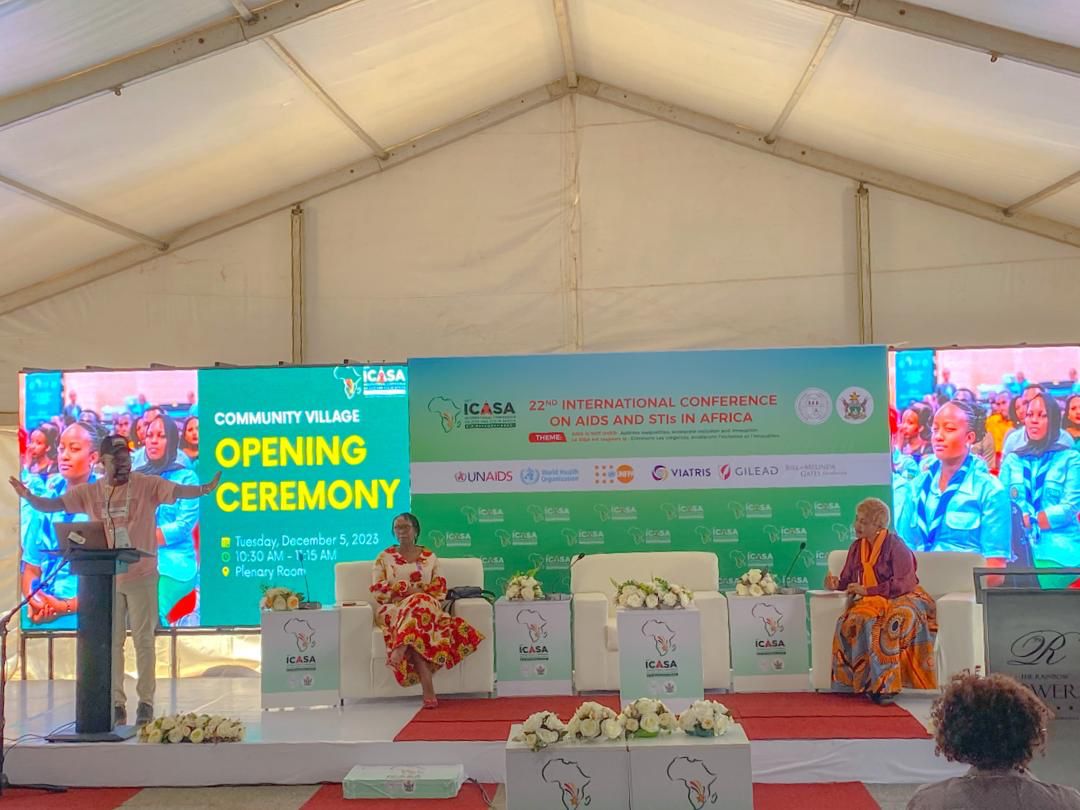
Yesterday, Youth preConferences were held fro 8:45 a.m. to 3:00 p.m before the opening which started in the afternoon 1h30min late with long speeches dominated by the delegate from the community who stressed and condemned an increasing reduction of organizing space for key populations and the use of laws and policies to further discriminate and exclude. Winnie Banyina, the UNAIDS ED to whom the community representative handed a memo ceremonially invited the activist to remain on the stage and sit next to her as she was only speaker who was not called from the stage.
Notable to note an incident at the opening of the main conference during which key populations activists who engaged in a picket were raided by the police and their placards confiscated only to be rendered later.
In a conversation with activists who were visiting the UNDP booth today, they expressed fears of not feeling safe at ICASA anymore.
Multiple concurrent sessions were running and as the UNDP regional team representative, I joined the WHO panel on delivering dignified, inclusive and diverse services for HIV in healthcare: why to refocus on stigma and discrimination? Sharing the best practices on the role of laws and policies in providing a stigma-free environment, I reflected on the work UNDP has done as follow-up to the 2012 Global Commission Report.
What is the role of legislative and policy initiatives (e.g. law reform) in advancing inclusive stigma-free health services and, on the other hand, how can health sector contribute to the advancement in other sectors (law reform, social discourse...)? What challenges? What progress have you seen?
Below were my reflections
B. How can health sector contribute to the advancement in other sectors (law reform, social discourse...)?
* by providing evidence of impact of bad laws on access to services
* public health arguments for legal reform
* empirical research for data to inform policy/legal initiatives
C. How can we advance this field in your area (CLM, Quality services, enabling environments)?
How can we scale up legal/policy reforms, parliamentary engagement on HIV, KP and human rights for ending AIDS? Is the better question.
What is the biggest obstacle in the field/your work right now?
Well-funded anti-rights, anti-gender movement, pro-family groups (they come in different forms and shapes), increasing nationalism and religious fundamentalism, shrinking fiscal/funding support, hostile political and social environment.
What changes have you seen (positive or negative) in this area of work that can affect the future success of reducing stigma?
Positive:
Negative:
Thank you Berry for taking the time to highlight those various aspects of the conference, including the Youth preconferences, the opening session, incidents during the main conference, and the role of legislative and policy initiatives in advancing inclusive stigma-free health services. And also for raising important questions on the challenges and progress in this area of work. We are looking forward to more posts form you reflecting on your participation in the sessions for the duration of the conference.
What a wonderful news to hear a movement of young people claiming their SRHR rights across the continent! See the details of the Young people Unite, a Y Plus (partner to the Ready Academy UNDP supports) and AfriYAN -led movement to claim SRHR and end HIV.
See below the session details
Session title: Youth-led Change: Youth Networks Accelerating the SRHR and HIV Response.
Organisers: Young People Unite – Y plus Global
Venue and time: Sapphire, Harare 6th December 2023
2:05p.m. – 2:50P.m
Summary of the presentations/discussions :
Relevance toYKP advocacy (key take-aways):
Recommended next steps:
Cross agency collaboration (UNFPA, UNICEF, UN Women on gender issues and GBV)
Assessment of existing initiatives to ride on (use of baselines)
Reach out to Y Plus Global through Ready Academy to explore inclusion of YKP into the mov
This is a significant and inspiring initiative.
I would love to hear from the online community about their thoughts on youth-led movements and the importance of cross-movement building. How do you think collaboration and breaking silos can enhance the effectiveness of advocacy efforts? Please share your ideas and experiences on mobilizing champions and engaging policymakers to drive positive change in sexual and reproductive health.
Additionally, I encourage everyone here to discuss the role of technology and social media platforms in empowering young leaders and promoting inclusivity. Have you witnessed or been part of initiatives that effectively utilize digital tools to amplify youth voices and engage marginalized communities? Let's explore the potential of technology in advancing SRHR and HIV response. I wish to invite Learnmore Chikwewo who hosted another dialogue on digital advocacy yesterday at the #WeBelongAfrica and Youth Gates Zimbabwe Trust facilitated YKP networking Zone yesterday.
Looking forward to an engaging and insightful conversation! Remember to be respectful and considerate of different perspectives while sharing your thoughts. Thank you
Reorientar o financiamento do VIH para colmatar as lacunas de igualdade no VIH em África e na prevenção para os jovens.
A Dra. Ann Poya- Malawi abordou sobre a situação de financiamento do VIH em África, evidenciando a dependência de financiamento externo, menos de 15% dos orçamentos nacionais atribuídos à saúde, investimentos de capital limitados em HIV, e desequilíbrio entre intervenções de prevenção e tratamento, como partes dos desafios financeiros.
Como defensores das populações das YKP, temos refletido sobre as desigualdades nos nossos processos de direcionamento do financiamento do VIH, e uma das questões que mais se levanta é : O financiamento dos programas de VIH chega aos mais vulneráveis?
Temos hoje mais do que nunca evidencias de que as maiores lacunas globais de prevenção e tratamento estão na AGYM, nas crianças e nas KP, por isso é importante para nós ter essa reflexão conjunta sobre as lacunas de equidade no acesso aos serviços de VIH, com atenção aos grupos marginalizados.
Obrigado, Roquiana Gunza. Peço desculpas se minhas traduções não estão precisas. Eu usei o Google Tradutor.
A sessão enfatizou a relevância dessas questões para os defensores das populações-chave, destacando a necessidade de garantir que o financiamento dos programas de VIH chegue aos grupos mais vulneráveis, incluindo AGYM, crianças e KP. As próximas etapas recomendadas, como a integração de intervenções do VIH, o estabelecimento de parcerias público-privadas e a implementação de abordagens comprovadas, fornecem soluções práticas para enfrentar esses desafios e avançar na resposta ao VIH em África.
A delegação angolana composta por Líria de Castro, Aguinaldo Sebastião e Carmelita Gunza partilha aqui algumas notas das sessões acompanhadas ontem e hoje.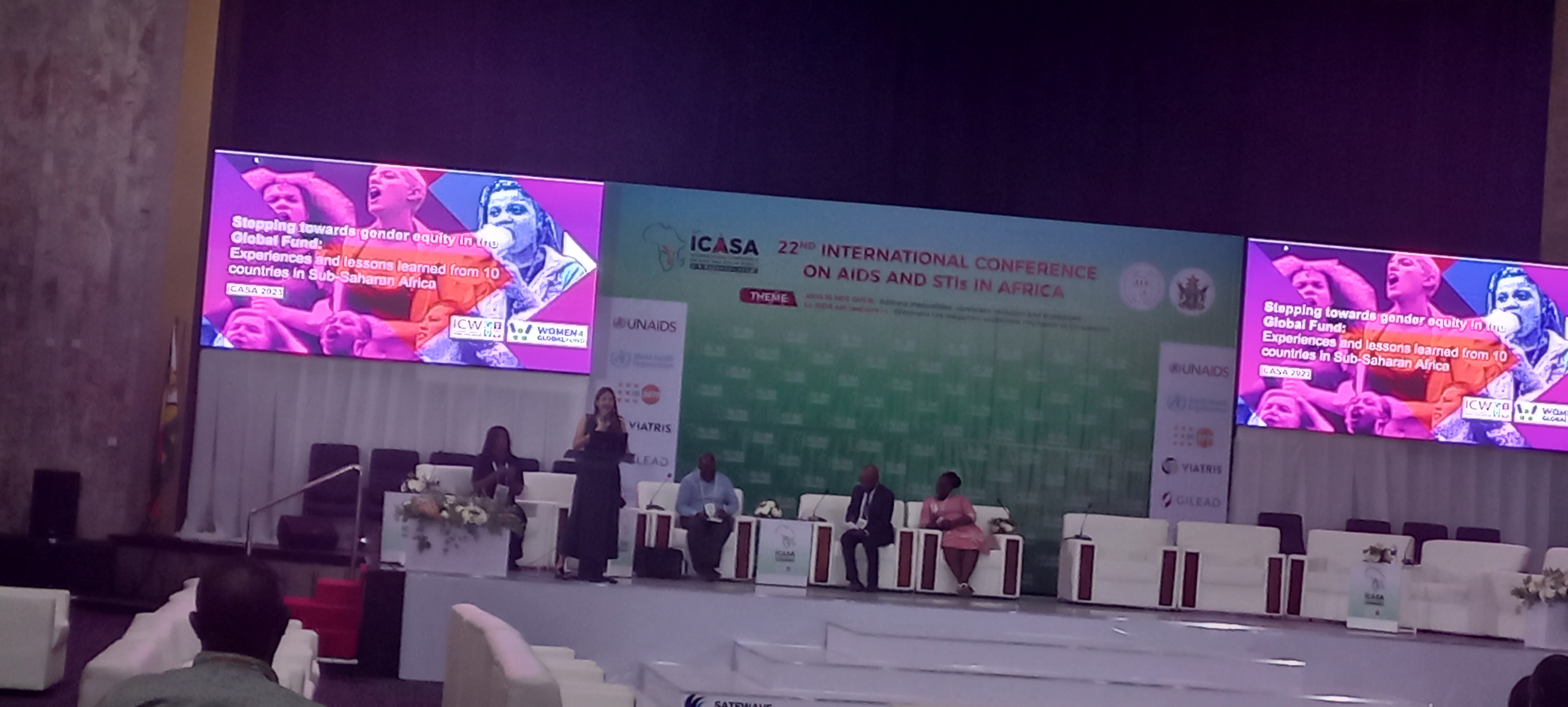
Obrigado Líria de Castro, por compartilhar os anexos. Gostaria de encorajá-los a colar o resumo na seção de comentários
Session Title: Global initiatives to eliminate HIV related stigma and discrimination.
Organizers: GNP+, Sibongile, Daughter Ogutu,Omah
Venue; Plenary Room
Time : 15:00pm- 16:00pm
Summary of the presentation;
Omah presented slides on how 25 counties contributed data to the presentations and he also indicated that only 12 counties are from Africa. The slides presentation also included videos of Key population ,people who are living with HIV speaking of inclusion to spaces and fear of disclosing their statuses to family, friends and Partners.
Transgender people most frequently reported stigma and discrimination based on their gender and behaviors when try to access health care services.
Daughtie Ogutu Programs Manager, presented on Stigma and discrimination, Criminalization.The Fear of stigma and discrimination being faced mainly by Key Population (LGBTQIA, Sex workers,Mem sleeping with Men and Gays).
36 counties plus Ghana are in a Global partnership Supported activities developed a manual to train Ghana employees.
Recommended Next Steps;
1-Finding ways of working together
2- important activities addressing HIV related stigma and scale
3-Frame work
4-Programming and Approaches
5-Community Leadership in HIV related stigma reduction implementation
6-Intersectional Stigma and Discrimination
7- Monitoring and Evaluation
8-funding to address HIV related
Session tittle:digital health and rights:participatory action research project workshop
Time:1045-1130 am
Venue:plenary room
Summary...
The workshop was full of life as panelists shared on the work they are doing with Adolescents and YKPs in advocating for digital health rights.attendees also asked questions with regards to the laws governing human rights.
The following are the major issues i was able to take note of
The workshop immensely helped me as an lgbtiq artivist to be aware of some of the dangers and opportunities associated with digital artivism.it also opened my eyes in identifying certain opportunities that are there and that i can take inorder to use digital platforms to adrees SRH issues inorder to end AIDS and make sure that the community that i represent has correct information.
The workshop also helped me be aware of what other countries are doing that we can also implement as Zimbabwe as far as digital health is concerned
Title : Digital Health and rights: Participatory action research Project
Time; 10:45-11:30
Venue; Plenary Room
Summary;
The morning energy was fine and the number of People who attended the workshop was fair. The panelist shared about digital health rights, and there was a QnA platform for everyone with questions, on laws of human right. There looked at different issues that YKP face in terms of digital health and rights. The exclusion in space to learn or to be informed about human rights and how to put them into practice. There's importance of community organization to engage with government on matters to do with the digital health and rights among our community.
The workshop is was helpful and as an activist and an advocate for the Key Population it's my duty to take the information far and try to reach to other partner organisation and share the strategy on how we can work together and face the government.
Also safe security matter specially on digital advocacy that one suppose to be face at all times.
Time; 13:30-14:30
Organizers; Richard and Sunflower
Venue ; Community Village Booth 17
Summary;
The panelist explained about UNDP and We belong Africa, how it started, when it started and where is it now.There also stated that there are 6 Counties who are partners with We belong Africa in Zimbabwe. Sunflower explained about digital advocacy training and how We belong is growing in Zimbabwe by engaging many different Key Population around Zimbabwe. There was Question and Answers for all, one lady representing Nigeria Sex workers highlighted that there have also Young gays in Nigeria who don't know about we belong and wanting to join and be part of the program as Nigeria doesn't have such platforms for them. She went on gave a success reflation on how their community is doing well with Sex workers both in Nigeria and Lusaka.
My reflection from this section I saw there lot of training that need to be done and We belong needs to engage with more other countries introducing We belong Africa and spreading more news about Digital advocacy globally.
Session Title: Information sharing #WebelongAfrica
Time: 13:30pm - 14:30
Venue : YKP Zone booth 17
Summary
The session was very insightful the panelist shared with the participants about "We Belong Africa", it's pillars and it's main objectives which include advocating for young key populations and their sexual reproductive health and rights .This session helped us as young key populations to understand that there are spaces where we are included and made the first priority, it helped us understand about inclusive government processes that are being supported under We Belong Africa project too. There was great interaction and both speakers and the audience enjoyed an information packed session.
The recurring ideas were:
*Importance of digitalisation
*Empowering both the general community and key populations
*Ensuring the availability and access to comprehensive health services
* The existence of Stigma
* The importance of self growth.
We also took note that we face problems in our respective spaces as our fellow young key populations in other countries.
Session tittle:shortening the time for access to new HIV,tuberculosis and malaria prevention in Africa
Venue and time: Diamond 1 and 2
Time:1045-1130
TB is as case for many KPS living with HIV but in Zimbabwe TPT is not someting well talked about and adressed within my community and this session helped me take not of that and excited me to find out more about TB prevention therapy to discerminate correct information to my community.
Recommended steps
Carry out workshop specifically targeted at TPT
Session Title: Information sharing and Skills building #WebelongAfrica
Organisers: Youth Gate Zimbabwe Trust
Time: 0930hrs - 1030hrs
Venue : YKP Zone booth 17
Summary
We had over 20 individuals participating in a skills building session. Most of them were your participants and pointed out how difficult it was to be economically empowered especially being part of the kp. The session thus opened up mind on ways to equip one self to become economically empowered. Several skilled raised in the session include farming, negotiating skills for those doing sex work, confidence, cooking/catering, sewing, baking, making detergents and cleaning utensils etc. These are skills that you can get trained for for minimum value but equipping you with a skill that can last you a lifetime.
Recurring thoughts:
- How difficult it is to find time to learn a skill
-How difficult it is to get funding to learn a skill as KPs
- How getting educated has become undependable, although still necessary thus we need to acquire skills.
-The importance of networking