


This blog was authored by Pem Wangdi, Risk and Strategic Management Specialist at UNDP Myanmar. Pem works with her colleagues to build resilience among the most vulnerable to future shocks—economic, health, conflict, and climate induced—while addressing immediate needs is at the heart of the humanitarian-development-peace nexus approach that underpins the new UNDP strategy in Myanmar.
UNDP Myanmar’s ‘Triple A’ Approach
The complex and dynamic crisis in Myanmar, further exacerbated by natural disasters and climate change impacts necessitates a fundamental shift away from traditional approaches to crisis response decision-making and implementation. UNDP Myanmar’s ‘Triple A’ (Anticipatory, Adaptive and Agile) approach provides a framework that enables the Country Office (CO) to remain alert to emerging signals, make quick adjustments, tailor responses to the evolving local contexts, capture lessons, find synergies and collaborate effectively and allocate resources dynamically for maximum impact, all while gradually building towards scale.
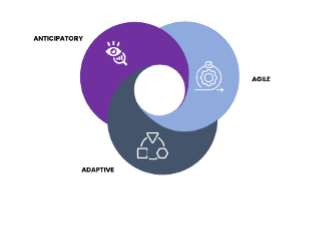
To bring the ‘Triple A’ approach closer to the field where the most critical actions take place, and have the most impact, the CO simulated the framework through a dynamic management process during its recent office retreat. Engaging over 180 staff and personnel, the objective of the simulation was to embed agility, adaptability, and anticipation into the everyday work of all personnel across field offices, project teams and functional units.
Real-Life Scenarios

By immersing teams in high-pressure scenarios based on current realities, facilitated by Gamemasters[1] who introduced evolving ‘triggers’ at regular intervals, participants were challenged to tackle emerging risks, while being faced with conflicting priorities and demands.
The scenarios were intentionally designed to mirror the unpredictable contexts UNDP operates in. Over 15 teams were placed under pressure to make decisions quickly while navigating complexities of communications, coordination, and leadership under stress. The experience demonstrated the importance of being flexible, need for strong communications and coordination loops and emphasized the importance of anticipating risks before they escalate.
Pausing for reflections
The retreat focused on applying dynamic management and fostering a culture of reflections. As such, reflections were a core element of the exercise. Each team was encouraged to consider the impact of their decisions and reflect on the actions they had taken. Mappers[2] observed team dynamics and provided insights into decision-making and interactions which were shared during the reflection session. This process not only facilitates personal growth but also provides space for leveraging collective experience enabling informed decision-making and encouraging learning and innovation.
Anticipation
For me personally, the most important take-away from the exercise was the emphasis on anticipation. Crisis response often feels reactive- we wait for something to happen before positioning goods, mobilizing resources and developing plans. The simulation stressed the importance of recognizing early warning signals. As the scenarios unfolded, teams were gradually able to identify these signals which are often overlooked in the rush to respond to immediate crises and integrate them into proactive and risk informed decision-making. This shift from reactive to anticipatory thinking is critical, especially in Myanmar’s context.

Looking ahead
Overall, the retreat served as a powerful reminder that the three ‘As’ are not standalone strategies – but that they are interconnected and mutually reinforcing. It taught us that:
Agility requires compliance: While it is important to be flexible and seek innovative ways of adapting and deliver assistance swiftly, processes must still be compliant with organization’s policies and procedures and respect the necessary protocols for decision-making to ensure accountability.
Reflections enhance Adaptability: Teams that take time to reflect and assess the impact of their work are better equipped to adjust their plans and reallocate resources in response to changing dynamics.
Anticipation in a collective effort: Identifying and making use of signals from the collective experience across the CO and other sources of intelligence must be a proactive and collaborative effort to enable risk informed decision-making, encourage learning and innovation, and ensure that our work remains relevant to the evolving landscape.
We can only move forward.
This retreat provided the opportunity to introduce the dynamic management process across the CO. We now have a stronger understanding and foundation to integrate both dynamic management and the ‘Triple A’ approach in our daily work. The three ‘As’ are valuable skills for effective crisis management. With continuous learning and reflections, innovative tools, and flexible processes, we are better resourced to stay ahead of challenges, ensuring that UNDP’s work in Myanmar remains relevant, responsive, and impactful.

[1] Facilitators guiding the simulation process. Their role involved introducing ‘triggers’ (evolving scenarios) and ensuring that the simulation remained dynamic and realistic.
[2] Observers with the responsibility of observing and monitoring team interactions, decision-making processes, and coordination efforts during the simulation. They provide insights and feedback on how teams handle emerging risks and an external perspective on group dynamics. Mappers’ reflections are critical to enhance collective learning and adaptation.
Thank you
Please log in or sign up to comment.