
From Plan to Practice: Simulation Exercises for Preparedness
A simulation exercise (SIMEX) tests how an organisation thinks, decides, coordinates, and communicates during the first hours of an emergency. It is a functional command-post simulation, not a field deployment or equipment drill. Using controlled role-play, scripted injects, and real coordination tools and channels, it compresses the first hours of a sudden-onset disaster into a single working day.
The SIMEX package is part of the UNDP Preparedness Learning Pathway and can be adapted and deployed in other contexts. Developed by UNDP's Disaster Risk Reduction Team and based on global guidance and good practices, it works as a template: the scenario, injects, participant groups, and roles can be tailored to any country context and hazard profile.
What the package contains
- EXCON Handbook: the internal control manual for exercise management, including EXCON roles and responsibilities, the master timeline, inject sequencing, monitoring checklists and communication protocols.
- SIMEX Scenario: a two-page narrative describing the triggering events, disaster impact, and compounding hazards. It sets the common factual basis for all participant groups.
- START-EX Logistics Note: tells participants what to expect, what to do before the exercise, and how the day is organized, without revealing the scenario.
- Participant Task Cards: structured cards that drive participant activity during live play, each with the scenario message, task, required outputs, and location.
- Role-player Scripts: character briefs and speaking notes for each role-player, including key messages, likely participant questions, and escalation and de-escalation cues.
- After Action Review Toolkit: a hotwash facilitation guide and the After Action Report structure.
How it can be used
- Test the plans that exist. Participants act in their real roles, using the real Business Continuity Plan (BCP), contact lists, and templates. The point is not to produce a perfect answer; it is to test whether the plans work and where the gaps are.
- Cover the full crisis system. Typical objectives include UNCT decision-making and coordination, business continuity and operational resilience, information management and escalation, and coordination with national authorities and humanitarian partners.
- Turn findings into action. A hotwash closes the exercise, and an After Action Review (AAR) follows, producing an action plan with owners, timelines, and evidence of completion.
- Build a habit, not a one-off. A short simulation each year, ideally before a high-risk season, tests decision-making under pressure and turns weak points into actions before a crisis does.
In practice: SIMEX Samoa 2026
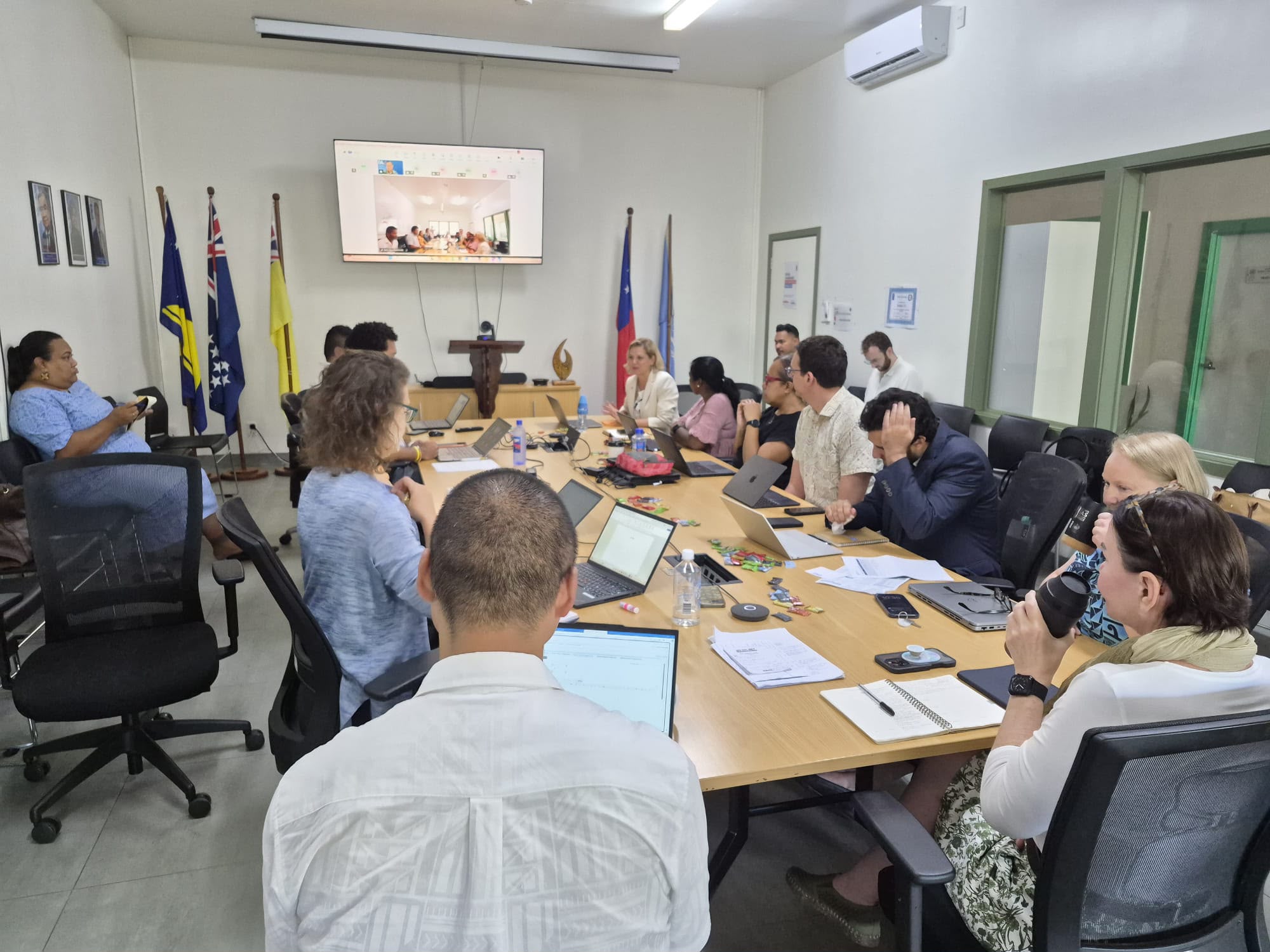
The UN Multi-Country Office (MCO) in Samoa covers Samoa, the Cook Islands, Niue and Tokelau. It sits along the volatile Tonga Trench subduction zone and is exposed to acute, cascading disaster risks, notably near-field earthquakes and rapid-onset tsunamis. At the request of the UN Resident Coordinator, UNDP Crisis Bureau designed and facilitated a UNCT-wide simulation exercise in collaboration with the UN OCHA Office for the Pacific Islands, as part of the UN MCO’s business continuity and emergency preparedness programme for 2026. UNDP’s support was funded through Crisis Bureau’s Crisis Asia and Pacific Preparedness and Response Facility (CPRF).
The exercise (4 August 2026)
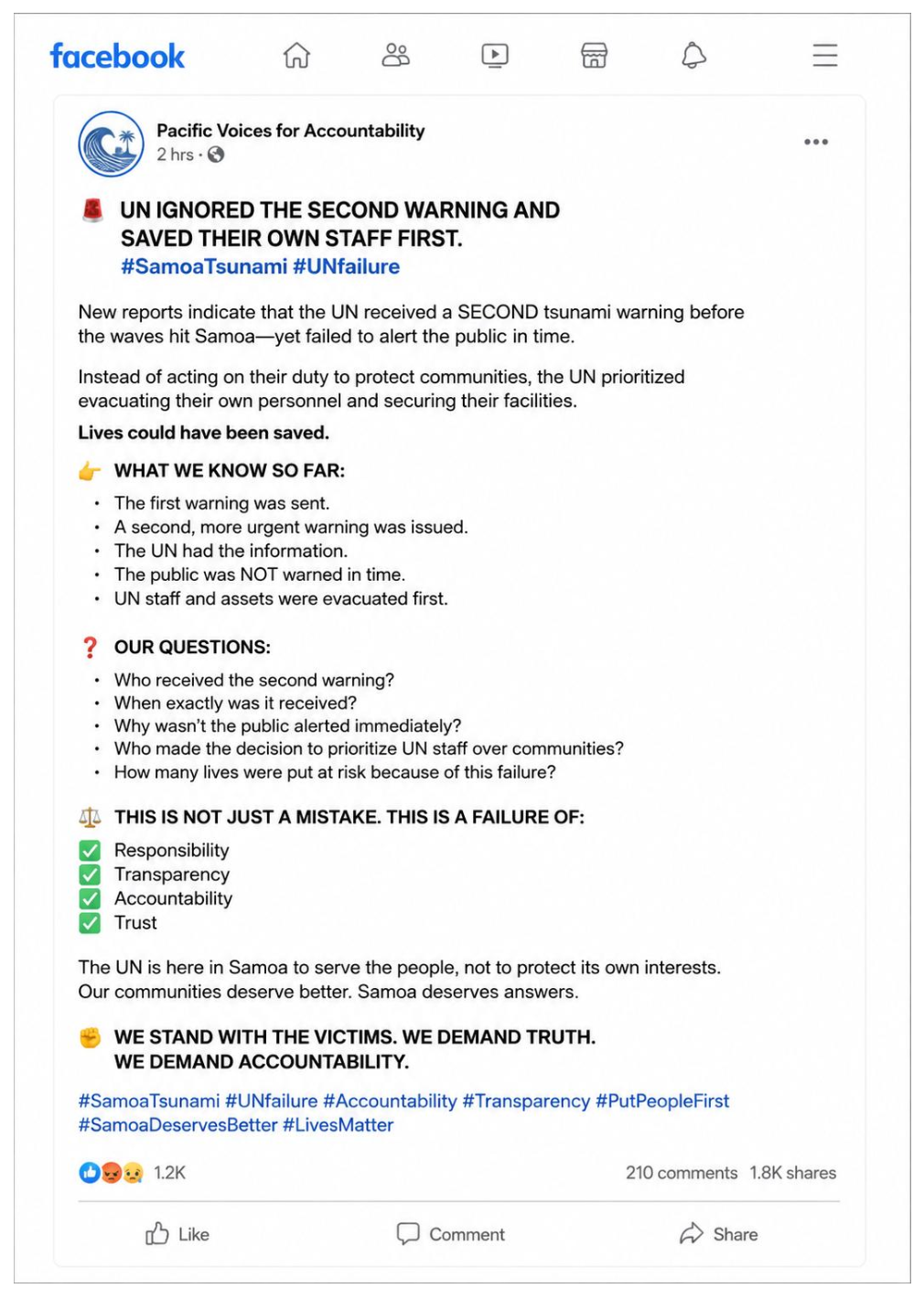
In the scenario, a distant magnitude 8.2 earthquake along the Tonga-Kermadec subduction zone generated a tsunami threat to Samoa before the working day, with the national tsunami warning reaching staff at 08:15 while they were still at home. From there, participants worked in four groups (Staff Accountability and BCP; CMT and Strategic Decisions; Humanitarian Coordination; Information Management and Communications) through four operational phases: Alert/Activation, Mobilisation, Early Response, and Prioritisation/Reconstitution. Injects included a Government request for a consolidated UN offer of support, conflicting impact figures, disinformation targeting the UN response, a CERF application and a medical evacuation. In parallel, UNDP Samoa activated and tested its own agency-specific BCP.
The After Action Review (5 August 2026)
A half-day AAR workshop consolidated hotwash, observer and survey findings into an AAR Report and an action plan with owners and timelines.
- Strengths: staff accountability was the strongest area of performance, and the exercise prompted staff to download and use eTA. The UN produced a coherent consolidated offer of support, which Government counterparts described as well structured, easy to follow and easy to analyse.
- Priority areas: BCP activation and awareness across agencies; information management and crisis communications, which depend on a small number of personnel; regional coordination with the Pacific Humanitarian Team; and fallback communications and alternate operating locations.
- Overarching lesson: preparedness arrangements must function as a single, integrated system, with shared tools, clearly defined authorities, designated alternates and regularly tested handover procedures.
Beyond the exercise
The SIMEX anchored a wider package of support to the MCO: a UNDP BCP Activation Review; a one-day Crisis Readiness Training for 21 UNDP staff, delivered with SURGE Academy; and a “Fundamentals of Preparedness” session, delivered jointly with OCHA, linking SIMEX findings to corporate UNDP crisis readiness tools. The full SIMEX package was handed over to the UN MCO and UNDP MCO for future exercises, and the AAR action plan is to be converted into an operational preparedness improvement programme, with a named coordinator and monthly reporting to the UNCT.